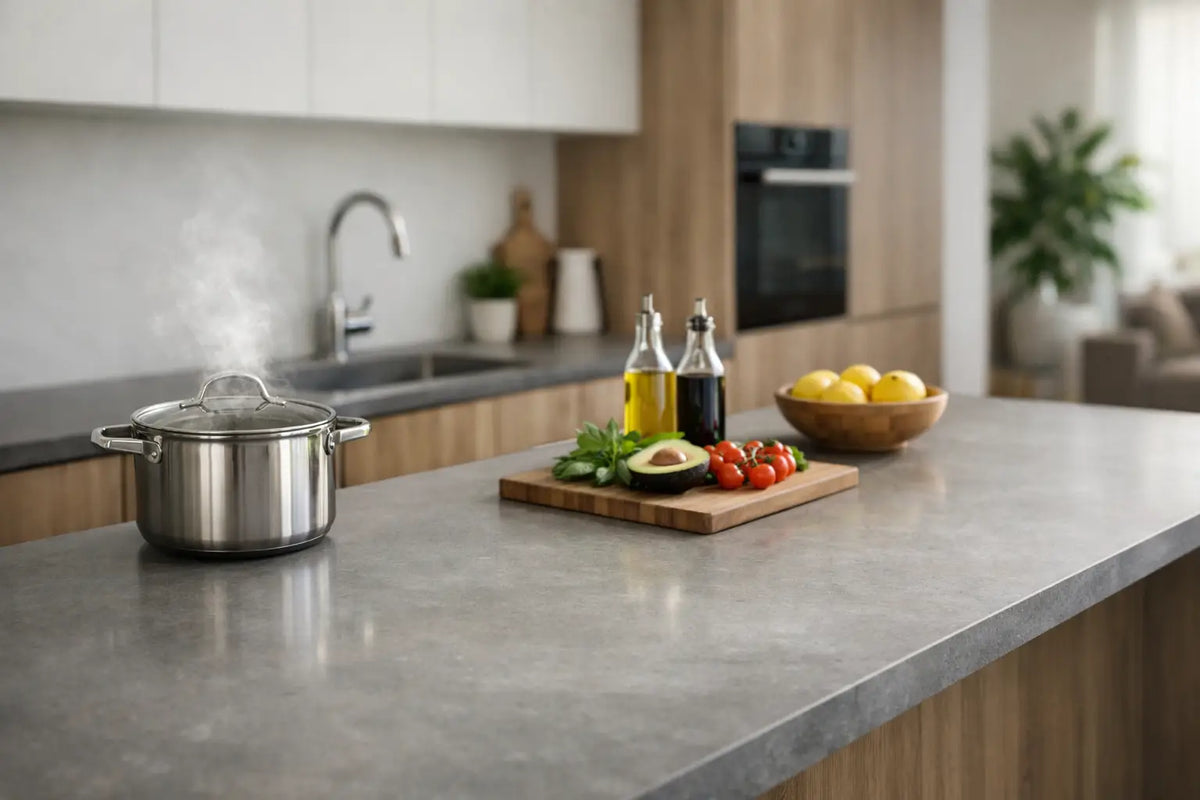
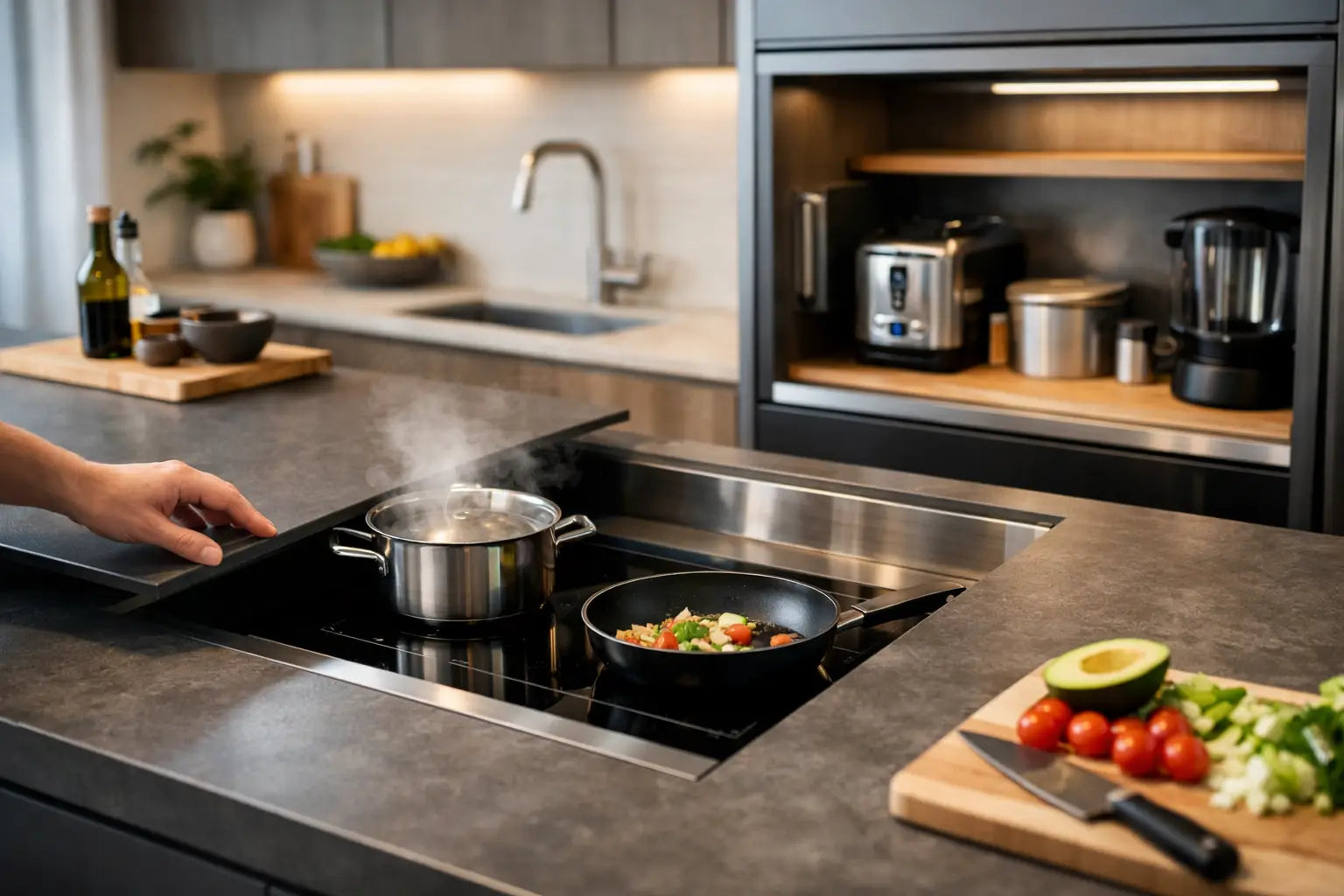
A porcelain island can be the visual center of a luxury kitchen - until a row of burners interrupts the surface. The top benefits of burnerless countertops begin with removing that compromise. With through-surface induction, the countertop remains a continuous architectural plane, then becomes a high-performance cooking surface precisely when needed.
This is not a decorative concept or a low-output warming zone. A properly specified invisible induction system cooks through approved porcelain, reaches cooking temperatures up to 400°F, and can bring water to a boil in under two minutes with compatible cookware. For homeowners designing a kitchen around a large island, that changes what the room can do.
1. More usable space, without adding square footage
A conventional cooktop claims a permanent section of the island. Even when it is off, the grates, burner caps, controls, or glass surface tell everyone exactly where cooking must happen. A burnerless countertop gives that area back.
When the system is not in use, the same porcelain surface can serve as prep space, a serving buffet, a dining counter, a homework station, or simply a clean expanse of stone-look material. This matters most in kitchens where the island carries the social life of the home. Instead of separating the cooking zone from the gathering zone, the island can shift between both roles in minutes.
The benefit is not merely visual. It is functional planning freedom. Designers can create larger uninterrupted work zones, place seating where it makes sense, and avoid building the entire island around a visible appliance cutout.
2. A kitchen that looks finished from every angle
Luxury kitchens increasingly rely on restraint: integrated refrigeration, concealed storage, slab backsplash details, and disciplined material selections. A visible cooktop can be the one element that breaks the composition. Burnerless induction preserves the countertop pattern, color, and edge-to-edge continuity.
That difference is especially striking with porcelain. The surface can run across the island without burner grates, raised trim, knobs, or a black-glass rectangle interrupting the design. When guests enter the room, they see the countertop first, not the appliance.
This is why burnerless countertops appeal to architects and homeowners who want an island to read like furniture rather than equipment. Invisible Design. Unmistakable Performance.
3. Faster, more responsive induction cooking
A hidden system should still earn its place as a serious cooking appliance. Through-surface induction transfers energy directly to compatible magnetic cookware instead of heating an exposed burner and the surrounding air. That direct energy path supports fast boiling, responsive heat changes, and efficient everyday cooking.
For many homeowners moving from gas, the speed is the first surprise. There is no open flame to wait on, and there is no hot coil gradually catching up to a temperature change. Induction responds quickly when a sauce needs to settle down or a pan needs more heat for a proper sear.
Performance does depend on the system, cookware, pan placement, electrical setup, and approved countertop material. Not every porcelain slab is suitable, and not every induction pan performs equally well. That is why countertop compatibility and installation details should be addressed before fabrication begins, not after the island is installed.
4. A cooler, safer surface around real life
Induction heats the cookware, not an exposed flame or a conventional radiant element. The area around the pan remains substantially cooler than a gas grate or glass-top cooking zone, helping make busy kitchens more forgiving around children, pets, and entertaining guests.
The porcelain itself is not a magic barrier. A pan holding a hot meal can still transfer heat to the surface, and cookware should always be handled with care. But there are no open flames, no hot burner caps, and no residual red-hot elements waiting after dinner.
That distinction changes the feeling of an island kitchen. Someone can help plate food, lean in to talk, or set out serving pieces without navigating a visible flame zone. When cooking is finished and the pan is removed, the countertop returns to being a countertop.
5. Cleanup becomes remarkably simple
Gas cooktops collect splatter around grates, burner assemblies, and crevices. Traditional glass-top induction units eliminate some of that complexity, but their designated black cooking surface still creates a separate area to maintain. A burnerless porcelain countertop has no grates to lift, no burner wells, and no exposed seams around a cooktop cutout.
Most everyday cleanup is straightforward: allow the area to cool as needed, wipe the porcelain surface, and continue using the island. Because the surface around the cookware does not become as hot as a conventional burner, spills are also less likely to bake onto it during cooking.
For a household that cooks often, this is a practical luxury. Less time cleaning appliance parts means more time using a kitchen that stays composed between meals.
6. Better energy use without sacrificing power
Induction is widely valued for its efficiency because it directs heat into the pan. Through-surface induction systems can operate at roughly 83% to 90% energy efficiency, compared with the considerable heat loss associated with gas cooking. In a warm California kitchen, less wasted heat can also make the room more comfortable while dinner is underway.
Efficiency should not be confused with weak output. The point is controlled power. A capable invisible induction system can deliver the speed homeowners expect from premium cooking equipment while avoiding the heat, combustion, and ventilation considerations that come with gas.
For some projects, eliminating gas at the island also simplifies the kitchen's visual planning. The electrical requirements remain significant and must be handled correctly, but the design no longer has to accommodate an open-flame appliance as the centerpiece of the room.
7. A differentiated investment for a custom home
Many high-end kitchens include premium appliances. Fewer make the cooking surface disappear completely. That makes burnerless countertops a meaningful differentiator in a custom renovation or new build, particularly when the island is intended to be the room's signature element.
The value is not just novelty. It comes from combining performance, flexibility, safety, and a more intentional architectural result. A conventional cooktop may be the right decision for a homeowner who prefers visible controls, uses oversized specialty cookware, or is working with a countertop material that cannot support through-surface induction. The best choice depends on how the kitchen will actually be used.
For the right project, though, the result is difficult to replicate with a standard range or a flush-mounted glass cooktop. The island works harder, looks quieter, and supports more of the day than a permanent bank of burners ever could.
What to confirm before choosing a burnerless countertop
The technology needs a coordinated team. Start with an approved porcelain material and confirm the exact slab thickness, construction details, and fabricator requirements. The induction modules sit beneath the countertop, so their locations must be planned before cuts, supports, and seams are finalized.
Electrical planning matters just as much. A qualified electrician should confirm the dedicated circuits, load requirements, and access specified for the chosen system. Cookware also deserves attention: induction-ready pots and pans with the correct magnetic base deliver the best results, while nonmagnetic cookware will not activate the cooking zone.
Finally, think about the island's daily rhythm. Marking systems can identify the active cooking positions, while the visible surface remains minimal. Consider where you will prep, where family members sit, and whether the island will host buffet service or casual meals. The strongest designs plan for those moments rather than treating the cooktop as an isolated appliance decision.
Invisacook California helps homeowners, designers, and trade professionals evaluate those details before they become expensive field changes. The goal is simple: specify the right porcelain, power, modules, and cookware so the finished island performs as beautifully as it looks.
A burnerless countertop is most compelling when it is designed into the kitchen from the start. Give the surface a purpose beyond cooking, then choose the technology that lets it meet that purpose without visible compromise.


Leave a comment
This site is protected by hCaptcha and the hCaptcha Privacy Policy and Terms of Service apply.