
A porcelain island can look completely uninterrupted, then boil water in under two minutes. That contrast prompts a fair question: are hidden cooking zones visible once an invisible induction system is installed? In a properly planned installation, the answer is no - not as burner outlines, metal rings, touch controls, or black glass panels. The countertop retains the continuous, architectural look that made porcelain the right choice in the first place.
That does not mean cooking becomes guesswork. Invisible induction is designed around intentional zone placement, compatible cookware, and a countertop layout that makes daily use feel natural. The technology disappears from view. The function does not.
Are Hidden Cooking Zones Visible on a Porcelain Countertop?
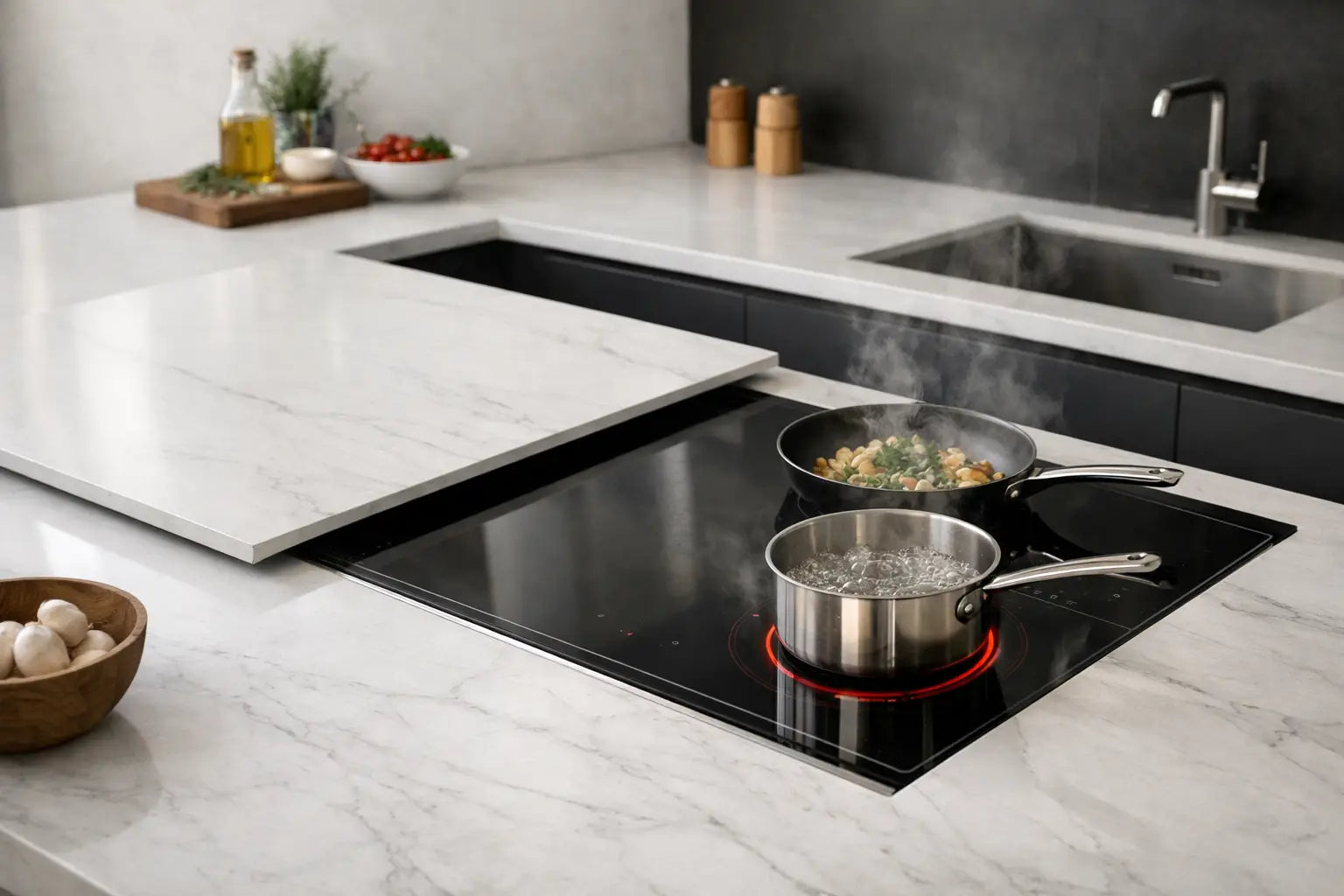
Traditional cooking surfaces announce themselves. A gas range has grates and burners. A conventional induction cooktop has a glass panel, marked circles, and a visible boundary between the appliance and the counter. Through-surface induction removes that visual interruption by placing the induction components beneath an approved porcelain slab.
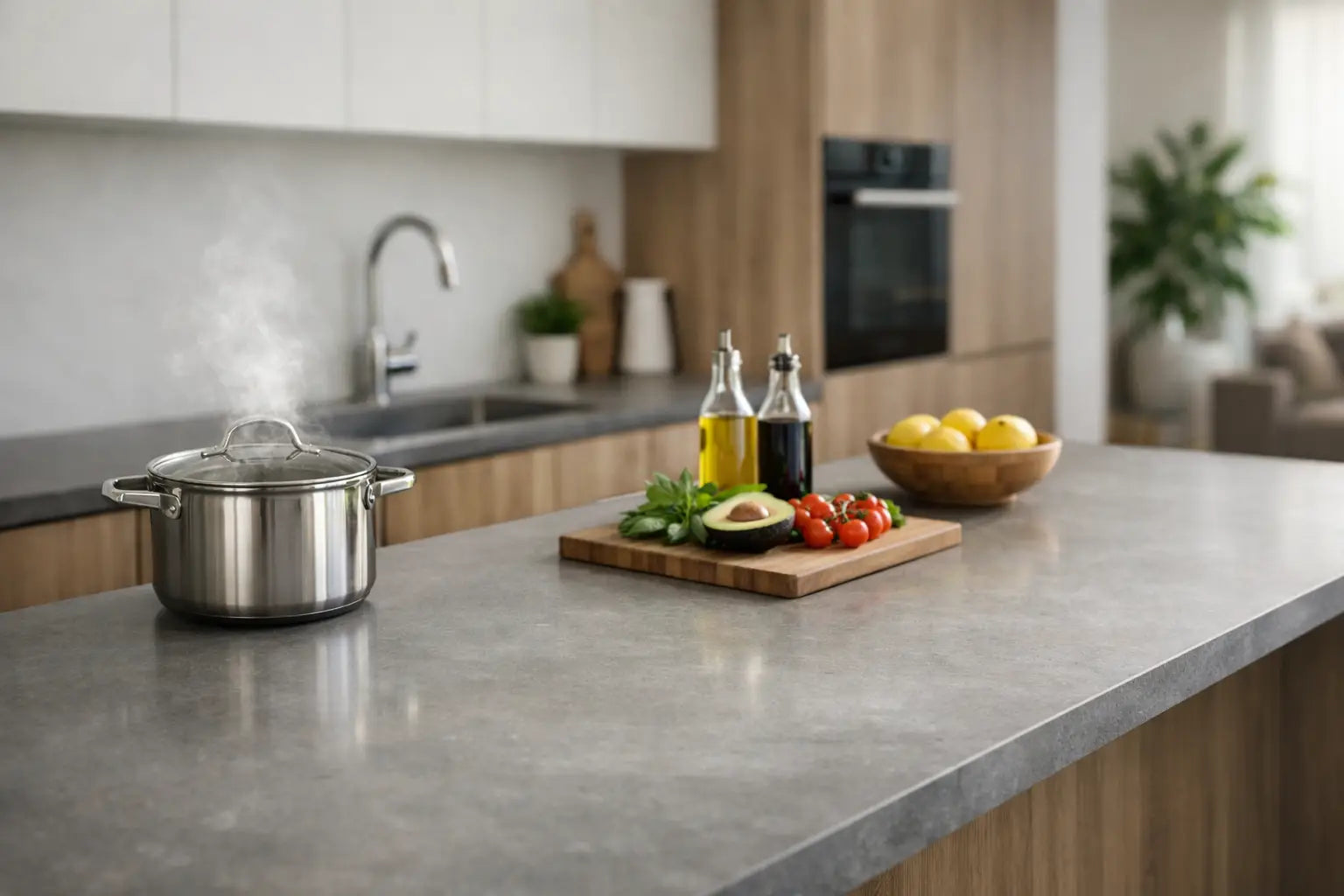
From across the room, and often from directly above, the cooking area reads as one continuous countertop. There are no permanent burner circles cut into the surface. No raised controls. No appliance seam dividing the island into a cooking side and a usable side.
The porcelain itself may have veining, movement, or a matte finish, depending on the selected material. Those natural design details remain visible because they are part of the slab, not evidence of the cooking zones below. The zones do not create a glowing outline, a different surface texture, or a glass-top appearance when the system is off.
This is the point of invisible design: your island can serve as prep space in the morning, a serving surface during a dinner party, and a dining or work surface after cooking is finished.
What You May See Instead of Burner Markings
While the cooktop is hidden, homeowners still need a reliable way to place a pan over the active area. Most projects solve this through subtle, practical cues rather than permanent visual clutter.
Some owners use removable zone indicators when cooking. Others learn the position of their one-, two-, three-, or four-burner configuration quickly, particularly when the zones are arranged around the way they cook. A fabricator and installer can also help establish a layout that aligns with cabinetry, seating, or the geometry of the island, making the cooking positions easy to remember without adding obvious marks.
The right approach depends on the kitchen. A homeowner who cooks every night may prefer a repeatable placement convention. An entertainer who values a pristine island for events may use temporary markers only while cooking. In both cases, the countertop can return to a clean, uninterrupted surface afterward.
There is a useful distinction here: invisible does not mean unplanned. It means the visual language of the kitchen is no longer dictated by visible burners.
Cookware Becomes Part of the User Experience
Induction requires magnetic cookware, and through-surface induction works best with cookware engineered for the system and the thickness of the porcelain. Compatible InvisaCookware helps create consistent heating performance and gives users a dependable pan footprint for each cooking zone.
That footprint matters. A pan must be centered over its intended zone to receive power efficiently. With the right cookware and a well-considered zone layout, placement becomes routine rather than a compromise. You are not searching for burners - you are cooking on a surface designed to stay visually quiet.
Why the Zones Stay Concealed
Induction creates heat in the cookware, not by heating an exposed element, but by using a magnetic field. In a through-surface system, the induction modules sit below the approved porcelain countertop. The cookware heats while the surface itself remains far cooler than a conventional electric cooking element.
That engineering changes what the kitchen can look like. Because the cooking hardware is below the surface, there is no need for visible coils, gas ports, grates, or a glass appliance deck. The porcelain is both the working surface and the design finish.
There are practical benefits beyond appearance. A continuous porcelain countertop is easy to wipe down because it has no burner grates, rims, or gaps around a glass panel. It also gives families more usable horizontal space when cooking is not underway. For kitchens where the island is the center of daily life, that reclaimed surface area is substantial.
The trade-off is that invisible induction must be designed as a complete system. Countertop material, slab thickness, zone locations, ventilation requirements, electrical capacity, cabinetry clearance, and cookware all need to be right. This is not a standard cooktop dropped into a cutout after the fact.
The Countertop Is the Key to a Truly Invisible Result
Not every countertop can conceal an induction system. Approved porcelain materials are selected because they can support the required thermal and technical performance while preserving the surface appearance homeowners expect.
The fabrication plan matters just as much as the material. Zone locations should be finalized before the slab is fabricated and installed. That lets the kitchen designer, fabricator, electrician, and appliance specialist coordinate the system around real-life use: where pans will sit, where people will gather, where outlets and cabinets land, and how much prep space the owner wants around each zone.
A thoughtful layout can make a four-zone island feel remarkably calm. Rather than seeing four circles every day, you see a single porcelain statement piece. Yet each cooking position remains available when a weeknight meal or a larger gathering calls for it.
This is also why countertop choice should not be treated as a cosmetic decision alone. A porcelain color, finish, and brand may be perfect visually but require confirmation for compatibility. Getting that validation early prevents redesigns later, when cabinetry is installed and fabrication dates are already set.
Can Heat or Use Reveal the Zones Over Time?
When the system is correctly specified, installed, and used with compatible cookware, the cooking zones should not become visually apparent through ordinary use. The goal is not a surface that looks hidden only on day one. It is a durable, high-performance countertop that remains the finished face of the kitchen.
As with any premium surface, homeowners should follow the care guidance for their particular porcelain and avoid treating the countertop as indestructible. The system is built for real cooking performance, including high-heat tasks up to 400°F, but every kitchen should use the recommended cookware, pan placement, and operating practices.
The visible changes most likely to affect a countertop are unrelated to hidden zones: scratches from abrasive handling, damage from improper fabrication, or choosing a material that was never approved for the application. These are planning issues, not an unavoidable consequence of invisible induction.
Hidden Does Not Mean Hard to Use
The concern behind this question is often practical: if the zones are not visible, will cooking feel less precise? For most owners, the answer comes down to setup. A system installed with clear zone locations and matched cookware is straightforward. After a short learning curve, placing a pan becomes as familiar as reaching for a drawer handle.
Cooking controls remain accessible without occupying the countertop. Depending on the system configuration, controls are positioned where they support the kitchen's design and workflow rather than becoming the focal point of the island. The experience is deliberate: high-output induction performance when you need it, and no visible appliance when you do not.
That makes hidden cooking zones especially compelling for open-concept homes. A visible range can pull attention toward the working side of an island even when no one is cooking. A through-surface induction system lets the island read first as furniture, architecture, and gathering space - then perform as a serious cooking surface on demand.
Design for the Moment After Dinner
The best invisible kitchens are not designed only around the meal being prepared. They are designed around what happens five minutes later. The pan is removed, the porcelain is wiped clean, and the island is ready for conversation, plating dessert, helping with homework, or setting out drinks.
Invisacook California helps homeowners and project teams evaluate that full picture before installation, from approved porcelain and electrical requirements to zone planning and cookware selection. The result should not be a novelty hidden beneath a slab. It should be a kitchen that gives you more room to live, without asking you to compromise on how you cook.

Leave a comment
This site is protected by hCaptcha and the hCaptcha Privacy Policy and Terms of Service apply.