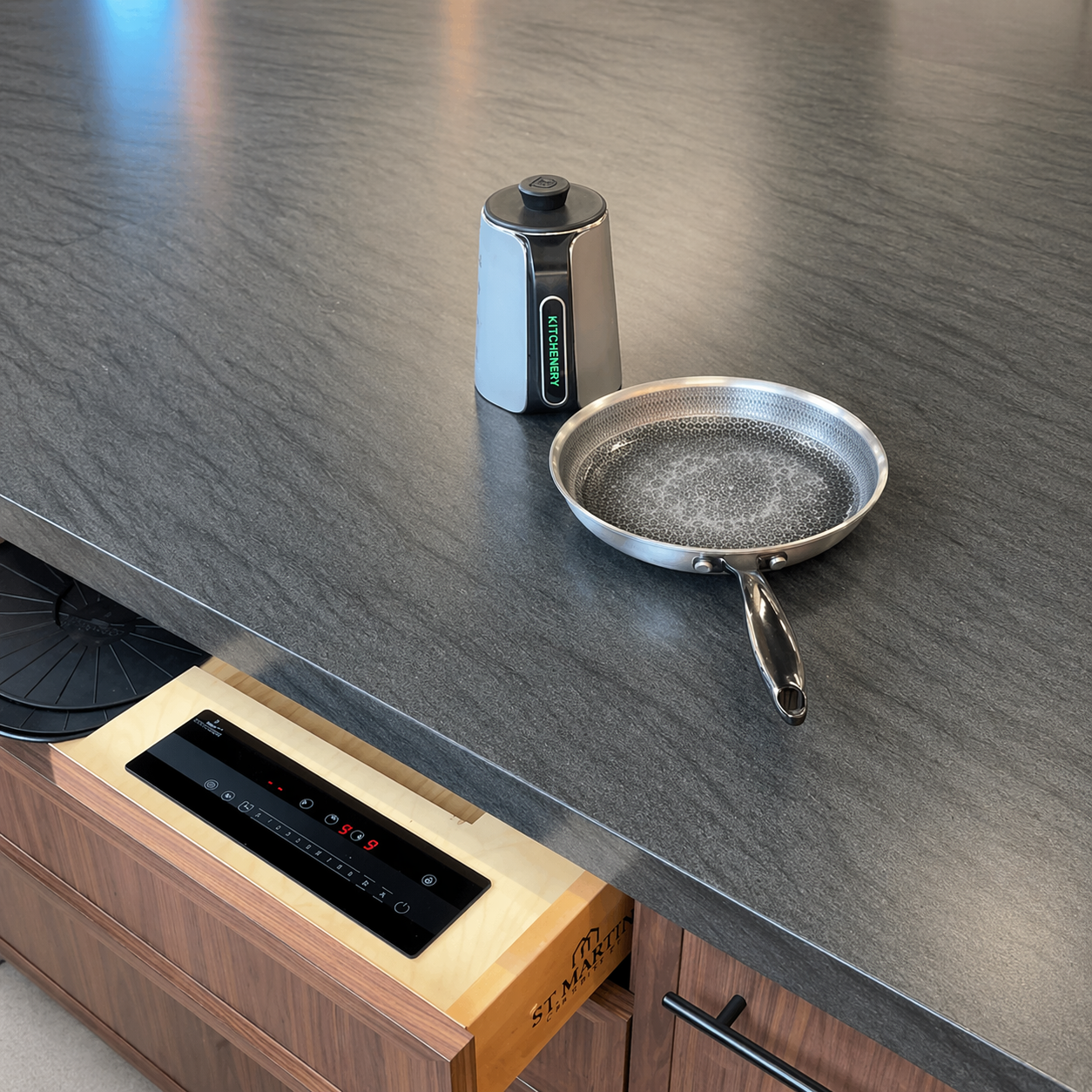
A porcelain island can be more than a beautiful work surface. With Invisacook through-surface induction, it can become the cooktop without giving up a single visible burner. Choosing the best porcelain slab for induction is what makes that transformation perform as beautifully as it looks. The right slab supports fast, responsive cooking underneath while remaining cool around the cookware, easy to clean, and architecturally clean when dinner is over.
This is not simply a matter of selecting a color. Porcelain slabs vary by manufacturer, thickness, composition, finish, and approved application. A slab that looks right in a showroom may not be the right candidate for an Invisacook invisible induction installation. Start with compatibility, then choose the design you want to live with.
What Makes the Best Porcelain Slab for Induction?
The best choice is an approved porcelain or sintered-stone slab engineered for countertop use and validated for Invisacook through-surface induction. It must transfer induction energy efficiently enough to heat compatible cookware, tolerate the localized thermal conditions created by cooking, and provide the structural consistency needed for fabrication and installation.
Porcelain is especially compelling because it delivers the qualities high-performance kitchens need: exceptional resistance to scratches, stains, UV exposure, and everyday heat. Unlike a conventional glass induction cooktop, the surface can continue across the entire island. There is no black glass rectangle interrupting the stone, no grates to clean, and no burners claiming space during a party.
That does not mean every porcelain panel is automatically suitable. The material category is only the beginning. The individual slab, its thickness, its installation details, and the induction system all need to work together.
Look for a slab approved for Invisacook through-surface cooking
Countertop suitability and Invisacook invisible-induction suitability are related, but they are not identical. A porcelain slab may be rated for kitchens and still require manufacturer-specific confirmation before it is installed over an induction unit.
Work from a current list of approved slab brands and collections supplied for the cooking system you plan to use. That validation matters because it addresses real-world variables, including material density, thermal behavior, slab thickness, and the performance distance between the induction coil and the bottom of the pan.
Do not ask a fabricator to guess. Before fabrication begins, confirm the exact brand, collection, thickness, and finish. A beautiful island is too significant an investment to leave compatibility to assumption. Typically 12 or 20mm Porcelain or sintered stone will work great.
Thickness is a performance decision, not just a design choice
Thin-format porcelain is often the natural fit for induction beneath the surface because it keeps the cookware closer to the induction field. That relationship affects responsiveness, power delivery, and boiling speed. In a properly designed system with compatible cookware, water can boil in under two minutes while the surrounding surface remains suitable for normal use.
Thicker material can work in approved configurations, but it should never be selected solely because it creates a more substantial edge profile. A built-up mitered edge can deliver the visual weight of a thick monolithic island while preserving the thinner countertop section where induction needs to perform. Sapien stone now offers 4D slabs that have through color design so imitate the look of natural stone.
This is one of the most valuable conversations to have early with your designer and fabricator. The visible edge, the actual slab thickness, and the equipment location are separate decisions. Treating them that way gives you more freedom without sacrificing performance.
Choose consistency over dramatic uncertainty
Large-vein marble looks, concrete tones, warm limestone effects, and quiet solid colors can all work beautifully in a hidden induction kitchen. The strongest visual choice is usually the one that supports the room's architecture rather than competing with it.
For the cooking zone itself, avoid assuming that a heavily textured finish will feel or perform exactly like a smooth finish. A deeply structured surface can add tactile character, but it may make pan placement, cleanup, and the visual marking of cooking positions less intuitive. Smooth matte, satin, or polished surfaces tend to create the cleanest experience for a multifunctional island.
Pattern direction also deserves attention. If a dramatic vein runs directly through the cooking area, it can either disguise the cooking zones elegantly or make placement marks harder to see, depending on how the layout is planned. Review the slab layout at full scale before cutting. The best result looks intentional from every seat in the room.
Porcelain Versus Other Countertop Materials
Natural stone, quartzite, engineered quartz, and solid surfaces each bring a different look and set of limitations. For an island designed to cook, serve, and entertain from the same uninterrupted plane, porcelain has a distinct advantage: it is highly durable while offering a broad range of stone-inspired and contemporary finishes.
Porcelain also handles the realities of luxury kitchen life well. It does not demand the same level of ongoing sealing associated with many natural stones, and it stands up to acidic foods, red wine, oils, and active family use. When the cooktop disappears beneath it, those practical advantages become even more valuable. The island is not an appliance with a surrounding counter. It is the counter.
There are trade-offs. Porcelain fabrication requires experienced handling, precise support, and careful transport. Large-format slabs can be unforgiving if fabricated or installed without the right expertise. A lower-cost fabricator who is unfamiliar with porcelain and hidden induction can create expensive problems. This is a premium system, and the installation team should reflect that.
Design the Cooking Zones Before the Slab Is Cut
Invisacook Invisible induction is most successful when the island is planned as a complete working surface. Decide where cooking will happen, where prep will happen, and how guests will gather around the island. A four-burner layout may be ideal for a household that cooks full meals daily. A two-burner configuration can be the more elegant choice for a second kitchen, entertaining space, or compact island.
The cooking areas are marked discreetly, often with refined indicators that preserve the porcelain's uninterrupted appearance. Their location should align with cabinetry, seating, venting strategy, lighting, and the electrical plan. They should also leave enough clear surface for serving platters and everyday prep.
Think about what the island becomes after the meal. With no visible burners, it can function as a buffet, bar, homework station, or dining surface. That flexibility is the point. Invisible Design. Unmistakable Performance.
Plan the cabinetry and electrical requirements early
The Invisacook induction units install below the porcelain, so the cabinet below must provide the required clearances, ventilation, and access. Electrical requirements depend on the number of cooking zones and the selected system. This is not a late-stage appliance decision to make after the island is built.
Bring the appliance specialist, kitchen designer, fabricator, cabinetmaker, and electrician into the conversation before final shop drawings. Early coordination protects the slab, keeps the installation clean, and prevents compromises such as moving a drawer stack or revising an island after fabrication.
At Invisacook California, Ben helps homeowners and trade professionals verify material compatibility, system sizing, and installation requirements before the order is placed. That direct guidance matters when the countertop itself is becoming the appliance. Call 213-729-6101 with any questions.
Cookware Matters as Much as the Slab
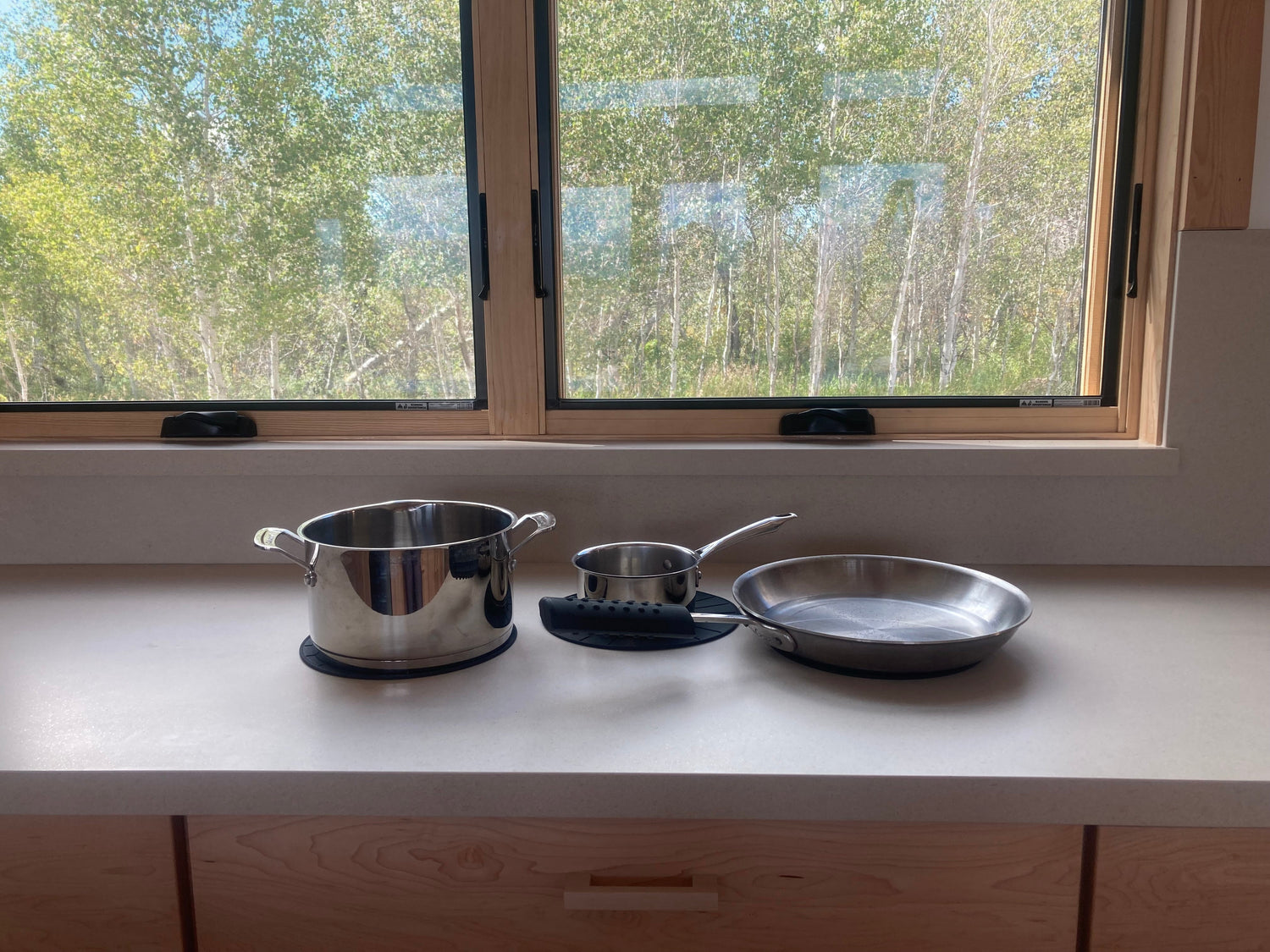
Invisacook through-surface induction requires magnetic cookware designed for the system. Standard induction cookware may respond, but cookware specifically engineered for Invisacook invisible induction delivers more reliable performance and protects the experience you are investing in.
Use cookware with a flat, stable magnetic base and a diameter that matches the marked cooking zone. Avoid dragging cookware across the porcelain, especially if grit is trapped underneath. Porcelain is remarkably scratch resistant, but good kitchen habits preserve any premium surface.
The technology heats the pan rather than an exposed burner. That means cooking can reach approximately 400°F while the area outside the cookware stays comparatively cool. It also means spills do not bake onto a glowing glass element. Once the pan is removed and the zone has cooled, the island returns to being a clean porcelain surface.
Questions to Ask Before You Commit
Before selecting a slab, ask whether the exact material and thickness are approved for the intended induction system. Confirm the fabricator has experience with porcelain and understands the required cutouts, support, and installation sequence. Review the cooking-zone layout on the actual slab template, not just a cabinet drawing.
Also ask where the control system, electrical connections, and ventilation will live. If you are planning wireless charging or other integrated island features, coordinate them at the same time. A well-designed island feels effortless because the technical decisions were made before the finishes were finalized.
The Right Slab Lets the Island Do More
The best porcelain slab is not necessarily the palest marble look, the darkest matte finish, or the most expensive collection in the showroom. It is the approved slab that delivers the look you want, the thickness your induction system needs, and the durability your household expects.
Choose it with the full kitchen in mind. When the cookware is put away, your island should not look like an appliance station waiting for its next task. It should look like the reason you designed the kitchen in the first place.

Leave a comment
This site is protected by hCaptcha and the hCaptcha Privacy Policy and Terms of Service apply.