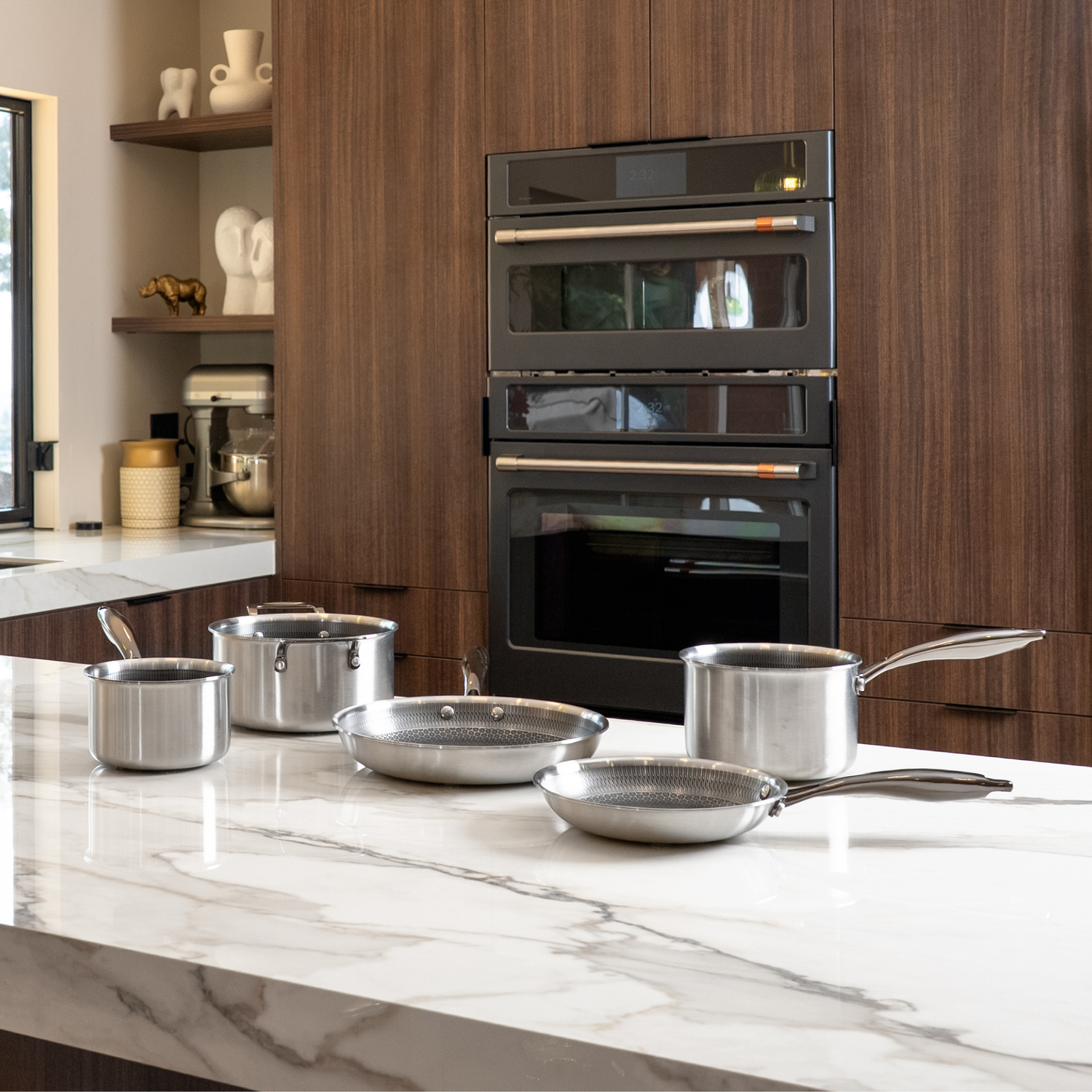
An Invisacook kitchen island induction cooktop changes the role of the island. Instead of dedicating its best real estate to visible burners, grates, and knobs, you can cook directly through a porcelain surface, then use that same surface for serving, homework, cocktails, or a family meal. When the cookware comes off, the cooking zone disappears.
That is not a novelty. For a high-end renovation, it is a design decision with daily consequences: more usable counter space, a cleaner sightline through the room, and serious induction performance without the visual weight of a conventional range or glass cooktop.
What an Invisacook Kitchen Island Induction Cooktop Changes
A traditional island cooktop announces itself from every angle. Even premium gas and glass-top induction models divide the countertop into cooking territory and everything-else territory. That can work in a utilitarian kitchen. It is less compelling when the island is meant to be the architectural center of an open-plan home.
Invisacook Through-surface induction takes a different approach. The induction components sit below a compatible porcelain countertop. Specialized cookware activates the cooking zones from above, while the porcelain remains continuous across the island. There are no exposed burners, no grate lines, and no black glass panel interrupting the slab.
The result is a kitchen that can shift roles quickly. Prepare dinner, move the pan, wipe the surface, and set out a buffet. Host guests around the island without asking them to lean around a raised appliance. In a smaller kitchen, that recovered square footage can matter as much as the cooking function itself.
This is why Invisacook invisible induction is especially compelling for large porcelain islands. Porcelain already delivers the slim profile, consistent color, and refined look designers want. A through-surface cooking system lets the material continue uninterrupted instead of forcing a visual compromise at the center of the room.
Fast Heat Without an Exposed Cooktop
Invisacook Induction heats the pan rather than heating an element and waiting for that element to transfer heat into cookware. That direct energy transfer is why induction can boil water in under two minutes in the right setup and why it responds quickly when you lower the temperature.
A properly specified Invisacook invisible induction system can deliver cooking temperatures up to 400°F while keeping the surrounding counter much cooler than a gas burner or radiant electric surface. The countertop may warm from contact with a hot pan, but it is not the heat source. Remove the cookware and the active cooking zone stops generating heat.
That difference has practical value for families, entertaining spaces, and kitchens where the island sees constant traffic. It also changes cleanup. There are no burner wells, burner caps, or grease-catching grates to scrub. Once the pan is removed and the surface has cooled from residual pan heat, a simple wipe restores the countertop.
Efficiency is another part of the case. Invisacook Induction systems typically transfer roughly 83% to 90% of their energy into the pan, compared with the significant heat loss associated with open-flame gas cooking. You get less excess heat released into the room, which is welcome during a California summer and in tightly planned, energy-conscious homes.
The Countertop Is Part of the Appliance
The most important planning point is also the one conventional cooktop shoppers do not expect: the countertop is not just a finish material. It is part of the cooking system.
Through-surface induction is designed for approved porcelain materials and specified thicknesses. Not every slab, installation method, adhesive, support strategy, or fabricator detail is appropriate. Natural stone, quartz, solid surface, wood, and standard laminate should not be assumed compatible simply because they look durable. This is a technical installation, not a cooktop that can be dropped into any existing cutout.
Start the conversation before the countertop is ordered or fabricated. The appliance layout, porcelain selection, zone placement, electrical supply, ventilation considerations, and cabinetry all need to work together. A well-designed installation feels effortless because the planning happened early.
Electrical and cabinet planning
Each Invisacook system has its own electrical requirements based on the number of cooking zones and selected configuration. Your electrician should confirm the dedicated circuits, load capacity, wiring path, and local code requirements before cabinetry is finalized. The Invisacook equipment below the counter also needs the required clearance and ventilation space.
This is not a reason to avoid the concept. It is a reason to treat it like the premium integrated appliance it is. A luxury kitchen already coordinates plumbing, refrigeration panels, lighting, ventilation, stone, and custom millwork. Invisacook Invisible induction deserves that same level of coordination.
Zone placement matters
An Invisacook one-burner system can create a discreet coffee, sauce, or secondary cooking station. Two burners suit many compact islands and entertaining spaces. Three, four and five-burner configurations support a more complete cooktop replacement for homeowners who want the island to be the primary cooking location.
Placement should follow how you cook, not just what looks balanced on a rendering. Consider where you set hot pans, where guests sit, whether a ceiling hood is planned, and how far the zones are from the sink and refrigerator. A designer can preserve symmetry while still giving the cook enough working room around each zone.
The Trade-Offs Worth Understanding
Am Invisacook kitchen island induction cooktop is not the right answer for every project. It asks for compatible porcelain, early coordination, specialized cookware, and a budget that reflects custom electrical and fabrication work. If you are replacing a cooktop after the counters are already installed, a conventional induction unit may be the more practical route.
Cookware also matters. Invisacook Invisible systems use purpose-built InvisaCookware designed to transfer induction energy through the porcelain surface effectively. That means this is not a place to assume every magnetic pot in the cabinet will perform the same way. The cookware is part of the performance equation.
Ventilation should be evaluated honestly as well. Induction eliminates combustion gases and substantially reduces excess heat, but it does not eliminate steam, smoke, or cooking odors from searing, frying, and high-heat cooking. Depending on the menu and local code, you may still want a well-planned overhead hood or downdraft solution.
For homeowners who love the theatrical look and tactile control of open-flame gas, Invisacook invisible induction represents a different cooking experience. It is quiet, precise, and architectural rather than performative. For many modern kitchens, that is exactly the point.
A Better Island for Cooking and Living
The strongest reason to choose Invisacook technology is not that it hides an appliance. It is that it gives the island more than one job.
During weekday cooking, it is a high-performance induction surface. During a dinner party, it can become a serving station with no visible burners competing with the tableware. The next morning, it is an uninterrupted porcelain counter for breakfast, work, or flowers. That flexibility is difficult to achieve with even the most beautiful conventional cooktop.
At Invisacook California, the selection process is built around that larger picture. The right system is matched to the porcelain, island layout, cooking habits, electrical plan, and installation team, with direct guidance from Ben before the fabrication decisions become expensive to change.
Specify It Before the Slab Is Cut
The ideal time to choose Invisacook through-surface induction is at the beginning of kitchen design development, when the island is still a concept rather than a finished countertop. Bring Ben, the Invisacook specialist, kitchen designer, fabricator, electrician, and contractor into the conversation early. Confirm the approved porcelain material, system size, zone layout, cookware, clearances, and electrical requirements before the final shop drawings are released.
That preparation protects the investment and gives the finished kitchen its strongest advantage: the island does not look like it was built around an appliance. It looks like it was designed to do more.
For a homeowner who wants clean lines without giving up real cooking power, that is the useful question to bring to the first design meeting: not where the cooktop will go, but what the island should become when cooking is over.
Call Ben with any questions 213-729-6101



Leave a comment
This site is protected by hCaptcha and the hCaptcha Privacy Policy and Terms of Service apply.