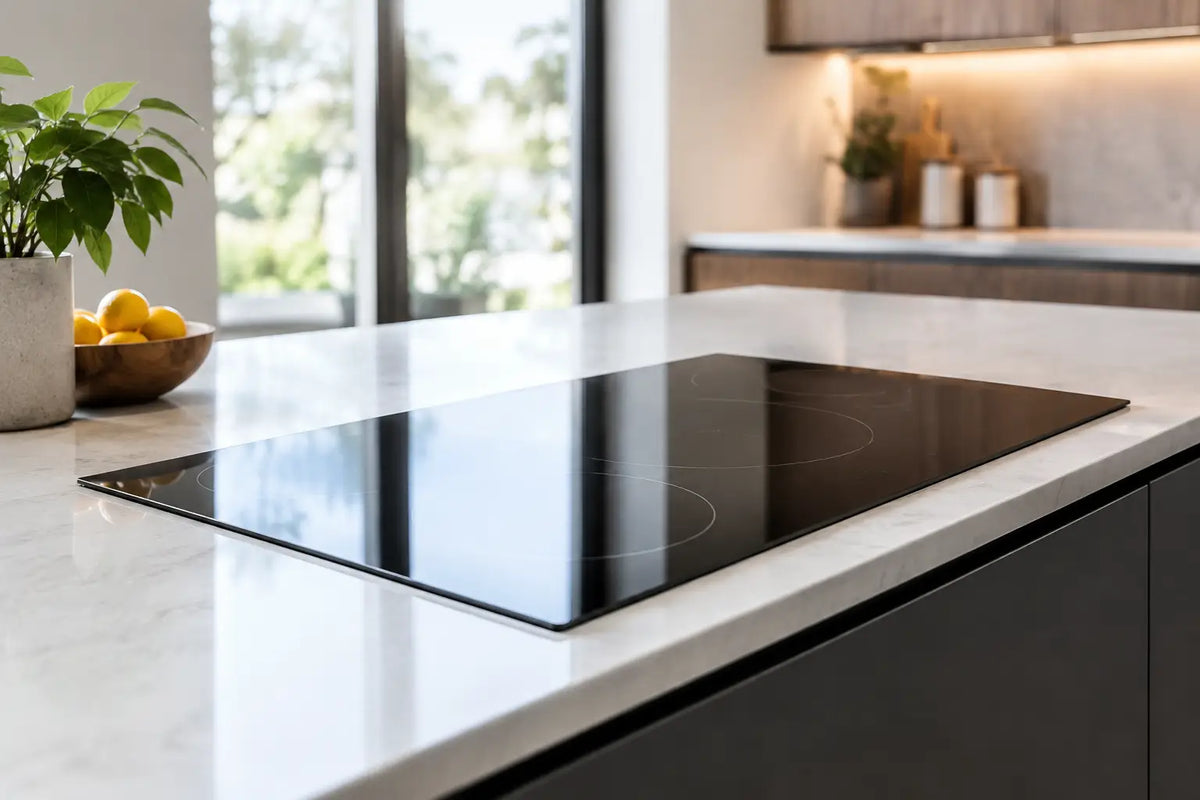
A porcelain island with no burners, no grates, and no glass cooktop can still bring a pot to a rolling boil in under two minutes. This modern renovation hidden induction example shows why architects and homeowners are rethinking the kitchen island: it does not have to look like an appliance to perform like one.
The result is a kitchen that shifts with the day. In the morning, the island is a clean coffee and breakfast surface. At dinner, it becomes a high-performance cooking zone. When guests arrive, the same porcelain slab can return to serving, dining, or gathering space without a visible burner in sight.
The modern renovation hidden induction example
Picture a full-depth porcelain island in a newly renovated California home. The homeowners wanted the quiet geometry of a single slab, with waterfall ends and no interruption at the center. They also wanted the island to do real work. A decorative prep surface was not enough.
Instead of installing a conventional gas cooktop or cutting a glass induction unit into the porcelain, the renovation team planned for a four-burner through-surface induction system beneath the countertop. Cooking zones were subtly marked during fabrication, if desired, or left completely unmarked for a more minimal look. The technology stayed below the surface. The porcelain remained the visual feature.
That choice changed the entire kitchen layout. Without a raised cooktop taking over the island, the slab could act as a generous prep counter and a social table. There were no burner grates collecting grease, no knobs breaking the edge line, and no black glass panel competing with the countertop material.
This is not induction disguised as a concept piece. With compatible cookware placed over an active zone, the system delivers precise induction heat through approved porcelain. Water can boil quickly, pans can reach cooking temperatures up to 400°F, and the surface around the cookware stays comparatively cool because heat is generated in the pan rather than by a hot element.
Why hidden induction changes the renovation conversation
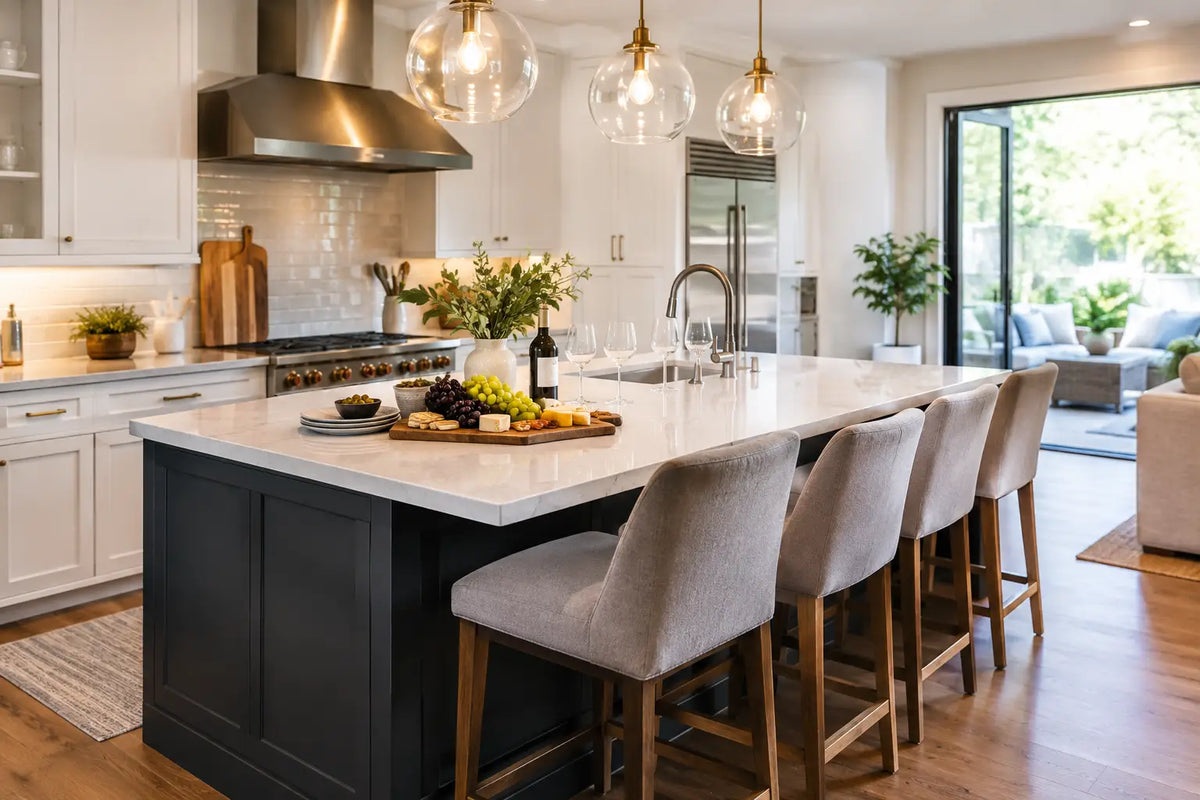
A visible cooktop dictates the look of an island. It creates a permanent appliance zone, even when no one is cooking. For some kitchens, that is perfectly acceptable. A professional-style range can be the right focal point in a traditional home, and a standard glass induction cooktop can be a practical fit for a straightforward remodel.
But a modern architectural kitchen often asks more of its centerpiece. The island may need to support homework, catered events, cocktail service, floral arranging, and family dinners. A clear porcelain surface gives the room back its most valuable real estate.
Hidden induction also makes cleanup radically simpler. A conventional gas cooktop has burner caps, crevices, and grates. A typical induction cooktop has a glass surface with a visible frame or cutout. A through-surface system leaves a continuous porcelain plane. Once the cookware is removed and the area is cool enough to wipe, spills and splatters have nowhere to hide.
There is a safety advantage as well. Induction heats magnetic cookware directly, not an exposed flame or a glowing coil. That can be especially appealing for families with children, pet owners, and homeowners who use an island as a frequent gathering point. The pan is hot after cooking, of course, and basic kitchen safety still applies. The difference is that the countertop is not functioning like a traditional hot burner.
The design decisions that make it work
The best hidden-induction renovations begin before the slab is selected. Porcelain is not one generic material, and a successful installation depends on using a countertop approved for through-surface induction. Thickness, composition, finish, fabricator experience, and the planned location of the cooking zones all matter.
The kitchen designer should decide early whether the cooking zones will be visibly indicated. Some homeowners prefer small etched marks or discreet icons, especially if several people cook in the home. Others want the island to appear entirely uninterrupted. Both approaches can work. The right choice depends on how intuitive the household wants the cooking experience to be and how pure the design vision needs to remain.
Placement deserves equal attention. A system set too close to a seating overhang can put hot cookware near guests. A system centered on a very large island may be ideal for a cook who wants open space on both sides, while a family that preps heavily may prefer zones shifted toward one end. The island should be planned around actual behavior, not just a rendering.
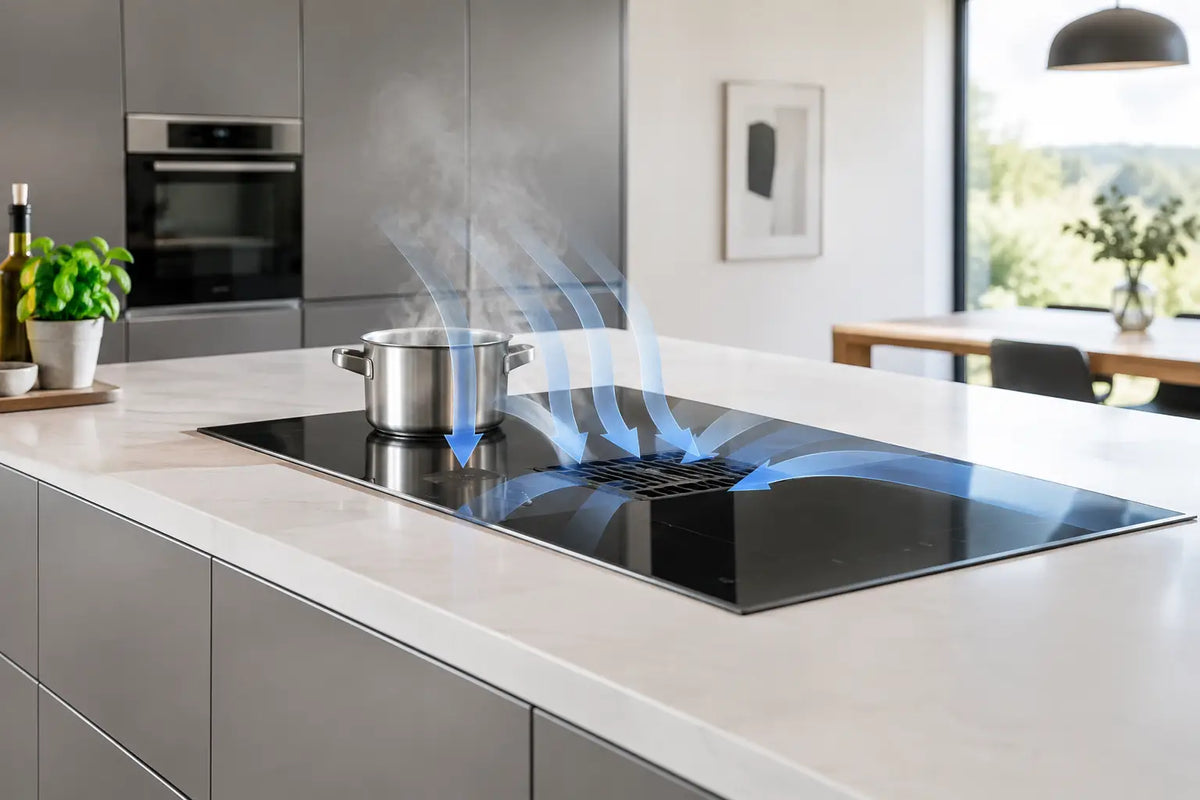
Ventilation is another renovation decision, not an afterthought. Induction removes combustion from the kitchen, which means there is no gas flame producing combustion byproducts. Yet sautéing, frying, and high-heat cooking still create steam, smoke, and odors. Depending on the cooking style, local code, and project design, a ceiling hood, downdraft solution, or another ventilation strategy may still be appropriate.
Performance depends on the details
Invisible design does not eliminate the need for proper specifications. Through-surface induction requires compatible magnetic cookware, adequate electrical capacity, and correct installation beneath the porcelain. It is a premium system that should be coordinated among the homeowner, kitchen designer, electrician, fabricator, and installation team.
Cookware is especially important. Flat-bottomed magnetic pans create the best contact and heat response. InvisaCookware is designed for this application, but many quality induction-ready pots and pans can work when they meet the required compatibility guidelines. A simple magnet test can indicate whether a pan is induction capable, although pan size, base construction, and overall condition also influence performance.
Electrical planning should happen while walls are open and before cabinetry is finalized. Depending on the burner configuration, the system requires dedicated power and should be installed according to manufacturer specifications and local electrical code. An experienced electrician can confirm load requirements and panel capacity before the countertop is fabricated.
This is where knowledgeable dealer support matters. The appliance, porcelain, electrical plan, and installation sequence have to agree. Invisacook California helps homeowners and trade professionals evaluate those details before an order becomes an expensive fabrication decision.
Where this approach fits best
A hidden induction system is strongest when the kitchen island is meant to be both functional and architectural. It is an excellent match for contemporary new builds, luxury condo renovations, clean-lined coastal homes, and open-plan kitchens where the cooking area is visible from the living space.
It can also solve a common renovation tension: one partner wants serious cooking performance, while the other wants a calm, appliance-free kitchen. Rather than choosing between a sculptural island and a usable cooktop, the project can support both.
There are trade-offs. Hidden induction is not the lowest-cost route to a functional kitchen, and it is not a casual late-stage substitution for a standard cooktop. It requires approved porcelain, coordinated trades, compatible cookware, and intentional planning. Homeowners who love cooking over an open gas flame may also prefer the familiar visual feedback of gas, even with induction's faster, more efficient heating and easier cleanup.
For the right renovation, though, the payoff is unusually clear. The countertop stops being a background material and becomes the kitchen's most capable surface.
Before choosing a slab or finalizing an island drawing, decide what that surface should do after the meal is over. If it needs to disappear back into the room, hidden induction gives modern kitchen design a powerful new answer.

Leave a comment
This site is protected by hCaptcha and the hCaptcha Privacy Policy and Terms of Service apply.