
A porcelain island can be a prep surface, serving buffet, homework table, and statement piece - right up until dinner starts cooking on it. That is the appeal of induction cookware for porcelain countertops paired with through-surface induction: no visible burners, no cutouts interrupting the slab, and no need to reserve the island for one purpose.
The cookware is not an afterthought. It is the direct connection between an induction system beneath the porcelain and the pan that creates heat. Choose the right pieces and the experience feels remarkably natural: fast boiling, responsive simmering, and a countertop that stays cooler than conventional cooking surfaces. Choose the wrong pan and performance, placement, and long-term countertop protection can suffer.
Why Cookware Matters More With Hidden Induction
A conventional induction cooktop places cookware directly on a glass surface with clearly marked cooking zones. Through-surface induction changes the architecture. The induction modules sit below an approved porcelain slab, allowing the countertop itself to remain continuous and visually quiet.
That added material between the induction module and the pan means cookware must be selected for the system, not simply labeled “induction compatible.” The pan needs a highly magnetic base, the right dimensions, and a bottom designed to make stable, even contact with the porcelain. It also needs to work within the countertop thickness and installation specifications approved for the project.
This is why a random collection of induction-ready cookware is not always the best answer. Many standard pans will activate on an ordinary glass-top induction range, yet produce inconsistent results when cooking through porcelain. A system engineered for hidden cooking deserves cookware engineered to match it.
What Induction Cookware for Porcelain Countertops Needs
The core requirement is ferromagnetic material. Induction creates a magnetic field that excites the cookware itself, producing heat in the pan rather than heating an exposed burner first. If a magnet adheres firmly to the bottom of a pan, it may work with induction. But magnetic attraction alone does not guarantee the performance a concealed system is built to deliver.
A Flat, Stable Magnetic Base
Look for cookware with a broad, flat base that sits securely on the porcelain. Warped cookware creates uneven contact, which can affect heating consistency and make a pan less stable during cooking. A flat bottom also helps preserve the refined look of the countertop by minimizing unnecessary scraping or rocking across the surface.
Cast iron and many stainless-steel pans can be magnetic, but their construction varies dramatically. Some stainless cookware has an induction-compatible layer only on part of the base. Other pans have thin, uneven bottoms that are prone to hot spots. For an invisible induction installation, purpose-designed cookware provides greater confidence than guessing from a magnet test.
Proper Pan Size and Zone Coverage
Cookware should be sized to match the induction module below the surface. An undersized pan may not receive the system's full potential. An oversized pan may heat less evenly at the outer edges. The goal is not simply to make the pan turn on. It is to make it perform as intended.
This matters when planning a kitchen with one, two, three, or four hidden cooking zones. A compact saucepan for sauces, a medium skillet for everyday meals, and a larger sauté pan or stockpot for entertaining should all fit the cooking layout before the countertop is fabricated. Your cooking habits should shape the system selection, not the other way around.
Heat-Aware Design
Porcelain is exceptionally durable, stain resistant, and well suited to luxury kitchen design. Still, a hidden induction installation has specific operating rules because the countertop is part of the cooking system. Cookware designed for through-surface use may include features that support controlled heat transfer and safe operation over the porcelain.
This is particularly valuable during high-heat cooking. A pan that is left empty on high can climb in temperature quickly on any induction system. With concealed induction, proper cookware and disciplined use help protect both cooking results and the countertop assembly. Heat the pan with food or oil inside, avoid prolonged empty preheating, and use the recommended settings for the cookware and system.
The Materials You Can Use - and the Trade-Offs
Induction is not limited to one pan material, but each option has a different personality in the kitchen.
Magnetic stainless steel is a practical everyday choice. It is durable, easy to maintain, and available in cookware shapes that suit everything from eggs to pasta. Multi-clad stainless performs especially well when it combines a responsive magnetic exterior with an aluminum or copper core for more even heat distribution.
Cast iron and enameled cast iron offer strong induction response and excellent heat retention. They are ideal for searing, braising, and moving from cooktop to oven. Their trade-off is weight. A rough cast-iron base can also scratch or mark a countertop if dragged, so lift it rather than slide it and keep the underside clean and dry.
Carbon steel responds quickly and can develop a naturally slick cooking surface with seasoning. It is a favorite for high-heat tasks, but it can warp if overheated or rapidly cooled. That makes controlled temperature management especially important.
Aluminum, copper, glass, and ceramic cookware generally will not work unless they have a bonded magnetic induction base. Even then, not every induction-base pan is appropriate for cooking through porcelain. Compatibility should be confirmed for the full countertop-and-cookware system.
Avoid These Common Mistakes
The most expensive cookware mistake is assuming “induction compatible” means “approved for concealed induction.” It may work, but it may not deliver the speed, temperature control, or safety margin expected from a premium installation.
Another mistake is buying cookware after the countertop is installed. In a conventional kitchen, that may be a minor inconvenience. In an architectural island designed around invisible cooking zones, cookware should be part of the early conversation with the kitchen designer, fabricator, electrician, and induction specialist. It affects how the kitchen functions on day one.
Do not use the porcelain surface as a landing area for hot cookware that has just come out of the oven unless the porcelain manufacturer and installation guidance allow it. Cooking over an active induction zone is different from placing an extremely hot pan on another part of the slab. Respect the countertop specifications for the exact porcelain material used in your project.
Finally, avoid treating the cooking zone like an ordinary worktop while it is active. Keep metal utensils, lids, and other magnetic items away from the active area. The beauty of an invisible system is that the island returns to a clean, usable surface when cooking ends. During cooking, it still deserves the same attention you would give any high-performance appliance.
Care That Keeps the Countertop Looking Architectural
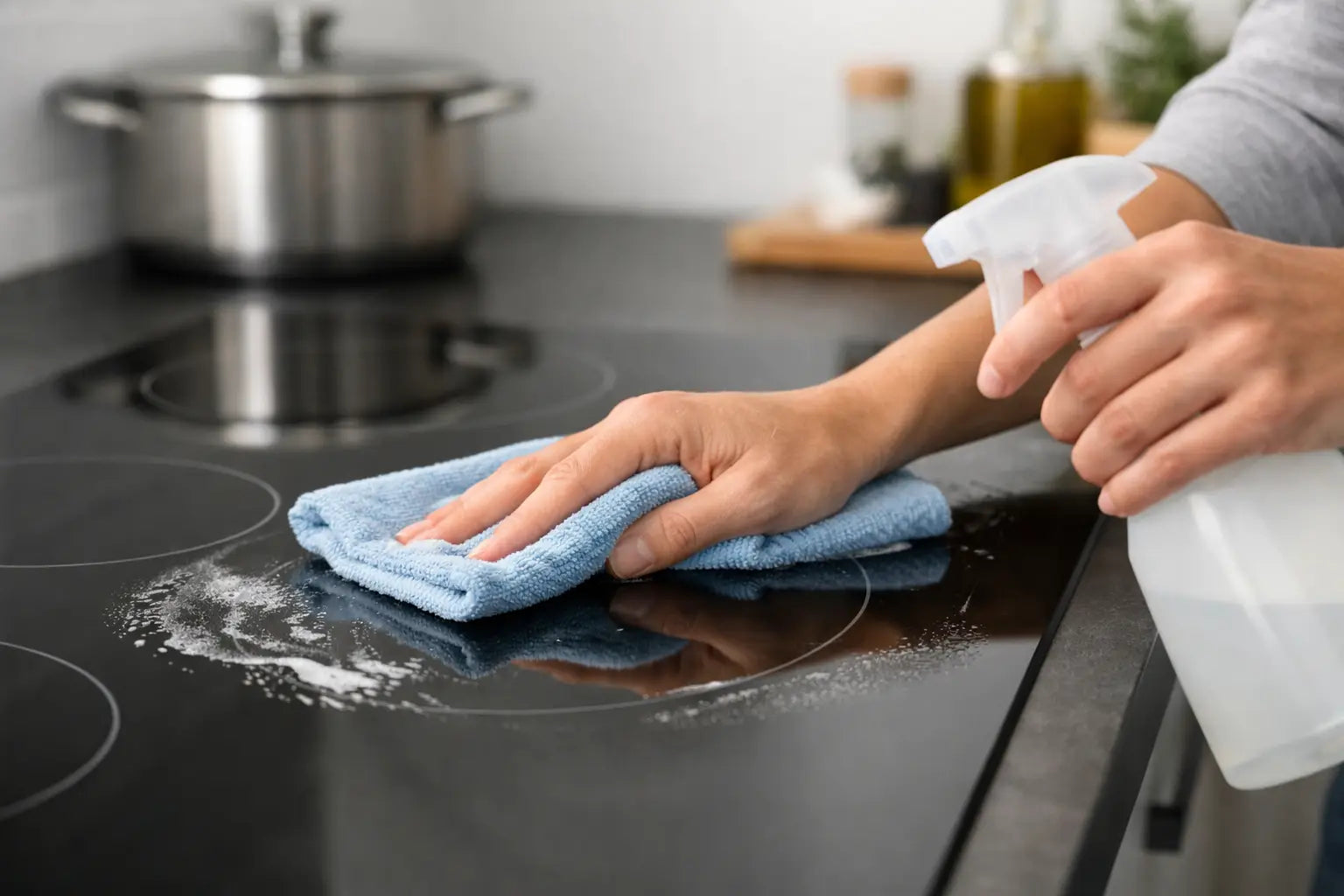
One of porcelain's strongest advantages is cleanup. Since induction heats the pan instead of an exposed glass element, spills are less likely to bake onto the cooking surface. Once the pan is removed and the area is safe to touch, wipe the countertop with a soft cloth and a cleaner suitable for the porcelain manufacturer’s recommendations.
The bottom of the cookware deserves equal attention. Sugar, grit, oil residue, or a small piece of food caught beneath a pan can create marks or drag across any refined surface. Check the pan before placing it on the island, especially after outdoor cooking, storage, or dishwasher cycles.
Use cookware that is in good condition. Replace pans with visibly warped bases, loose handles, or damaged coatings. Premium kitchens are designed around details, and a dependable pan is as much a part of the experience as the porcelain slab itself.
Build the Kitchen Around the Way You Cook
The best invisible kitchen does not ask you to sacrifice real cooking for a minimalist photo. It gives you both. A properly planned through-surface induction system can reach cooking temperatures up to 400°F, boil water in under two minutes in the right conditions, and keep the island visually uninterrupted when it is not in use.
Invisacook California helps homeowners, designers, and fabricators align approved porcelain, electrical planning, installation details, and compatible InvisaCookware before decisions become expensive changes. That guidance matters because every kitchen is different: slab thickness, cooking-zone count, cabinetry, ventilation, and family routines all influence the final specification.
Select cookware with the same intention you bring to the porcelain itself. The right pan turns a beautiful island into a serious cooking surface - then lets it disappear back into the room when the meal is over.


Leave a comment
This site is protected by hCaptcha and the hCaptcha Privacy Policy and Terms of Service apply.