A porcelain island with no visible burners changes the rhythm of the kitchen. After dinner, there is no glass cooktop frame, grate, or burner well collecting splatter. There is simply a clean architectural surface ready to become a serving station, prep area, or gathering place.
Knowing how to clean invisible cooktop surfaces correctly protects that effect. The good news is that through-surface induction makes cleanup remarkably simple: the porcelain itself does not generate heat, and a properly selected porcelain countertop is nonporous and highly resistant to staining. Still, it is a premium countertop surface. Use the right method, address spills promptly, and avoid harsh tools that can dull its finish.
Start With a Cool, Clear Surface
Wait until cooking is complete and remove the cookware and any approved cooking interface from the countertop. Through-surface induction heats magnetic cookware rather than an exposed burner, so the porcelain generally remains much cooler than a conventional glass cooktop. However, the area directly beneath a hot pan can retain warmth from contact and radiant heat.
Let the surface cool enough to touch comfortably before cleaning. This is not just a safety step. Spraying cleaner onto a warm surface can leave streaks or cause it to dry before you can wipe it away.
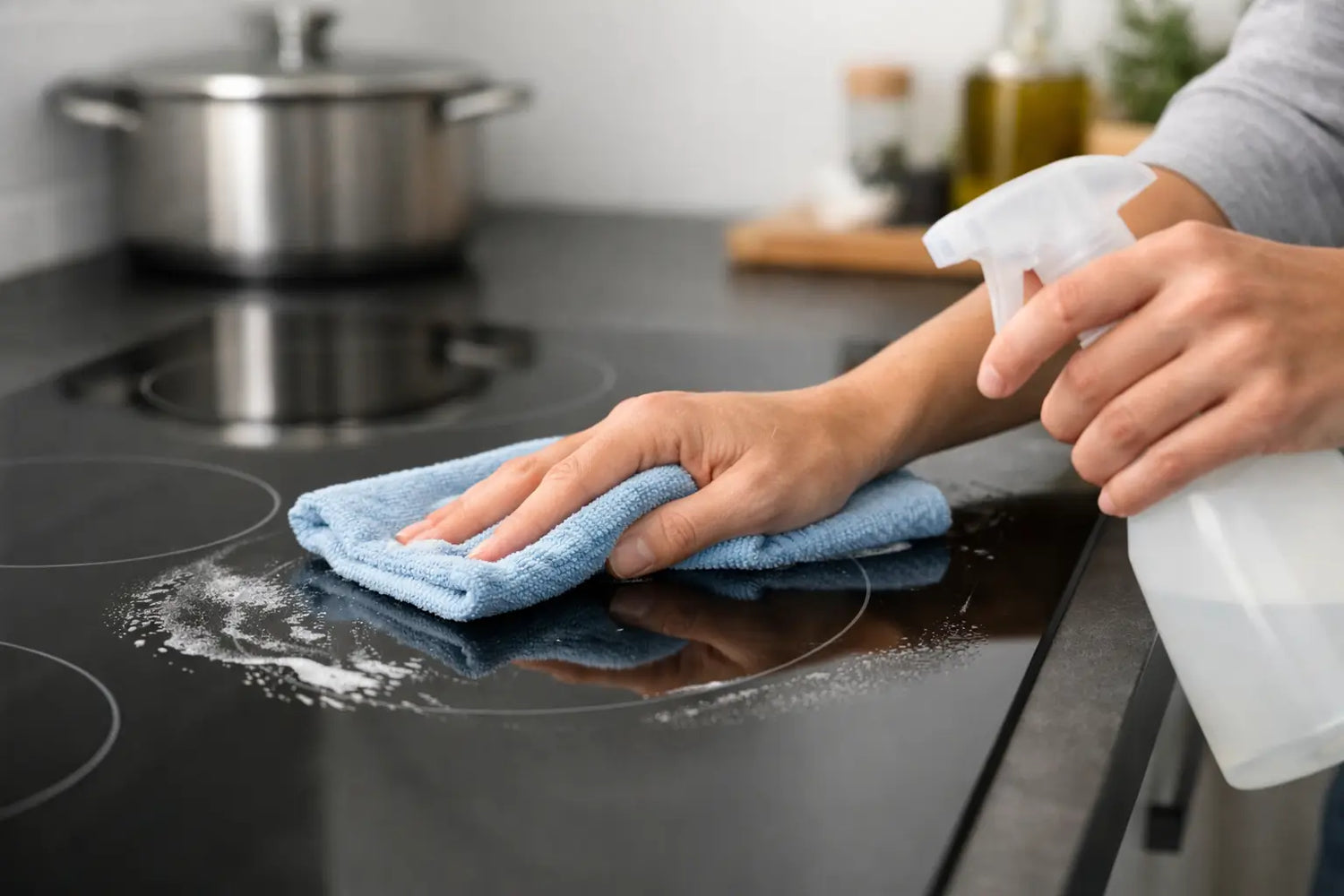
For everyday cleaning, start with a soft microfiber cloth dampened with warm water. Wipe the cooking area and the surrounding countertop in broad, overlapping passes. A second dry microfiber cloth removes moisture and restores the crisp, low-sheen or polished look of the porcelain.
That is often all the cleaning an invisible induction surface needs after normal cooking.
The Everyday Method for an Invisible Cooktop
The best routine is short enough to do after every use. Wipe away crumbs, oil mist, sauce drips, and moisture before they dry onto the countertop. Porcelain is durable, but a quick wipe prevents residue from becoming a scrubbing project.
For grease or fingerprints, use a small amount of mild, pH-neutral cleaner that is approved for your specific porcelain slab. Apply it to the cloth rather than flooding the countertop. Then wipe the area clean with a damp cloth and dry it immediately.
Avoid treating your invisible cooktop like a restaurant griddle. The countertop is a work surface, not a surface intended for direct contact with food or grease. Keep cooking contained to the compatible cookware and any system-specified protective accessory. This preserves both the countertop finish and the clean, burner-free visual that makes the installation special.
Clean the Cooking Accessories Separately
If your Invisacook setup includes a protective cooking mat or other approved interface, clean that piece separately according to its care instructions. Most day-to-day residue can be removed with warm water, mild dish soap, and a soft sponge or cloth. Dry it completely before putting it away or returning it to the cooking zone.
Do not assume every silicone mat, trivet, or pan protector is suitable for through-surface induction. Use accessories designed or approved for the system. The correct accessory supports efficient heat transfer while helping protect the porcelain from cookware movement and cooking residue.
How to Remove Dried Spills and Grease
A dried sauce splash or a ring of oil does not call for aggressive scrubbing. Start gently and give the residue time to release.
Place a warm, damp microfiber cloth over the spot for several minutes. Once softened, wipe with a mild pH-neutral cleaner approved for porcelain. If a trace remains, repeat the process rather than increasing pressure or reaching for an abrasive pad.
For stubborn greasy film, use a porcelain-safe degreaser only if the countertop manufacturer permits it. Follow the label directions closely, then rinse the area with a clean damp cloth and dry it. Cleaner residue can leave a haze that looks like a stain when it is really just product left on the surface.
If the countertop has a textured, matte, or heavily veined finish, check the fabricator's care recommendations before using any specialized cleaner. Different porcelain brands and finishes can have different guidance. Your countertop fabricator remains the final authority on surface-care products.
What Not to Use
Porcelain is hardwearing, but invisible design deserves careful maintenance. Skip harsh products and tools that create unnecessary risk. Avoid the following:
- Steel wool, scouring pads, abrasive powders, and rough scrub brushes
- Strong acids, oven cleaners, drain cleaners, and highly caustic degreasers
- Wax, polish, or coating products that can leave a film on the countertop
- Knives, metal scrapers, or sharp tools used to pry up dried material
Protect the Countertop While You Cook
The cleanest invisible cooktop is one that is set up correctly before the first pan hits the surface. Use compatible induction cookware with a stable, clean base. Before cooking, check the bottom of the pan for stuck-on grit, sugar, or oil residue. Those small particles can transfer to the countertop or create marks as cookware is moved.
Lift cookware instead of sliding it across the porcelain. This is a smart habit for every premium countertop, whether it is porcelain, natural stone, or quartz. The porcelain may be engineered for exceptional durability, but avoiding unnecessary friction protects its finish over years of daily use.
Also keep pot handles, lids, and utensils organized. A boiling pot can drip when moved from the cooking zone to the sink, and a lid set directly on the counter can leave moisture behind. A quick wipe after cooking is easier than dealing with dried mineral spots later.
Managing Boil-Overs and High-Heat Cooking
Induction performance is fast. Water can reach a boil in under two minutes with the right equipment and power setting, which is excellent for weeknight cooking but gives you less time to look away. Use cookware sized appropriately for the job, leave room at the top of the pot, and reduce power once a rapid boil is reached.
If a boil-over happens, turn off the cooking zone, move the cookware safely, and let the area cool. Wipe the spill as soon as practical with warm water and a microfiber cloth. Sugary sauces, starches, and dairy should not be left to bake onto any kitchen surface, even one as durable as porcelain.
For oil splatter, blot first rather than spreading it outward. Then follow with a damp cloth and a porcelain-safe cleaner if needed. This prevents a thin greasy film from migrating across a large portion of the island.
Keep the Invisible Design Actually Invisible
A seamless induction island looks best when the entire countertop receives consistent care, not just the active cooking zone. Wipe down the full island after entertaining, especially if guests have used it as a buffet or dining surface. Food residue, drink rings, and handprints can be more visible on a large uninterrupted slab than on a divided countertop.
Use soft cloths dedicated to countertop care. A cloth that has picked up grit from the floor, grill, or outdoor furniture can introduce scratches to any refined surface. Wash microfiber cloths without fabric softener so they remain absorbent and do not leave a residue behind.
If you notice a persistent mark, discoloration, or surface change that does not respond to the approved cleaning method, stop experimenting with stronger chemicals. Take a photo, identify the countertop brand and finish, and consult the fabricator or surface manufacturer. Premium materials reward a measured response, not trial-and-error cleaning.
Common Questions About Cleaning an Invisible Cooktop
Can I use glass cooktop cleaner on porcelain?
Not automatically. Glass cooktop cleaners are formulated for glass-ceramic surfaces and may contain abrasives, acids, or polishing agents that are unnecessary for porcelain. Use a cleaner specifically approved for your countertop material and finish.
Do I need to seal a porcelain invisible cooktop?
Most porcelain slabs are nonporous and do not require sealing. That is one reason they work so well for a high-use kitchen island. Follow the guidance for your exact slab, particularly if it has a specialty finish or a fabricator-applied treatment.
Will heat stain the porcelain?
A properly designed through-surface induction installation uses approved porcelain material, correct thickness, compatible cookware, and the required installation approach. Normal cooking should not stain the surface. Problems are more likely to come from residues left behind, improper accessories, or using a countertop material that was never approved for the system.
A hidden cooktop should make your kitchen easier to live in, not add another delicate appliance to maintain. Keep a microfiber cloth nearby, clean spills while they are fresh, and use only countertop-approved products. The reward is a cooking surface that performs at dinner time and disappears beautifully when the evening is over.



Leave a comment
This site is protected by hCaptcha and the hCaptcha Privacy Policy and Terms of Service apply.