
A porcelain island can be a breakfast bar at 8 a.m., a serious cooking station at 6 p.m., and a clean serving surface by 7. That versatility raises a fair question: is Invisacook invisible induction safe when the cooktop sits beneath the countertop rather than in plain view?
For the right countertop, cookware, electrical setup, and installation, Invisacook through-surface induction is designed to be exceptionally safe. It removes open flames, exposed heating coils, and permanent burner cutouts from the kitchen. But it is not magic, and it is not a solution to install beneath just any slab. The safety of an invisacook invisible induction kitchen depends on respecting the system's engineering from the first countertop selection through daily use.
Why Invisacook invisible induction is safer than it looks
Invisacook Invisible induction uses an induction generator mounted below an approved porcelain countertop. Instead of heating a burner or the counter directly, the generator creates a magnetic field that heats compatible magnetic cookware. The pan becomes the heat source. That distinction is the foundation of induction safety.
With gas, a visible flame can ignite towels, loose sleeves, or cooking grease. With conventional electric, the glass surface itself gets hot and retains heat after the pan is removed. Through-surface Invisacook induction eliminates the flame and does not rely on a glowing element beneath the surface.
The porcelain above an active cooking zone can become warm from heat conducted by the pan, especially during long, high-heat cooking. It is not a permanently cold surface. Still, it cools faster than a traditional radiant electric cooktop and does not produce the same exposed, high-temperature burner hazard. That is a meaningful advantage for homes with children, pets, and busy entertaining spaces.
Is Invisacook invisible induction safe around children and pets?
It can be one of the smartest choices for a family-focused luxury kitchen. There is no flame to reach toward, no hot coil glowing red, and no raised burner edge to catch a sleeve or spill. When no compatible pan is present, the system is not actively transferring cooking energy into the countertop.
That said, safe cooking habits still matter. A recently used pan can be dangerously hot, and the porcelain directly beneath it may be warm. Pan handles should face inward, cookware should be centered over the marked cooking zone, and children should be taught that an active countertop is still a cooking surface even when it looks like a beautiful uninterrupted island.
The visual restraint of Invisacook invisible induction is a benefit, but it also changes behavior. Guests may not realize where the cooking zones are, particularly at a party. Clear zone markers, a quick verbal cue, and keeping hot cookware attended are simple ways to preserve the open, multifunctional feel of the island without sacrificing awareness.
The countertop is part of the safety system
An Invisacook invisible induction system is only as safe as the material above it. Approved porcelain is engineered to handle the thermal demands of through-surface induction, while other countertop materials may crack, discolor, delaminate, or interfere with performance. A beautiful slab is not automatically an induction-ready slab.
Porcelain is especially well suited because it is dense, heat resistant, nonporous, and designed for demanding kitchen use. Yet brand approval, thickness, fabrication details, and installation requirements still matter. The system needs a specified mounting arrangement beneath the counter so heat can dissipate properly and the Invisacook can operate as designed.
This is why Invisacook invisible induction should be planned alongside the countertop fabricator, cabinet team, electrician, and kitchen designer. Retrofitting may be possible in certain projects, but it is not simply a matter of placing Invisacook under an existing island. The underside of the porcelain, support structure, ventilation space, and exact location of seams or cutouts all need careful review.
Why proper ventilation matters
The Invisacook induction components generate a small amount of heat while delivering power to the cookware. A correct installation keeps the equipment accessible, follows required clearances, and provides the dedicated electrical supply specified for the chosen one-, two-, three-, four or five-burner system. Premium kitchens are built around details that disappear from view. This is one detail that should never be improvised.
The electrical side: safe when installed correctly
Invisacook is an electric appliance, so electrical safety begins with a properly sized dedicated circuit and professional installation. The exact circuit requirements vary by system configuration and local code. An electrician should confirm load capacity, wiring, breaker sizing, grounding, and required protection before cabinetry is finalized. The 5 burner requires a 50amp breaker, all other units require a 30amp breaker for the 220v units. The 110v units can use a 20amp breaker.
Do not treat Invisacook as an accessory that can share power with countertop outlets, refrigeration, or lighting. A dedicated circuit protects performance and helps prevent overloaded wiring. It also gives your installer a clean, serviceable setup if the system ever needs inspection.
For homeowners considering a whole-kitchen renovation, this is often a practical advantage rather than a complication. Eliminating gas may simplify the island design, avoid routing a gas line to the cooking surface, and reduce combustion-related concerns. But an all-electric plan should be evaluated early, especially in homes with limited panel capacity.
Cookware and everyday use are part of the answer
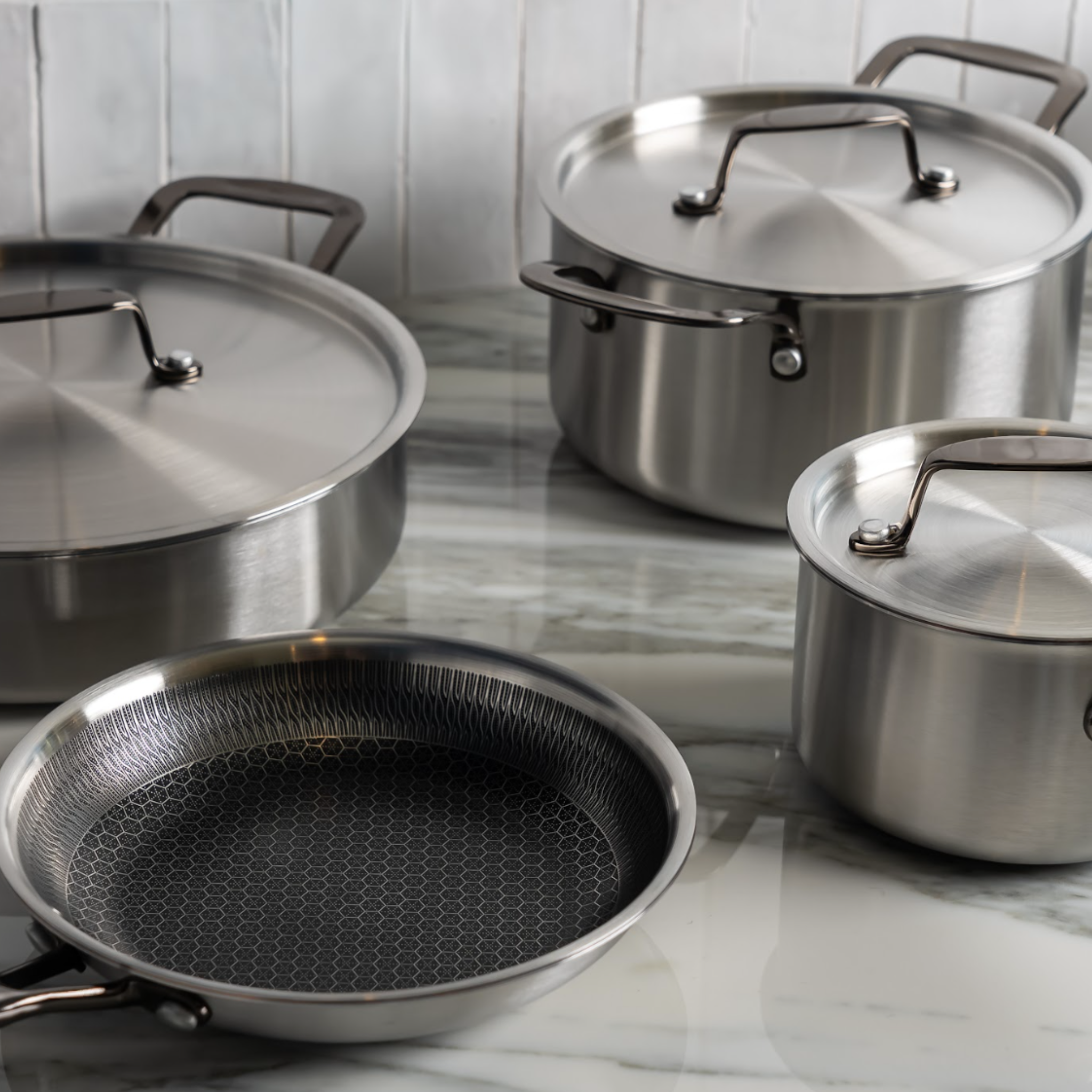
Invisacook Invisible induction requires magnetic cookware. 3, 5 or 7 ply Stainless steel pans, and purpose-built InvisaCookware are common options. Aluminum, copper, glass, and ceramic cookware will not heat unless they have an induction-compatible magnetic base. Unfortunately cast iron pans will get too hot and can damage the counter over time, so we don't recceomend them.
A simple magnet test can help identify compatible pans, but cookware made for the system provides the most predictable contact and performance. Flat-bottom cookware matters as well. It promotes efficient heat transfer, stable pan placement, and consistent cooking results across the porcelain surface.
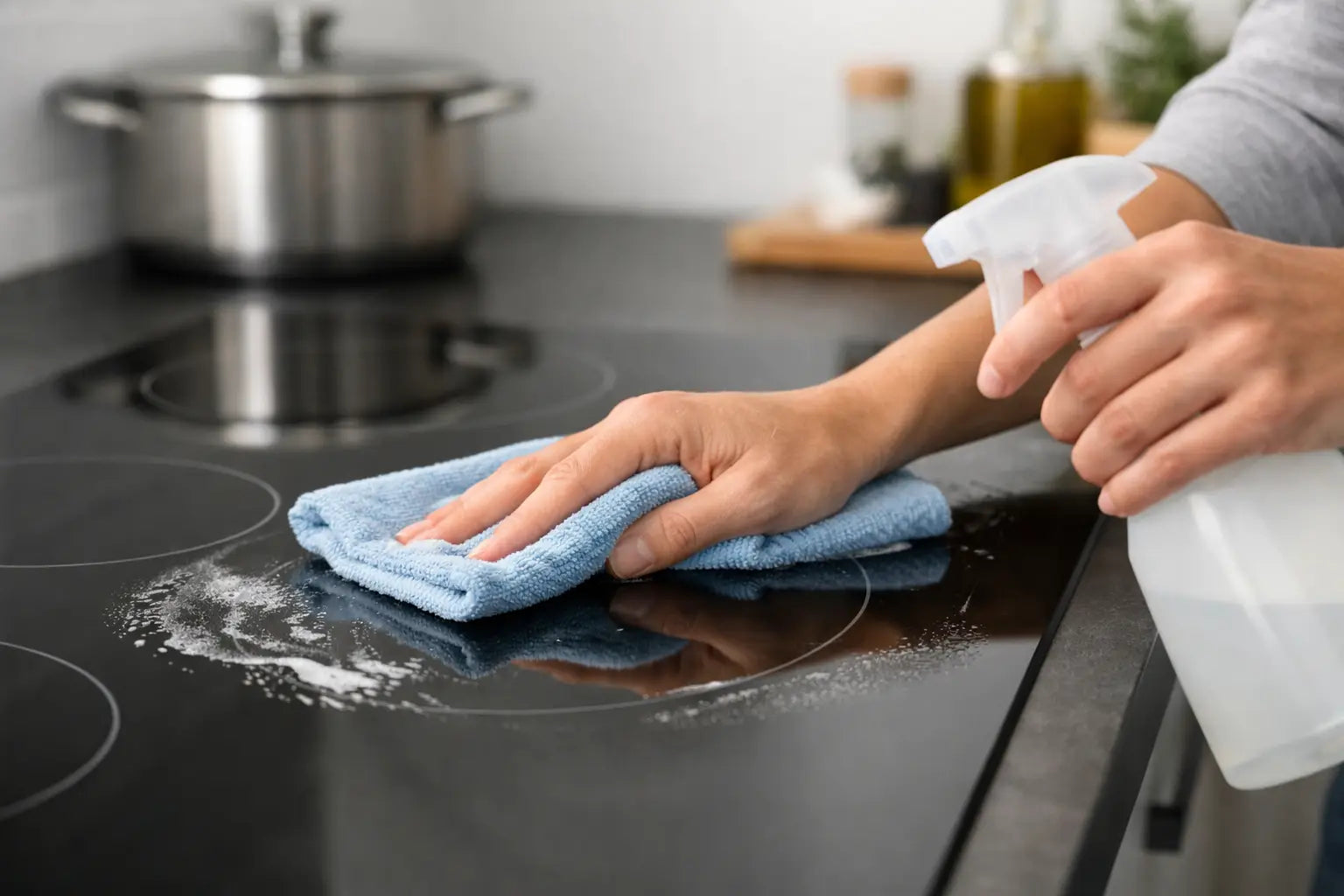
Use the cooking zones as intended. Avoid sliding abrasive cookware aggressively across the counter, and do not place hot pans outside the designated zone without a trivet. Porcelain is highly durable, but a luxury surface deserves normal care. Wipe spills after the area has cooled, particularly sugary or oily residue that can bake onto any warm surface.
Real trade-offs to understand before you specify it
Invisacook Invisible induction is not the right answer for every kitchen. It asks for more coordination than dropping a standard cooktop into a pre-cut opening. The upfront investment includes compatible porcelain, qualified fabrication, electrical work, and a precise installation plan.
It also asks cooks to adapt. There are no visible circles or knobs built into the counter, and cookware compatibility is non-negotiable. Some homeowners who love the theater and immediate visual feedback of gas will prefer a visible range. Others will see those trade-offs as the point: no burners interrupting the stone, no grates to scrub, and more usable island space when cooking is done.
For people with implanted medical devices, including pacemakers, the prudent approach is the same as with any induction appliance: consult the device manufacturer and medical professional. Modern devices often have guidance for electromagnetic fields, and the answer can depend on the individual device and its use conditions.
A safer result starts before you order
The strongest safety feature is not a single component. It is a fully coordinated system: approved porcelain, correct generator placement, proper ventilation, dedicated electrical service, compatible cookware, and homeowners who understand where and how they cook.
That is why specialist guidance matters. Invisacook California helps homeowners and project teams confirm countertop compatibility and installation requirements before an island becomes expensive to change. The goal is not merely to hide a cooktop. It is to create a surface that performs at high heat when needed and returns to being a clean, calm part of the home when it is not.
Invisible design should never mean invisible planning. When the material, installation, and daily habits are right, invisible induction gives a luxury kitchen more room to live, gather, and cook with confidence.

Leave a comment
This site is protected by hCaptcha and the hCaptcha Privacy Policy and Terms of Service apply.