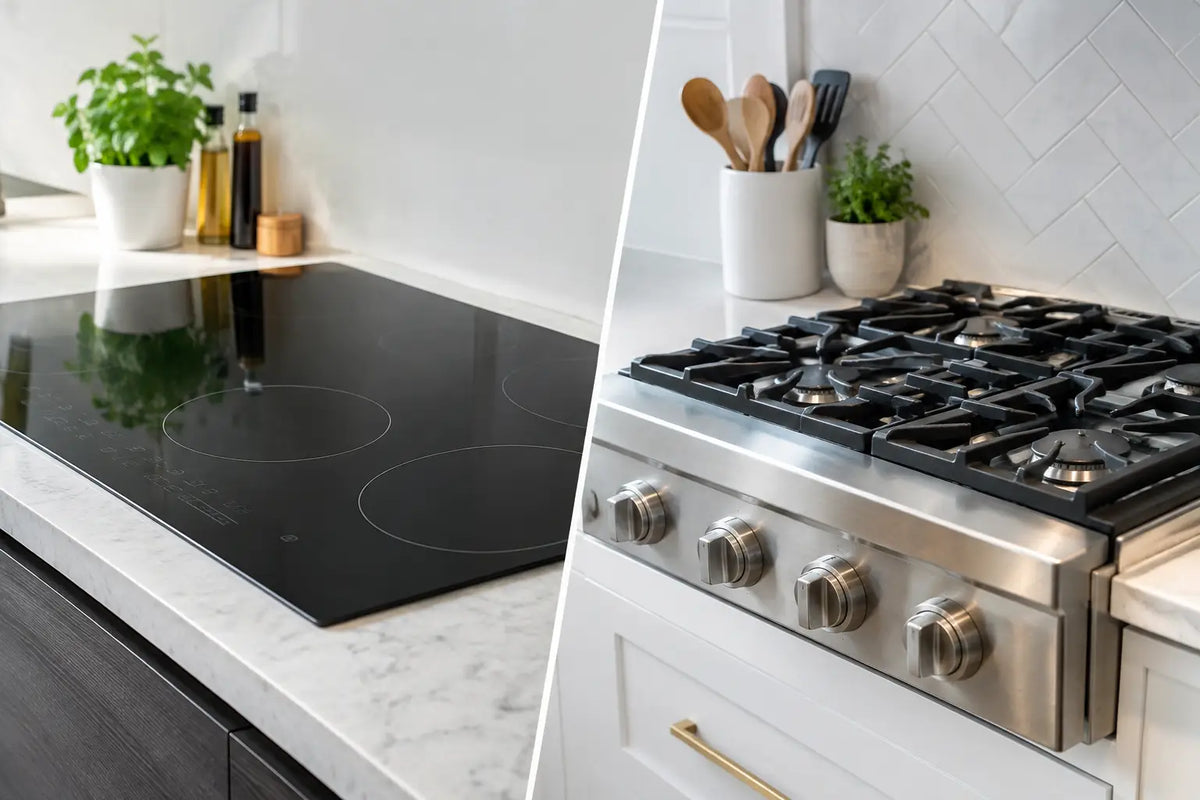
A kitchen island can be a serious cooking station at 6 p.m. and a clean serving table by 8. That is the real decision behind integrated cooktops versus range tops. One keeps cooking hardware visible and purpose-built. The other can turn the countertop itself into the cooking surface, preserving every inch of the room’s architecture when dinner is done.
For a high-end renovation, this choice is not simply gas versus induction. It affects your island layout, countertop material, ventilation plan, electrical scope, entertaining style, and the way the kitchen feels every day.
Integrated Cooktops Versus Range Tops: The Core Difference
A range top is a dedicated cooking appliance installed into a counter. It typically uses gas burners, although induction range tops exist. The cooking zones, grates, knobs, and controls remain visible at all times. Range tops are often chosen for their familiar format, powerful burner configurations, and professional-kitchen appearance.
An integrated cooktop usually refers to a cooktop installed flush with the counter or integrated into the work surface. With conventional glass induction, the black glass remains visible. Through-surface induction takes the concept further: the induction units sit beneath an approved porcelain countertop, so there are no visible burners, glass panels, or permanent cooking-zone outlines on the surface.
That distinction matters. A flush glass cooktop improves the look of a kitchen, but it still reads as an appliance. A through-surface induction system lets a porcelain island remain a continuous architectural plane.
Design Freedom Is the Biggest Separation
A range top makes a clear visual statement. For many kitchens, that is exactly the goal. A large gas range top beneath a sculptural hood can create a traditional professional focal point, especially in a dedicated cooking wall.
But islands have a different job. They often need to work as prep space, homework space, buffet space, and a place where guests gather. A visible range top claims that real estate permanently. Grates collect crumbs, knobs interrupt the cabinetry line, and the island still looks like a cooking station even when nobody is cooking.
With through-surface induction, the cooking area disappears into the porcelain. Put a serving platter over it after cooking. Roll out pastry on it. Use it as a bar during a party. The surface remains clean, cool, and visually uninterrupted once the cookware is removed.
This is why integrated induction is particularly compelling for modern and minimalist kitchens. It does not ask the cabinetry, countertop, and appliance package to compete for attention. It allows the material selection to lead.
The Countertop Is Part of the Appliance Decision
A range top can be paired with many counter materials, subject to cutout and clearance requirements. Through-surface induction requires a more deliberate plan. The countertop must be an approved porcelain product and installed to the system’s specifications. Thickness, support, cabinet ventilation, electrical placement, and cooking-zone locations all need to be coordinated before fabrication.
That planning is not a drawback when it happens early. It is how a minimal kitchen achieves a precise result. Fabricators, designers, electricians, and appliance specialists should be working from the same layout before the slab is cut.
Performance: Fast Induction or Familiar Flame?
Range-top buyers often choose gas because they value visual flame control, wok-friendly burner shapes, and a familiar cooking experience. High-output gas burners can deliver intense heat, and many experienced cooks enjoy the immediate feedback of adjusting a flame.
The trade-off is that gas heats the air around the pan as well as the pan itself. It introduces combustion into the kitchen, requires more demanding ventilation planning, and leaves a hot grate and burner assembly after use. Cleanup is more involved because spills travel beneath grates and around burner components.
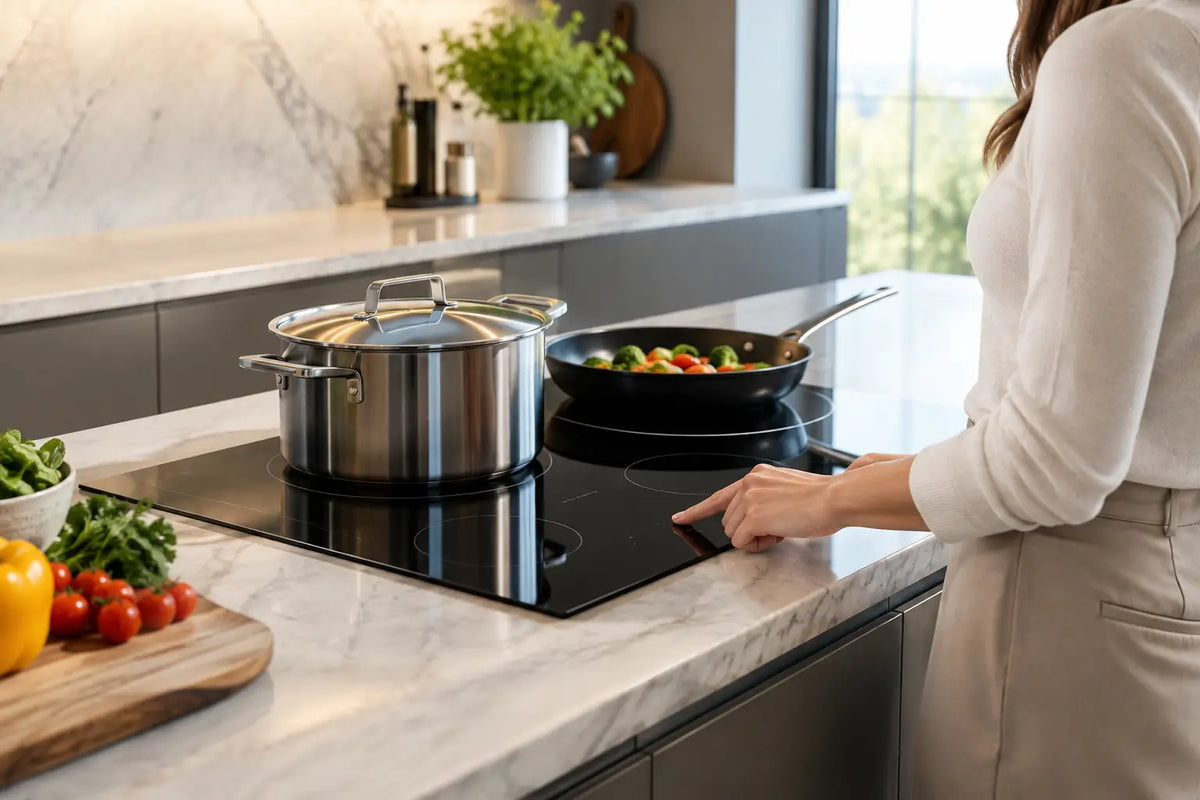
Induction transfers energy directly into compatible cookware. The pan heats quickly while the surrounding surface stays comparatively cool. Properly specified through-surface systems can deliver powerful cooking performance, including boil times under two minutes and cooking temperatures up to 400°F at the pan. Induction also delivers approximately 83% to 90% energy efficiency, compared with the substantial heat loss associated with open-flame cooking.
For daily cooking, the response can feel remarkably precise. Water boils quickly, sauces hold a controlled simmer, and the kitchen stays more comfortable because less heat spills into the room. The adjustment is cookware, not capability. Magnetic cookware is required, although many premium stainless-steel, cast-iron, and induction-ready pans already qualify.
Range Tops Still Have a Strong Case
A range top is not automatically the wrong choice because a homeowner wants luxury. It is often the right answer for a serious cook who wants a classic chef’s kitchen, relies on specialty gas cookware, or prefers a dedicated appliance wall with a substantial ventilation hood.
It can also be simpler in a renovation where gas infrastructure, a vent hood, and a standard appliance cutout are already in place. Replacing a range top with another range top may involve less coordination than redesigning an island around integrated induction.
The better question is not which technology is more prestigious. It is whether the kitchen should display its cooking function or conceal it.
Safety and Cleanup Change Daily Living
The most meaningful benefits tend to show up after the renovation dust settles. A gas range top has exposed flame, hot grates, and narrow spaces that need regular cleaning. It asks for more attention in a household with small children, pets, or frequent entertaining.
Through-surface induction eliminates the open flame. Since heat is generated in compatible cookware, the porcelain around the pan does not function like a red-hot electric element. That creates a calmer island environment and makes spills easier to manage. Once the pan is moved, the surface can return to its role as usable counter space.
This does not mean an integrated cooktop needs no care. The cookware should be centered over the designated zones, and the surface should be protected from hard impacts like any premium porcelain installation. But the day-to-day cleaning routine is refreshingly direct: wipe the counter as you normally would.
Ventilation Is Not an Afterthought
Gas range tops require ventilation that is sized and installed for the appliance. In many kitchens, the hood becomes a dominant visual element. That may support the design, particularly over a cooking wall. On an island, however, an overhead hood can interrupt sightlines and compete with lighting.
Induction does not create combustion byproducts, so it can simplify the ventilation conversation. Cooking odors, steam, and grease still exist, especially when searing or frying, but the need is different. Some homes benefit from a discreet ceiling hood, downdraft strategy, or carefully designed room ventilation rather than a large commercial-style canopy.
Local code, cooking habits, and the overall kitchen layout should determine the final approach. Treat ventilation as an early design decision, not a finishing detail.
Installation: Where the Real Decision Is Made
A range top installation is familiar to most kitchen trades: cabinet cutout, gas or electrical connection, manufacturer clearances, and ventilation coordination. It is straightforward, but it remains a conventional appliance installation.
Integrated through-surface induction demands more planning because the countertop is integral to the system. The electrical supply must be properly specified. Cabinetry must provide appropriate space and ventilation below the units. The porcelain must be compatible, and the cooking zones need to align with the lifestyle of the people using them.
A four-zone layout makes sense for a household that cooks several dishes at once. A one- or two-zone system may be better for a secondary island, a compact luxury kitchen, or a client who wants occasional cooking without surrendering the island’s primary function. Add-ons such as through-counter wireless charging can extend the same idea: technology that works hard without cluttering the surface.
This is where expert guidance has real value. Invisacook California helps homeowners, designers, fabricators, and contractors coordinate the product, approved porcelain, electrical requirements, and installation details before a beautiful plan turns into an expensive revision.
Which Choice Fits Your Kitchen?
Choose a range top when you want visible professional presence, routinely cook with gas-specific tools, or are building a classic cooking wall around a powerful hood. It is familiar, expressive, and highly capable.
Choose an integrated through-surface induction cooktop when the island needs to do more than cook. It is the stronger choice for a porcelain-centered design, a clean modern aesthetic, safer daily use, faster induction performance, and entertaining spaces that should never feel dominated by appliances.
The best luxury kitchens do not force a compromise between beauty and function. They decide where function should be seen. If your island is meant to be the center of the home rather than the center of the appliance package, design it to disappear when the meal is over.


Leave a comment
This site is protected by hCaptcha and the hCaptcha Privacy Policy and Terms of Service apply.