A luxury kitchen island should not have to choose between looking architectural and working hard. That is the promise behind hidden induction, and it is why a serious hidden induction review needs to go beyond the visual reveal. A burner-free porcelain surface is striking, but homeowners, designers, and builders also need to know how it cooks, what it requires, and where the trade-offs begin.
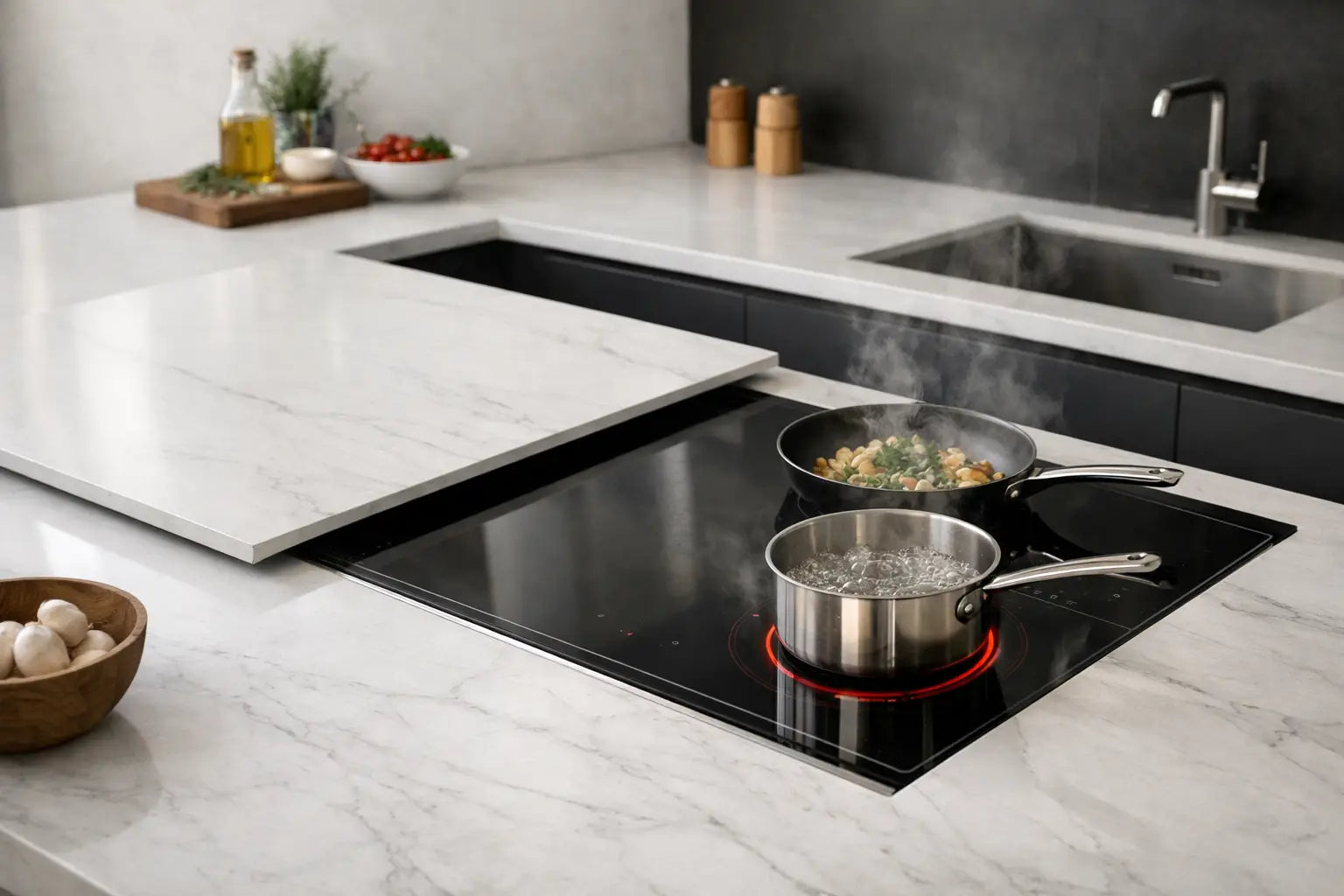
Through-surface induction places the cooking technology beneath an approved porcelain countertop. When the system is off, the island reads as one uninterrupted slab. When it is on, the marked cooking zones heat compatible cookware directly through the porcelain. The result is a kitchen that can move from dinner preparation to cocktail service, family homework, or a fully clear entertaining surface without a visible cooktop taking center stage.
Hidden Induction Review: The Design Advantage
The strongest reason to choose hidden induction is not novelty. It is the freedom it gives a kitchen plan.
A conventional range establishes a permanent cooking wall. A glass-top induction unit improves the look, but the black glass panel still divides the countertop. Hidden induction allows the porcelain island to remain the material statement. Veining continues uninterrupted. The surface can feel calmer, larger, and more deliberate, especially in open-plan homes where the kitchen is visible from nearly every room.
That visual gain translates into usable square footage. A four-zone system can make a large island function as a cooking station one hour and a buffet, serving surface, or gathering place the next. For homeowners who entertain, that flexibility is more meaningful than a cleaner photograph.
The surface is also easier to maintain than a traditional cooktop. There are no burner grates to remove, no recessed seams around a glass panel, and no exposed controls collecting crumbs. Once the cookware is removed and the area has cooled, the porcelain can be wiped as part of the normal countertop cleanup routine.
There is a practical boundary: hidden induction is not a universal countertop solution. It is designed for approved porcelain materials and specified thicknesses. A beautiful slab is not automatically compatible simply because it is porcelain. The countertop selection, fabrication plan, and appliance layout must be coordinated before installation.
Cooking Performance: Does Invisible Mean Compromised?
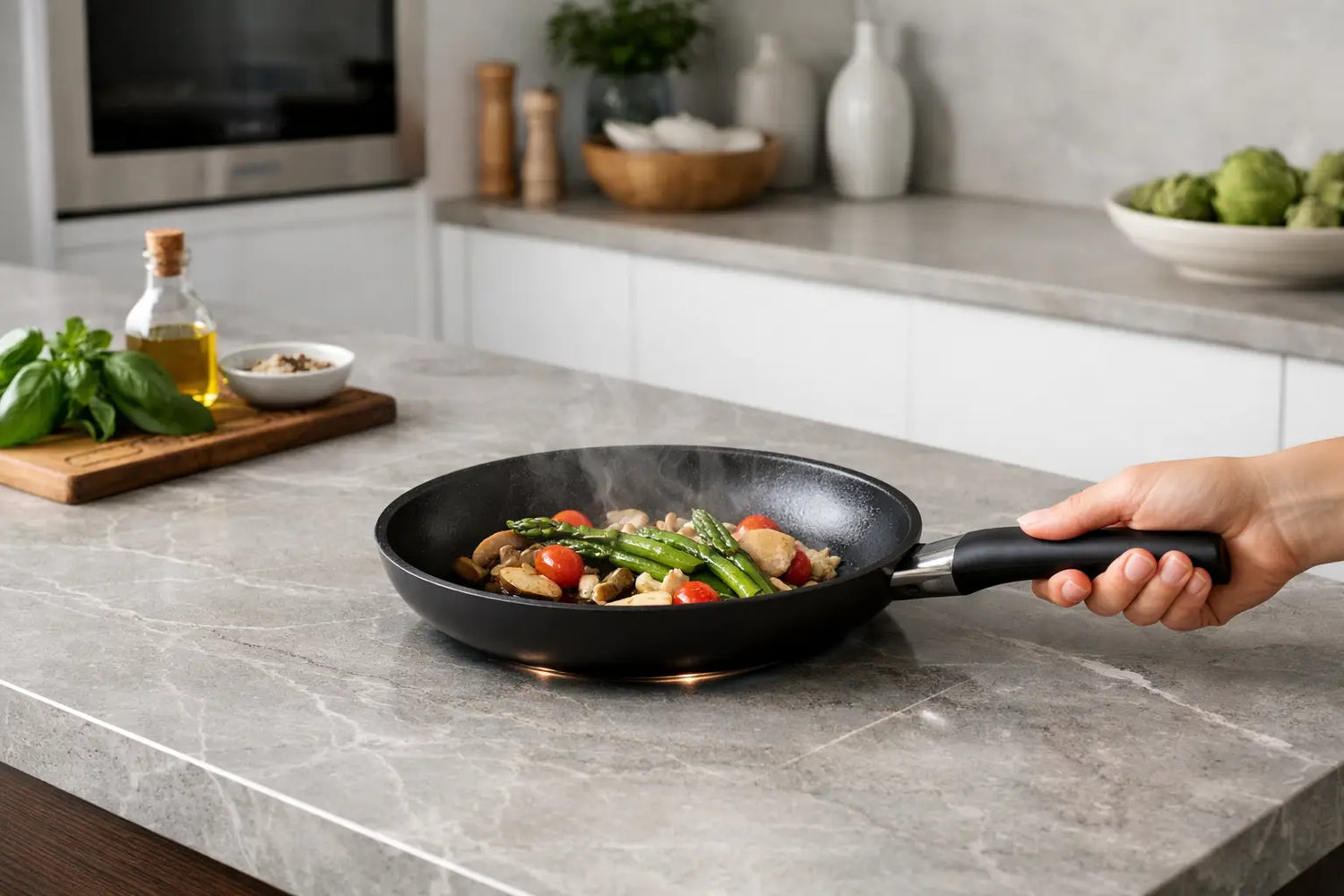
No - provided the system is correctly specified and installed. Induction creates heat in magnetic cookware rather than warming the cooktop first, which is why it can deliver rapid response and fast boil times. With the right pan and electrical setup, hidden induction can bring water to a boil in under two minutes and support cooking temperatures up to 400°F.
That performance places it in a different category from decorative warming surfaces or low-output integrated appliances. It is built for sautéing, searing, simmering, and everyday meal preparation. The countertop around the pan remains comparatively cool because the pan itself is the heat source, although the porcelain directly beneath a hot pot can retain heat after cooking. It should still be treated with the care you would give any recently used cooking area.
For families, the cool-surface advantage is substantial. There are no open flames, no hot coils, and no cast-iron grates holding residual heat. For design professionals, it removes the need to visually accommodate a dominant cooking appliance at the island. For serious cooks, the key benefit is control: induction responds quickly when heat is raised or reduced.
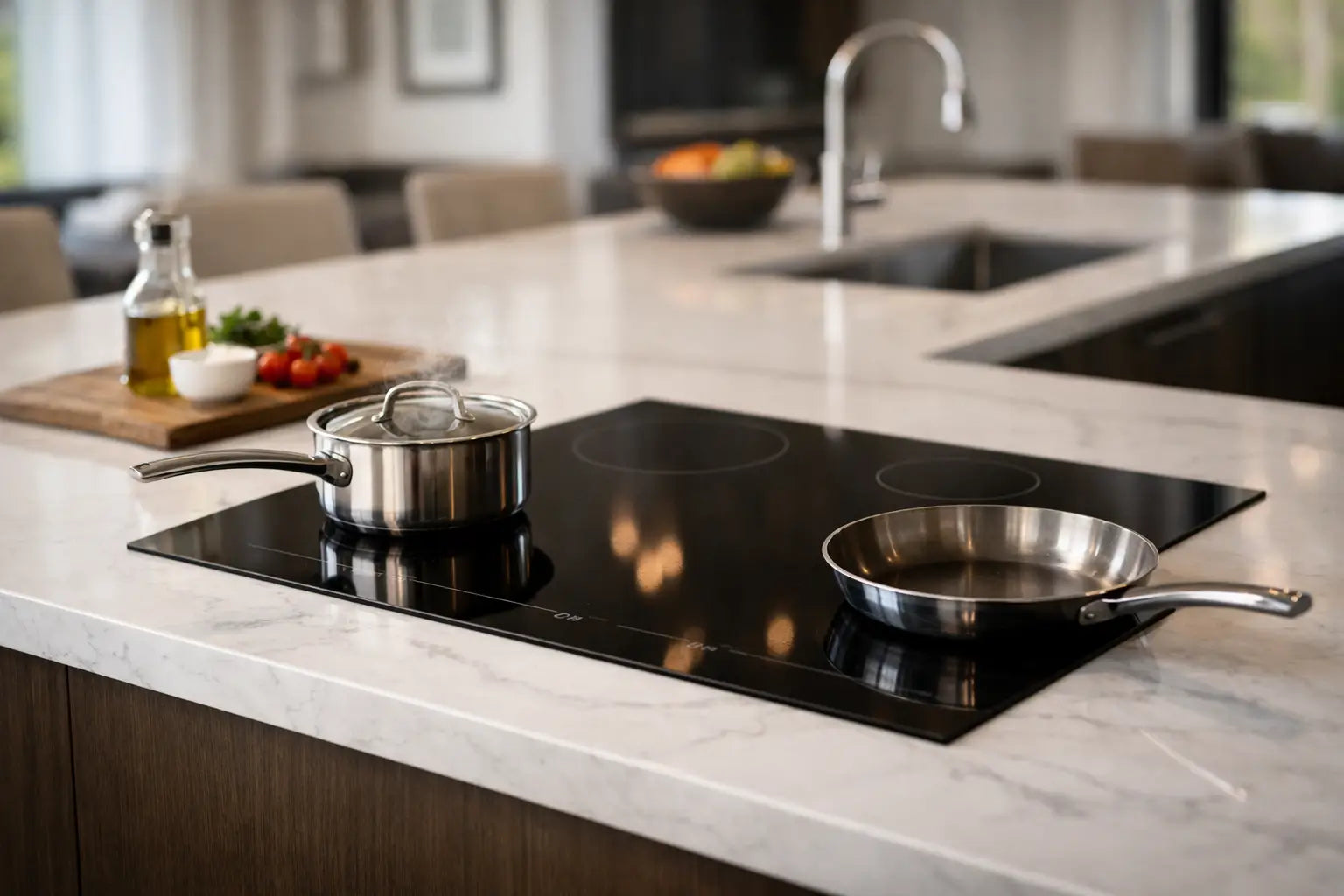
Still, performance depends on cookware. Cast iron, magnetic stainless steel, and purpose-built induction cookware are appropriate choices. Aluminum, copper, glass, and non-magnetic stainless pans will not activate the zones unless they have a magnetic induction base. InvisaCookware is designed for through-surface use, but buyers should review their existing cookware before assuming every favorite pan will make the transition.
Porcelain Compatibility Is the Non-Negotiable
The most common mistake in hidden induction planning is treating the appliance as a late-stage selection. It is not. The system becomes part of the countertop specification, so the fabricator, kitchen designer, electrician, and appliance specialist should be aligned well before the slab is cut.
Approved porcelain brands and materials are tested for the heat transfer and structural requirements of through-surface cooking. Thickness matters, as does the condition of the slab and the fabrication process. Cutouts, support, seams, and the exact burner-zone locations all need to work together. A countertop that has already been fabricated may limit what is possible.
This coordination is the trade-off for invisible design. A standard cooktop can often be selected late and dropped into a cutout. Hidden induction rewards earlier decisions. For a new custom kitchen or a major renovation, that requirement is usually manageable. For a quick countertop replacement, it may make a conventional induction cooktop the simpler path.
The same is true of electrical planning. These systems require dedicated electrical circuits sized to the chosen configuration. One-, two-, three-, and four-burner layouts have different needs. Electrical requirements should be confirmed during design development, not after cabinets, stone, and finishes are complete.
Installation Is Where a Good System Becomes a Great Kitchen
The appliance sits below the porcelain, concealed within the cabinet structure. That demands proper clearance, ventilation, access, and support. The visible countertop may look effortless, but the installation should never be improvised.
A well-planned installation begins by mapping how the island will actually be used. Are the cooking zones near the sink for daily meal prep? Is the island primarily an entertaining piece that needs a discreet two-zone setup? Will a vent hood be required, or is the project using a separate ventilation strategy? These decisions affect more than aesthetics. They determine workflow.
Zone markings deserve attention, too. Most homeowners want a nearly invisible look, but cookware still needs a clear landing point. Subtle markings can preserve the uninterrupted porcelain appearance while making the surface intuitive for guests and family members. The right level of visibility depends on the stone pattern, lighting, and how frequently the kitchen will be used for cooking.
Working with a specialist such as Invisacook California can reduce uncertainty here. The value is not just purchasing the appliance. It is having someone help validate porcelain compatibility, electrical requirements, system configuration, cookware, and installation coordination before expensive materials are committed.
Hidden Induction vs. Gas and Glass-Top Induction
Gas remains familiar and visually expressive. Some cooks enjoy the flame and the traditional range format. Its drawbacks are equally clear: open combustion, more heat in the room, grates to clean, and a permanent visual footprint. In a minimalist porcelain kitchen, gas can feel like the one element that refuses to disappear.
Visible glass-top induction is a strong performance choice and can be less complex to install than a through-surface system. It offers fast heating, a smooth cleaning surface, and broad availability. But it still reads as an appliance. If the project goal is a multifunctional island with no exposed burners, glass-top induction cannot deliver the same effect.
Hidden induction costs more in planning and demands compatible materials. It is also less forgiving of last-minute changes. In return, it preserves the countertop as a continuous design surface while delivering true induction cooking. Whether that premium is worthwhile depends on the project. On a large porcelain island designed as the center of the home, it can be the feature that makes the entire kitchen feel resolved.
Who Should Choose Hidden Induction?
Hidden induction is an excellent fit for a homeowner building a high-end, modern kitchen around a porcelain island. It also makes sense for architects and designers who want the island to serve several roles without a visible cooktop interrupting the composition.
It may be less suitable for homeowners who already own a non-compatible stone surface, rely heavily on non-magnetic cookware, need a plug-and-play replacement, or prefer the look and tactile feedback of gas. There is no universal winner. The best choice follows the countertop material, cooking habits, renovation timing, and the value placed on a completely clear surface.
The right hidden induction system does more than hide burners. It gives the kitchen permission to become whatever the moment requires - a serious cooking space, a clean entertaining island, or simply a beautiful porcelain surface with nothing to explain.

Leave a comment
This site is protected by hCaptcha and the hCaptcha Privacy Policy and Terms of Service apply.