A gas range once signaled a serious kitchen. Today, many high-end renovations are moving away from visible flames, heavy grates, and a dedicated cooking zone that occupies the most valuable part of the room. The best gas range alternatives deliver precise heat and serious cooking performance while giving homeowners more control over safety, cleanup, efficiency, and the architecture of the kitchen itself.
For a traditional cook who wants familiar pans and visible heat, the right replacement may be a conventional induction range. For a homeowner designing a porcelain island to serve as a prep station, dining table, buffet, and gathering place, through-surface induction creates a fundamentally different result: no burners in sight when cooking is finished.
Why Homeowners Are Reconsidering Gas Ranges
The shift is not only about changing fuel sources. It is about how a kitchen performs and how it feels to live in.
Gas ranges bring real strengths. The flame is immediate and visual, many cooks enjoy the tactile control, and nearly every pan works on a gas grate. But the trade-offs become harder to ignore in a design-led renovation. Open flames produce heat in the room, grates and burner wells collect grease, and the range remains a permanent visual anchor even when it is not in use. Gas also requires a properly planned fuel line and ventilation strategy.
Induction answers many of those concerns. It heats compatible cookware directly through a magnetic field rather than heating a burner first. That means faster response, less wasted heat, and a cooking surface that does not stay hot in the same way a gas grate or electric element does. Quality induction systems can reach cooking temperatures up to 400°F and bring water to a boil in under two minutes with the right cookware and setup.
The key decision is no longer simply gas versus electric. It is whether you want a visible appliance, a visible cooktop, or a countertop that becomes the cooking surface only when you need it.
Gas Range Alternatives That Fit Different Kitchens
Traditional electric ranges
A conventional electric range is the most familiar replacement path. Coil and radiant glass-top models are widely available, straightforward to understand, and often less expensive upfront than premium induction. They can work with nearly any cookware.
Their downside is responsiveness. Radiant elements take longer to heat and cool, and a hot glass surface remains a consideration after the pan comes off. For a secondary kitchen, rental property, or budget-sensitive refresh, electric can make sense. For a luxury kitchen designed around speed, precision, and a clean architectural finish, it is rarely the strongest long-term choice.
Induction ranges and visible induction cooktops
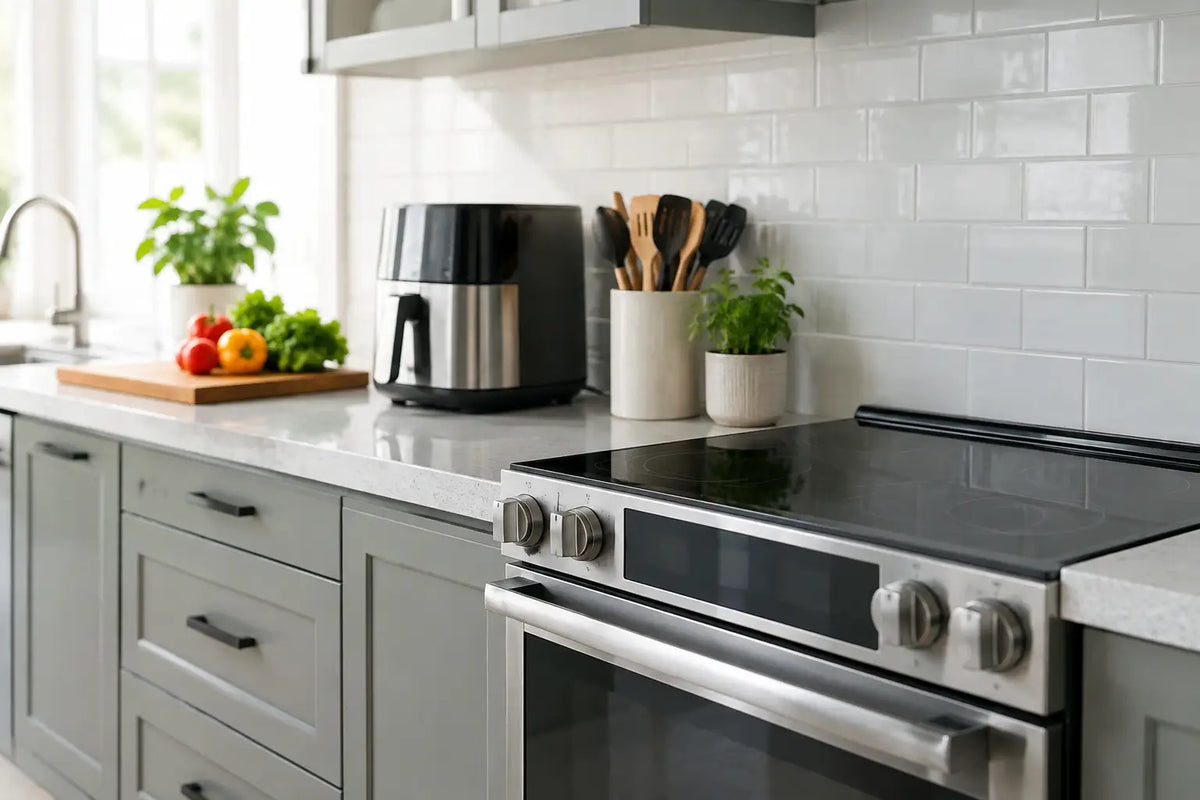
A visible induction range offers the closest all-in-one replacement for a gas range. It combines an induction cooktop with an oven, retains a familiar appliance footprint, and eliminates combustion at the cooking surface. A separate induction cooktop offers similar performance with more flexibility around wall ovens and cabinetry.
This is an excellent choice for homeowners who want induction's fast boiling, controlled simmering, and efficient operation without changing the fundamental layout of the kitchen. The surface is easy to wipe down, and there are no burner grates to remove or scrub.
There are trade-offs. The black glass panel remains visible at all times, and it can become a focal point on a large island. It also requires magnetic cookware. Cast iron, carbon steel, and most stainless steel work well, while aluminum, copper, and glass cookware generally need an induction-compatible magnetic base.
Through-surface induction beneath porcelain
Through-surface induction takes the performance benefits of induction and applies them to a different design objective: preserving the countertop as a continuous, usable plane.
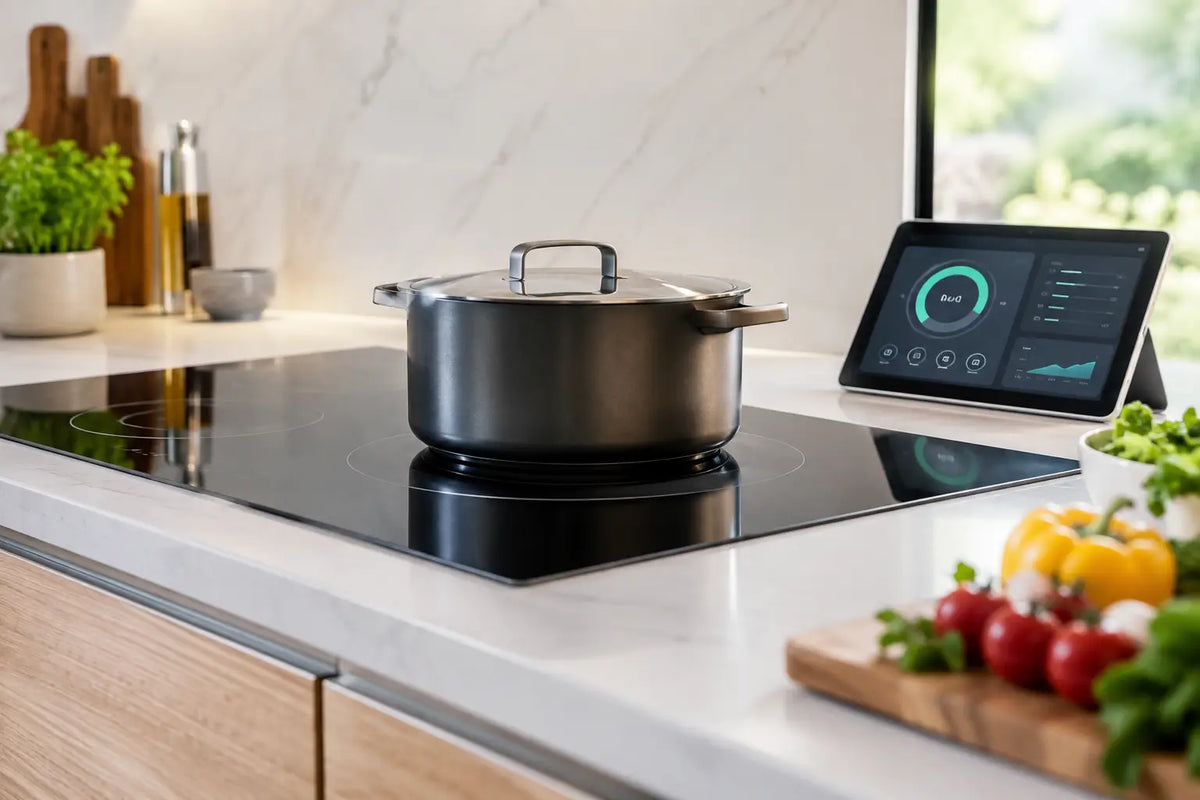
The induction modules install beneath approved porcelain countertops. There are no exposed burners, no glass cooktop panel, and no permanent interruption in the slab. Place compatible InvisaCookware on the marked cooking area, and the surface functions as a powerful induction cooktop. Remove the cookware, and the island returns to a clean porcelain surface for serving, working, dining, or entertaining.
This approach is particularly compelling for modern homes where the island is the center of the room. Instead of dedicating a large portion of that island to visible appliances, homeowners can keep the visual field calm and let the material take the lead. Invisible Design. Unmistakable Performance.
It is not a universal replacement for every kitchen. Through-surface induction requires approved porcelain materials, proper slab fabrication, adequate cabinet ventilation, electrical planning, and a careful installation process. The system should be designed into the project early, before the countertop is fabricated. That planning is precisely what makes the finished result look effortless.
Modular cooking zones
Some homeowners do not want one appliance to do everything. A modular approach can combine induction with a dedicated steam oven, speed oven, outdoor grill, or specialized cooking appliance. This is common in large custom kitchens where the main island is intended for daily cooking and a separate back kitchen handles high-volume prep.
The benefit is tailored performance. The drawback is complexity, cost, and the risk of creating a kitchen full of competing controls and surfaces. A strong kitchen plan begins with how the household actually cooks, not with a checklist of premium appliances.
How to Choose Between Gas Range Alternatives
Start with the island. If it is simply a work surface beside a traditional cooking wall, a visible induction range or cooktop may be the cleanest answer. If the island needs to function as furniture as much as an appliance, hidden induction is worth considering from the first design conversation.
Next, consider your cooking habits. Induction is exceptionally strong for boiling, sautéing, simmering, and temperature adjustments. A homeowner who frequently uses oversized round-bottom woks over an open flame may prefer a separate specialty burner or an outdoor gas cooking station. Most everyday cooking translates beautifully to induction, but the best kitchen design leaves room for the exceptions that matter to you.
Then evaluate the installation requirements honestly. Replacing a gas range with an induction range usually involves electrical work, often a dedicated 240-volt circuit. A through-surface system requires more coordination: countertop compatibility, fabrication details, module placement, ventilation space, cookware selection, and electrical capacity all need to align. The investment is higher than a standard appliance swap, but it creates a result a standard appliance cannot replicate.
Finally, think about what the kitchen should look like on the days you are not cooking. A visible range is still a range. A visible cooktop is still a dark panel in the middle of the island. An invisible induction system allows the countertop to read as uninterrupted porcelain, which changes the entire character of an open-plan room.
Performance, Safety, and Cleanup Without the Flame
Gas cooking creates ambient heat because the flame heats the pan and the surrounding air. Induction directs energy into compatible cookware, which can support energy efficiency in the range of 83% to 90%. Less heat escapes into the room, a meaningful advantage in sunny California-style homes and open kitchens where the island sits close to living and dining spaces.
Safety is also more layered than the usual gas-versus-electric debate. Gas has an open flame and hot grates. Conventional electric surfaces can remain hot long after cooking. Induction activates with suitable cookware, and the countertop around the pan stays far cooler than a traditional cooking surface. The cookware itself is still hot, of course, and a serious kitchen still demands normal care. But the absence of flames and exposed elements can be especially appealing for households with children, pets, and busy entertaining schedules.
Cleanup is where the daily difference becomes obvious. No burner caps. No grates. No crevices around a cooktop frame. A porcelain through-surface system leaves a continuous countertop that can be wiped clean after the cookware is removed. It is a small operational change that makes the kitchen feel more considered every day.
Designing a Kitchen That Does More
The most compelling gas range alternatives do more than change the heat source. They give the kitchen back to the people who use it.
A thoughtfully specified hidden induction system from Invisacook California can turn a porcelain island into a high-performance cooking zone, then return it to a polished surface for cocktails, homework, platters, or a quiet morning coffee. That flexibility is not a compromise on cooking. It is a better answer to how luxury kitchens are actually lived in.
Before choosing your next cooking surface, stand at the island and picture the room after dinner. The best option is the one that still makes the space feel larger, calmer, and ready for whatever happens next.


Leave a comment
This site is protected by hCaptcha and the hCaptcha Privacy Policy and Terms of Service apply.