A beautiful kitchen island should not force a compromise between performance and open space. This induction power management guide explains what happens when multiple cooking zones call for power at once, and how to plan an invisible induction kitchen that performs exactly as intended.
For a through-surface system, power management is not an afterthought. It is part of the design conversation from the first countertop slab selection to the final electrical connection. Get it right, and your porcelain island can boil water quickly, hold a low simmer, and still look like a refined architectural surface when dinner is over.
What induction power management actually means
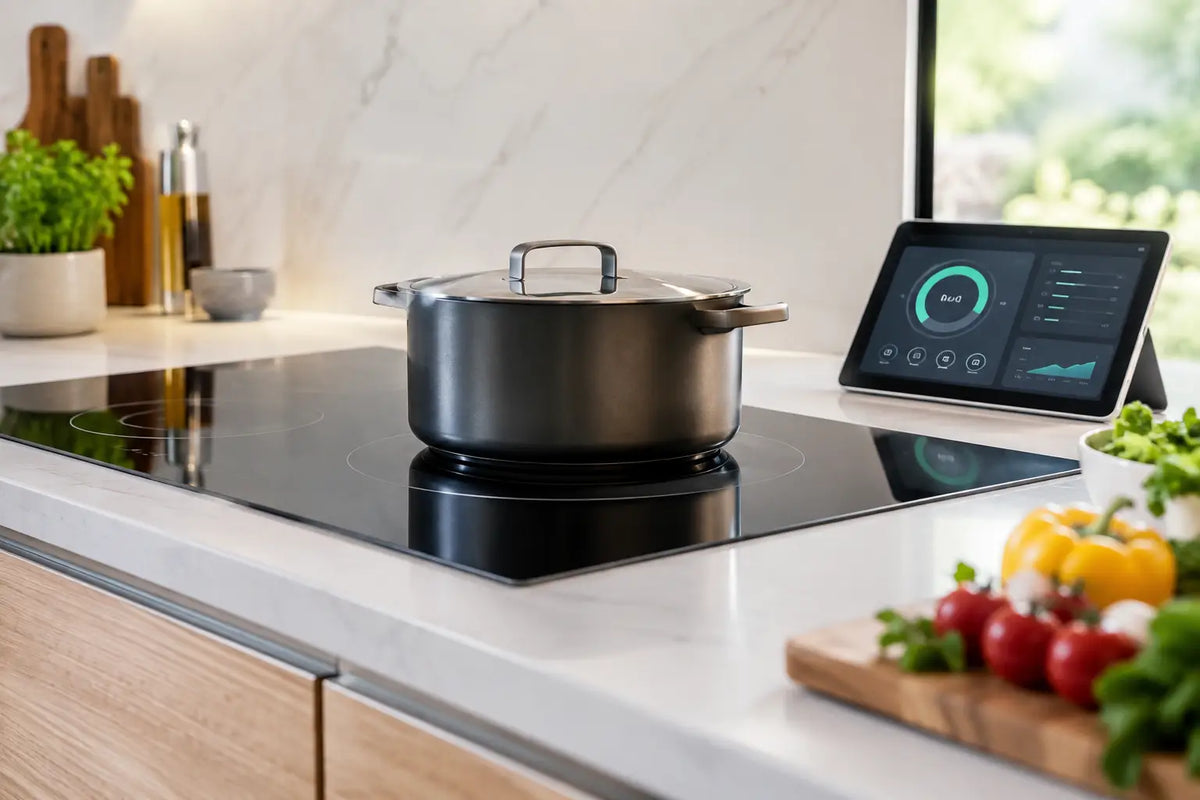
Induction does not heat the countertop or create a flame. It creates a magnetic field that heats compatible cookware directly. That direct energy transfer is one reason induction can boil quickly, respond precisely, and leave the porcelain surface comparatively cool outside the pan area.
Power management is the system's method for allocating available electrical output across active cooking zones. A multi-zone cooktop has a defined total power capacity. When one zone is running at high power, it may use a large share of that capacity. If several zones are set high at the same time, the system intelligently distributes energy so it stays within its electrical limits.
This is normal behavior, not a defect. Think of it as a performance strategy. A cooktop cannot deliver unlimited peak wattage to every zone indefinitely without requiring a much larger electrical supply. Well-designed power management gives you strong real-world cooking performance while keeping the installation practical for a residential kitchen.
Why it matters more on a multifunctional island
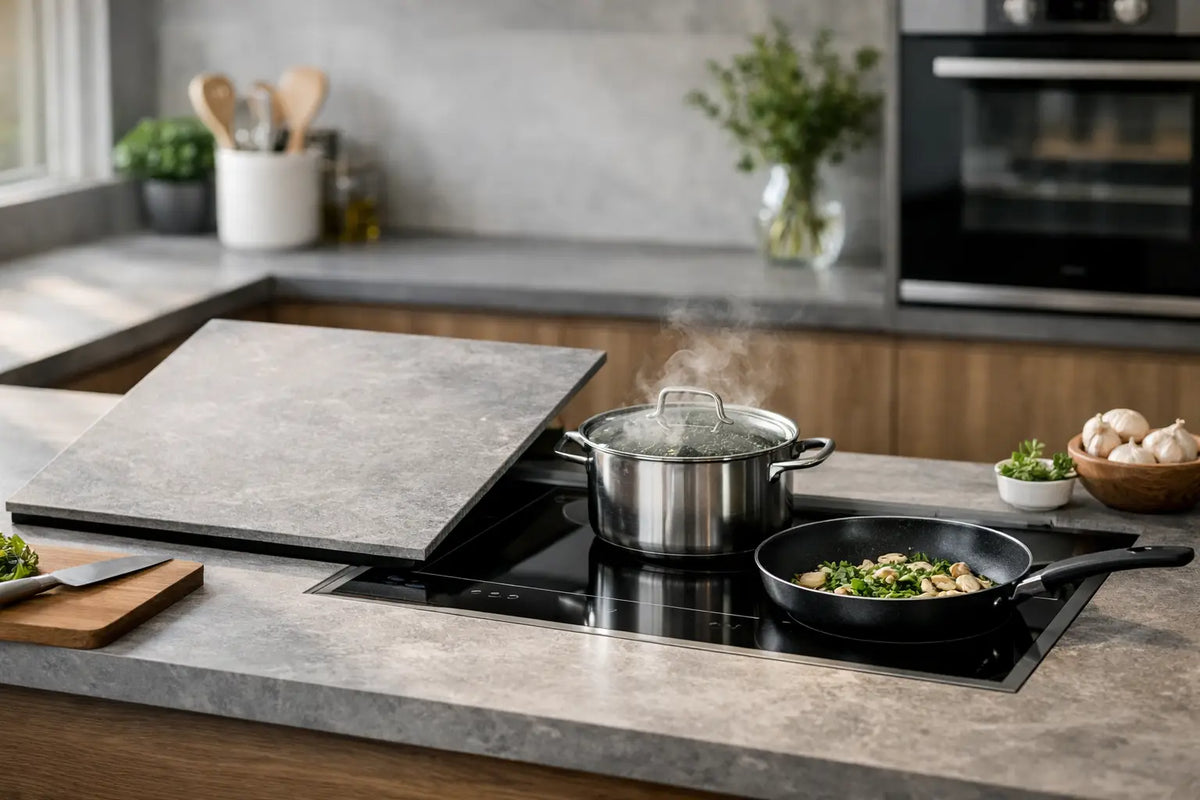
A visible cooktop tells everyone where cooking happens. An Invisacook installation changes that relationship. The island can function as a prep surface, serving counter, dining table, or clean focal point, then become a powerful cooktop when compatible cookware is placed in the marked zone.
That flexibility makes planning more important. A homeowner may picture pasta boiling on one zone, a sauce reducing on another, and a skillet searing nearby during a dinner party. An architect may specify a large porcelain slab with four hidden zones because the island is the center of the home. Those are excellent use cases, but they require an honest discussion about how many zones will be used at high output simultaneously.
The answer is rarely that every burner needs maximum power at every moment. Most cooking involves a short, high-output phase followed by lower heat. Water comes to a boil, then drops to a controlled simmer. A pan preheats, then the setting is reduced. Power management is designed around that rhythm.
Start with the electrical plan, not the appliance wish list
The cleanest installation starts before cabinetry is finalized and before the porcelain fabricator cuts or templates the slab. Your selected induction system has a specified voltage, circuit requirement, amperage, and maximum connected load. Those figures must be matched to the home's electrical capacity and local code by a qualified electrician.
Do not assume that a kitchen renovation automatically has enough available power. Older homes, all-electric homes, and projects adding wall ovens, steam ovens, warming drawers, wine refrigeration, or EV charging can place real demand on a service panel. A load calculation tells the electrician what the home can safely support.
A dedicated circuit is generally required for a cooking appliance. The correct wire size, breaker type, disconnect method, and junction-box placement depend on the system specifications and local requirements. Electrical details should never be improvised to preserve a design decision made too late.
Ask these questions before ordering
Confirm the number of cooking zones you want, the expected circuit requirements, and whether the current panel has sufficient capacity. Also establish where the control components, ventilation clearances, and service access will be located beneath the countertop.
For a renovation involving a porcelain island, bring the electrician, kitchen designer, cabinetmaker, and fabricator into the conversation early. Through-surface induction is a coordinated system. The countertop material, thickness, approved construction method, cabinet layout, and electrical infrastructure all affect the final result.
Invisacook California helps customers work through these decisions before installation, which can prevent costly changes after a slab has been fabricated.
Understand boost mode and shared output
Many induction systems offer a boost function for fast heating. Boost mode directs extra available power to one cooking zone for tasks like bringing a stockpot to a boil or rapidly heating a sauté pan. It is a high-performance tool, not necessarily a setting meant to stay engaged throughout an entire meal.
On a multi-zone configuration, activating boost on one zone can reduce the power available to a neighboring zone, depending on how the zones are paired and how the system is configured. You may see one zone step down slightly when another receives priority. That is the cooktop protecting its total electrical capacity while still giving you the heat you need where you need it most.
The practical approach is simple: use boost strategically. Bring the pasta water up quickly, then reduce it to a simmer. Once that demand drops, more power is available for searing, sautéing, or another high-heat task. Experienced cooks already sequence tasks this way. Induction simply makes the transitions faster.
Zone layout affects the cooking experience
More zones provide more flexibility, but they also invite a different style of meal preparation. A one- or two-zone island system can be ideal for a minimalist kitchen, a secondary prep kitchen, or homeowners who typically cook with one or two pans. A three- or four-zone configuration makes sense for frequent entertaining and full meal production.
The right choice depends on your cooking habits, not just the size of the island. If you routinely use a Dutch oven, skillet, saucepan, and griddle at once, additional zones are valuable. If the island is primarily a social and serving space, fewer zones may deliver a cleaner plan and better value without sacrificing daily performance.
Cookware is part of power management
Induction power is only as effective as the cookware receiving it. Use magnetic cookware with a flat, stable base sized appropriately for the active zone. A quick magnet test is useful: if a magnet grips firmly to the bottom of the pan, the cookware is generally induction-compatible.
Heavy stainless steel, enameled cast iron, and many induction-ready clad pans perform well. Thin, warped, or undersized cookware can heat less evenly and may cause the system to cycle differently as it tries to maintain control. For through-surface cooking, purpose-built compatible cookware also helps maintain the correct relationship between the pan and the induction field beneath the porcelain.
Pan placement matters. Center cookware over the indicated cooking area, especially when using smaller saucepans. Avoid sliding abrasive cookware across a porcelain surface, and lift rather than drag heavy cast iron. The cooking technology is hidden, but the countertop is still a premium finish worth protecting.
Use settings with intention
Induction responds quickly enough that traditional habits from gas cooking can lead to unnecessary power use. You do not need to leave a pan at maximum heat while deciding what to add next. Preheat with purpose, then adjust down as soon as the pan is ready.
For everyday cooking, medium settings often deliver more control than people expect. Use high power for rapid boiling and initial searing. Use lower settings for eggs, sauces, melting chocolate, and holding food warm. This approach reduces the chance of scorching, creates more consistent results, and frees available output for other zones when needed.
Lids make a noticeable difference, especially when boiling water. A properly fitted lid retains heat and reduces the time a zone needs to run at its highest setting. That is a small habit with a practical benefit during busy cooking sessions.
Plan for performance, then enjoy the space
The best invisible induction kitchen does not ask you to think about circuitry every time you cook. The technical work happens during planning: selecting the right system, verifying the electrical infrastructure, specifying approved porcelain, and understanding how your household uses heat across multiple zones.
After that, power management becomes almost intuitive. Use high output when speed matters. Let simmering and holding tasks run lower. Choose cookware that responds well. The result is a countertop that can produce serious cooking performance, then return to being the calm, open center of the room when guests arrive.

Leave a comment
This site is protected by hCaptcha and the hCaptcha Privacy Policy and Terms of Service apply.