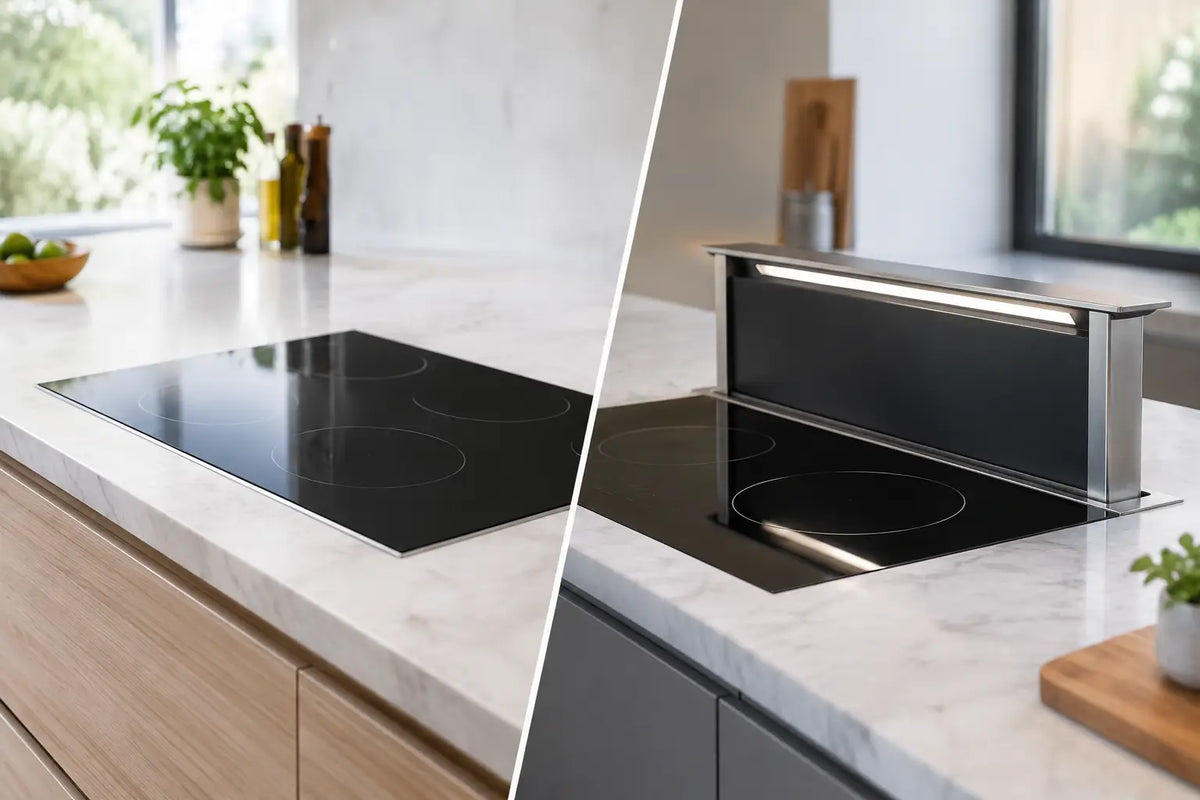
A flush cooktop can make a kitchen look more refined. A hidden cooktop can make the cooking zone disappear altogether. When comparing flush versus hidden cooktops, the real question is not simply which one looks cleaner. It is how much of your island you want back when dinner is over.
For a high-end kitchen renovation, that distinction changes the entire room. A flush-mounted glass induction unit still reads as an appliance: you see its dark cooking surface, touch controls, burner outlines, and boundaries. A through-surface induction system places the technology beneath an approved porcelain countertop, leaving a continuous architectural surface above it. The island can cook at 400°F, then return to being a prep counter, serving station, homework table, or cocktail bar.
Flush versus hidden cooktops: the visual difference
Flush cooktops are installed level with the surrounding countertop. This is a meaningful improvement over a raised cooktop with a visible lip, especially in a minimalist kitchen. Crumbs do not collect around an elevated edge, and the installation feels intentional rather than add-on.
But flush is not invisible. The glass panel remains visible because it must. Even the most elegant black induction surface creates a contrasting rectangle in a light porcelain slab or a veined stone-look island. It tells guests exactly where the appliance begins and ends.
A hidden cooktop takes a different approach. The induction modules sit beneath the porcelain, so the countertop itself becomes the cooking surface. There are no exposed burners, no glass insert, and no permanent black rectangle interrupting the material. Cooking zones can be subtly indicated or left visually quiet, depending on the design plan and how the homeowner prefers to use the surface.
That difference matters most on large islands. In an open-plan home, the island is rarely only for cooking. It is where people gather, serve food, open laptops, arrange flowers, and spread out during the day. A conventional flush cooktop improves the appliance. A hidden cooktop expands the purpose of the island.
Performance is not the trade-off people expect
Many homeowners assume an invisible cooking surface must sacrifice cooking power for appearance. With the right system, approved porcelain material, and compatible cookware, it does not.
Through-surface induction heats the cookware directly through the porcelain rather than heating the countertop itself. The pan gets hot, while the surface around it remains significantly cooler than a gas grate or radiant electric element. That creates a cooking experience built around speed, control, and safer cleanup. Water can boil in under two minutes with the right cookware and setup, and the system delivers the responsive performance serious home cooks expect from induction.
Flush glass induction also offers strong performance. If your priority is a familiar induction layout and you are comfortable dedicating part of the counter to a visible appliance, it remains an excellent option. It is especially practical for projects using materials that are not approved for through-surface cooking.
The key is to compare like for like. A hidden cooktop is not a decorative alternative to a weak hot plate. It is a purpose-built induction system designed to operate below compatible porcelain. Its value is that it delivers real cooking performance without asking the kitchen to look like it is organized around an appliance.
Cleanup and everyday living
Both options are easier to clean than gas. There are no burner caps, grates, ignition ports, or seams around individual burners. A flush glass cooktop wipes down quickly, although spills can still dry onto the dedicated glass panel and its control area.
With a hidden system, the cooking surface is the same porcelain surface used across the island. Once the cookware is removed and the area has cooled, cleanup is as simple as wiping the countertop. There are no edges between counter and cooktop because there is no separate cooktop on top.
This becomes especially compelling for families and frequent entertainers. A visible cooktop, even a flush one, makes the island feel like a work zone. An invisible induction system allows it to reset immediately. After cooking, the same surface can hold platters, drinks, or place settings without working around a glass appliance panel.
There is also a safety advantage worth considering. Induction does not use an open flame, and the porcelain surface does not become the heating element in the way a radiant electric cooktop does. The cookware creates the heat. That makes the area easier to live around when children, pets, and guests naturally gather at the island.
Installation: where the decision becomes specific
The hidden option demands more planning, not less. This is where a knowledgeable dealer and coordinated project team matter.
A flush cooktop typically requires a countertop cutout, proper ventilation clearance below, and electrical service sized for the appliance. The countertop fabricator follows the manufacturer’s cutout specifications, and the cooktop drops into the opening. It is a familiar process for most kitchen professionals.
A hidden cooktop requires a compatible porcelain slab, correct slab thickness, an engineered installation plan, appropriate support below the countertop, and dedicated electrical planning. Not every countertop material can be used. Natural stone, quartz, and standard solid-surface materials do not automatically qualify simply because they look similar to porcelain. The countertop must be specifically approved for through-surface induction use.
The sequence also matters. The homeowner, designer, fabricator, electrician, and installer need to agree on cooking-zone placement before the slab is fabricated. This is not the place for assumptions about where the modules will sit or how the cabinet below will be organized. Drawer clearance, structural support, power requirements, and heat-management specifications should be confirmed before installation begins.
That upfront coordination is a feature of the system, not an inconvenience. It protects a premium porcelain investment and produces the clean result homeowners are paying for. Invisacook California helps customers work through countertop compatibility, system selection, electrical requirements, and installation questions before a critical decision becomes expensive to change.
When a flush cooktop is the smarter choice
A flush induction cooktop is often the right answer when the project calls for a proven, conventional appliance format. It may suit a renovation where the countertop is already selected, the material is not approved porcelain, or the homeowner prefers clearly defined burner positions and built-in touch controls.
It can also make sense for a secondary cooking area, a compact kitchen, or a project with a tighter installation budget. Flush mounting delivers a polished look without the design and fabrication coordination required for a through-surface system.
Choose it because the format fits the kitchen, not because it is assumed to be the only premium option.
When hidden induction earns its place
Hidden induction is for homeowners who see the island as furniture as much as equipment. It is particularly effective in new construction and full remodels where a large porcelain slab is already central to the design.
It is also a strong choice when visual continuity is nonnegotiable. If the goal is a monolithic porcelain island with no visible burners, no glass insert, and no compromise to the countertop pattern, a flush cooktop cannot deliver the same result. It can be beautifully integrated, but it remains visible.
The best hidden-cooktop projects begin with one practical question: what should this island become when nobody is cooking? If the answer includes dining, hosting, working, serving, or simply enjoying an uninterrupted surface, plan the cooking system before the porcelain is ordered. That is how a statement countertop becomes a working kitchen without ever looking like one.



Leave a comment
This site is protected by hCaptcha and the hCaptcha Privacy Policy and Terms of Service apply.