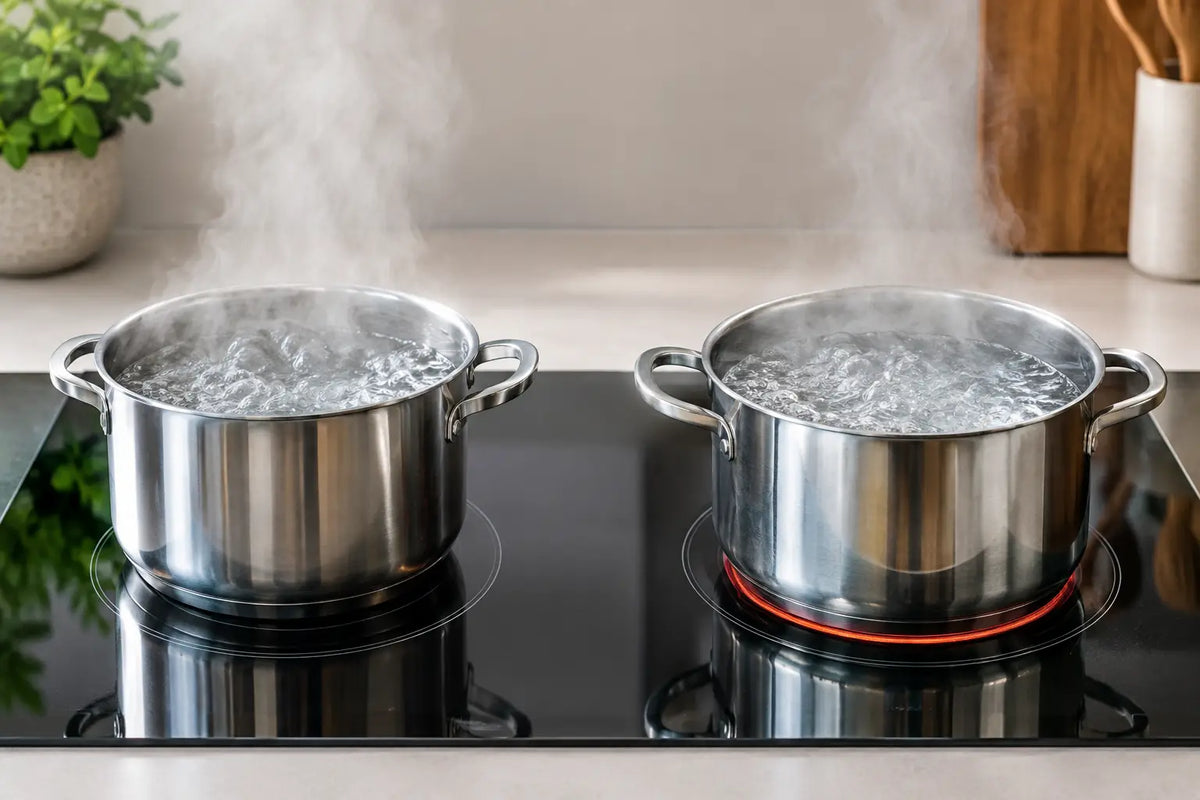
A pot of water is a small test with a big impact on how a kitchen feels. If pasta night means waiting beside a noisy gas flame or watching an electric coil slowly recover, the answer to does induction boil water faster is usually yes. Induction transfers energy into the cookware itself instead of first heating a burner, surrounding air, and the bottom of the pot. That direct approach can bring water to a rolling boil noticeably sooner while keeping the cooking surface far less hot.
For a high-performance kitchen island, speed is only part of the story. Induction also delivers control, efficiency, and a cleaner visual result than a conventional cooktop. When the technology is installed beneath an approved porcelain countertop, the same surface can move from serious cooking station to an uninterrupted serving, prep, or gathering space.
Why Induction Boils Water Faster
A gas burner creates heat through combustion. The flame heats the pot, but a meaningful portion of that heat escapes around its sides and into the room. Traditional electric cooktops work differently but face a similar delay: the element must heat up first, then transfer that heat to the cookware.
Induction uses a magnetic field to excite compatible cookware. The pan becomes the heat source. Water still needs time and energy to reach 212°F, but less energy is wasted getting there. That is why induction systems commonly operate at roughly 83% to 90% efficiency, compared with the lower real-world efficiency of gas cooking.
The effect is easy to recognize in everyday use. A properly sized induction burner with a quality magnetic pot can take water from tap temperature to a vigorous boil in a fraction of the time many homeowners expect from gas or radiant electric. On powerful systems, smaller volumes of water can boil in under two minutes. The exact number will vary, but the advantage is real: the energy arrives where the cooking is happening.
It Is Not Just About Peak Power
Wattage matters, but it is not the whole equation. A high-output induction zone can deliver substantial power quickly, yet the cookware must be able to receive and distribute that power effectively. A heavy, flat-bottomed stainless steel pot with a magnetic base will generally boil water more efficiently than a thin, warped pan with limited magnetic material.
The pot also needs to match the active cooking area. A small saucepan on a large zone can work, but a pan that is proportioned to the zone makes better use of the available energy. A lid helps, too. It reduces heat loss and can make the difference between a fast boil and a needlessly long wait.
Does Induction Boil Water Faster Than Gas?
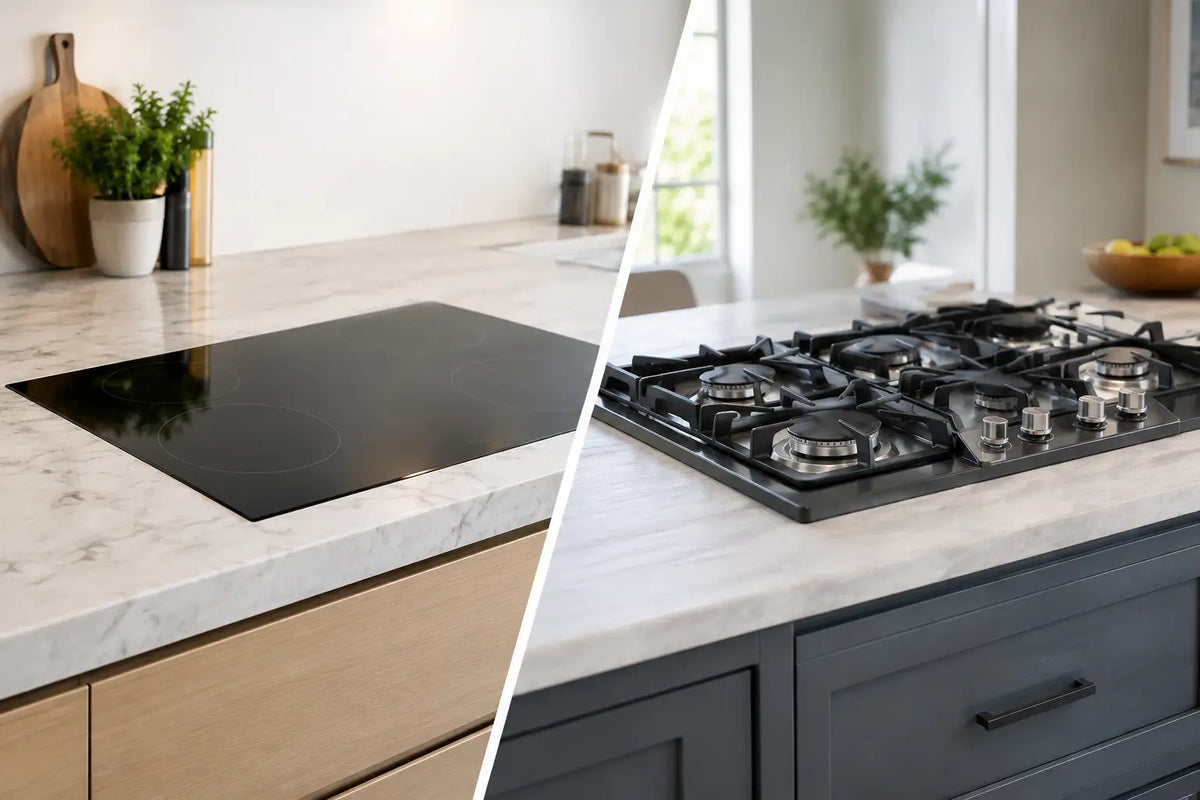
In most comparable kitchen setups, yes. Induction is typically faster than gas because gas heats the air and the cookware, while induction heats the cookware directly. It is also usually faster than a standard radiant electric cooktop, which must cycle a hot element beneath glass.
That does not mean every induction cooktop will outperform every gas burner under every condition. A small, low-power portable induction unit may not beat a professional gas burner when heating a large stockpot. Conversely, a high-power induction system paired with compatible cookware can outperform many premium gas ranges on boil time while using less energy.
The more useful comparison is not simply flame versus no flame. It is usable power at the pan. Induction's response is immediate because the cookware starts heating as soon as the system is activated. Turn the setting down and the energy drops quickly. Remove the pan and the heating action stops. For boiling, simmering, and rapid temperature changes, that responsiveness creates a more precise cooking experience.
What Changes Boil Time in a Real Kitchen
Boil-time claims should always be read with context. The amount of water, its starting temperature, the pot material, and the power level all matter. A quart of cold filtered water in a thick Dutch oven has different demands than two cups of room-temperature water in a covered saucepan.
Four variables make the largest difference:
- Water volume and starting temperature: More water requires more energy. Cold winter tap water takes longer than water that begins near room temperature.
- Cookware construction: Induction-ready stainless steel, cast iron, and carbon steel can work well. Aluminum or copper cookware needs a magnetic induction base.
- Pan contact and fit: A flat base and an appropriately sized pan allow the system to couple energy efficiently.
- Cooktop output and electrical design: Higher-powered zones and correctly planned electrical service give the appliance the capacity to perform as designed.
Faster Boiling, Without a Hot Glass Cooktop
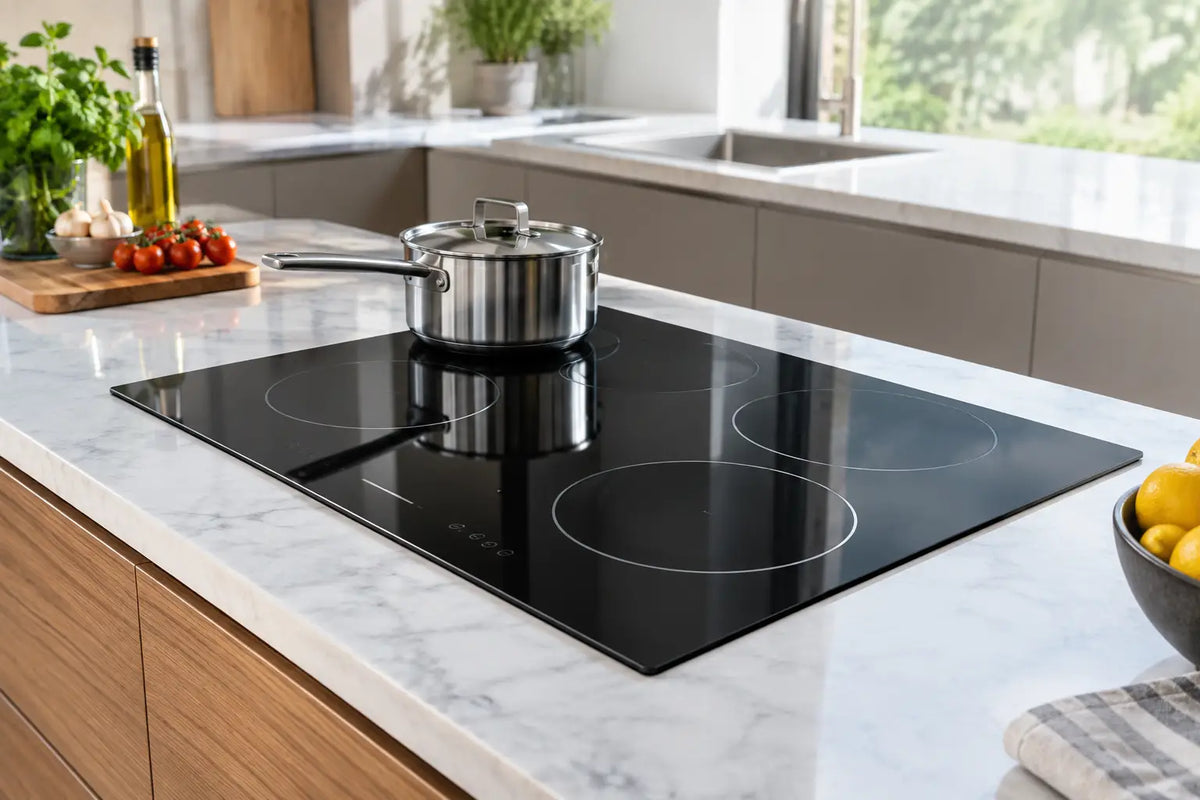
Speed is compelling, but the surface experience is where induction changes kitchen design. With a conventional glass-top unit, the glass becomes hot because the electric element beneath it is hot. It remains hot after cooking, and spills can bake onto the surface.
With induction, the cookware generates the heat. The countertop or glass around the pan may warm from contact with the hot pot, but it is not being heated by an exposed flame or glowing electric element. Once the pan is lifted away, the active heating stops.
For families, that can mean fewer worries around children and pets. For people who entertain, it means a cooking island can return to service sooner. Wipe away a splash after the pot is removed, and there are no grates, burner caps, knobs, or recessed seams to clean.
The Invisible Induction Difference
Through-surface induction takes this performance further by removing the visible cooktop from the design entirely. Beneath an approved porcelain countertop, the induction technology creates a functional cooking zone while preserving the architectural continuity of the island. There are no visible burners when the kitchen is not in use.
The cooking principle remains the same: magnetic cookware is heated directly. What changes is the finished surface above it. A porcelain slab can become a cooking surface, a buffet, a dining table, or a clean expanse for daily prep. For a minimalist kitchen, that is not a minor detail. It gives square footage back to the room.
This application requires planning. Not every countertop material, slab thickness, or installation approach is appropriate. Approved porcelain matters because its composition and thermal characteristics must support safe, reliable operation. The system also needs proper clearances, electrical capacity, ventilation considerations, and coordinated work among the designer, fabricator, electrician, and installer.
That is why selection should begin before the countertop is fabricated, not after the island is complete. Invisacook California helps homeowners and trade professionals validate countertop compatibility and installation requirements before committing to the final kitchen plan.
Choosing Cookware That Delivers the Speed You Expect
Induction cookware does not need to be complicated, but it must be magnetic. A quick magnet test on the base is useful: if a magnet adheres firmly, the pan is likely compatible. Many stainless steel cookware collections are induction-ready, while all-aluminum, copper, and glass cookware generally are not unless they include a magnetic layer.
For the fastest boil, choose a pot with a flat, stable base and a lid. Multi-ply stainless steel is often an excellent choice because it combines a magnetic outer layer with conductive aluminum or copper inside, helping heat spread evenly through the vessel. The result is rapid heating without concentrating all the energy in one spot.
Avoid assuming that a thicker pan is automatically slower. A well-built, heavier pot may take a moment to warm, but it can distribute heat more evenly and retain it well. What matters most is a magnetic base with good contact and construction suited to the food you cook.
Is a Faster Boil Worth It?
For a homeowner who boils water once a week, the time savings may feel like a pleasant upgrade. For a busy household, it changes the rhythm of cooking. Pasta, tea, blanching vegetables, and quick weeknight meals start sooner. The same control that brings water to a boil quickly also helps hold a delicate simmer without the oversized flame adjustments common on gas.
The design value can be even greater. A burner-free porcelain island does not announce itself as an appliance. It supports the room as a piece of architecture, then delivers 400°F cooking performance when dinner begins. Faster boiling is the proof point people notice first. The freedom to use the kitchen island in more ways is what they remember after the renovation is finished.

Leave a comment
This site is protected by hCaptcha and the hCaptcha Privacy Policy and Terms of Service apply.