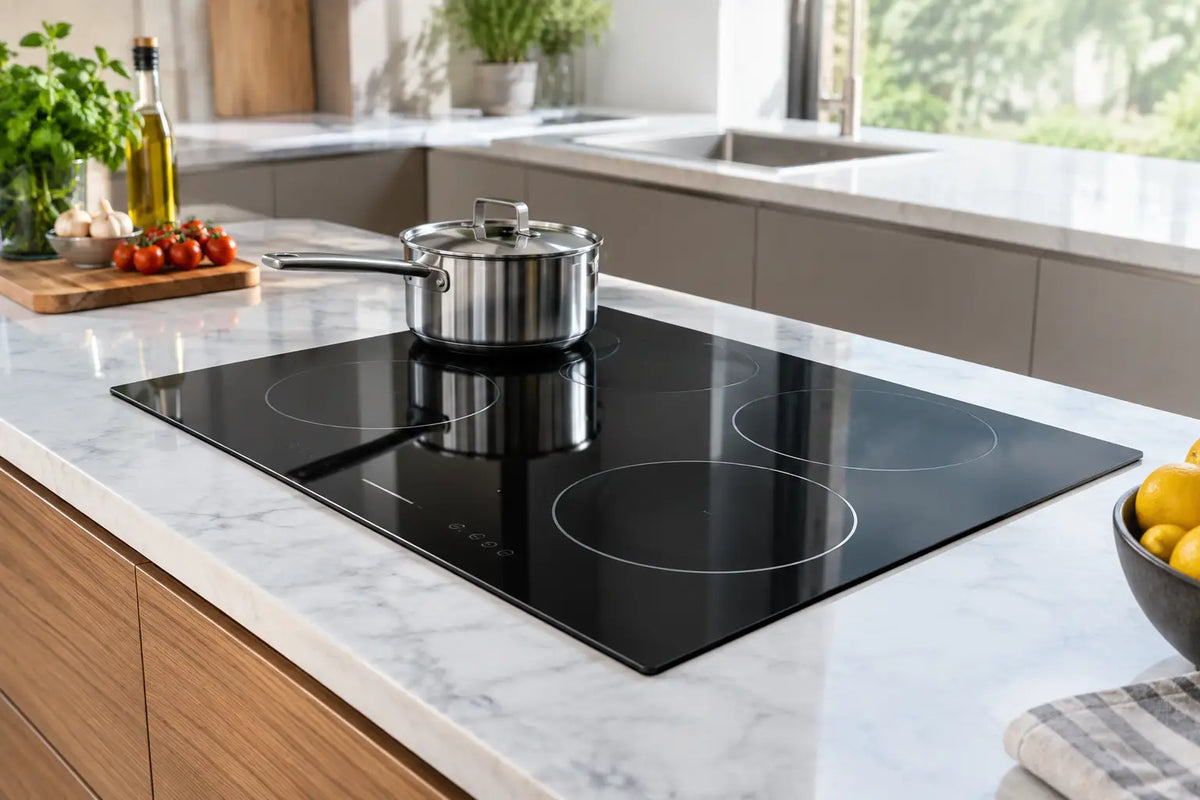
A four burner induction system changes what a kitchen island can be. Instead of dedicating its best surface to visible burners, grates, knobs, and a vent-heavy focal point, you can cook directly through an approved porcelain countertop - then use that same uninterrupted surface for serving, dining, homework, or cocktails.
For a high-end renovation, that is more than a clever appliance choice. It is a layout decision. A four-zone invisible system gives a serious home cook the capacity to sauté, simmer, boil, and hold food at once while preserving the calm, architectural look designers want from a porcelain-clad island.
What Four Burner Induction Actually Delivers
Four burner induction is the right capacity for homeowners who cook real meals, host often, or simply do not want a beautiful kitchen to feel limited. With four independently controlled cooking zones, you can run a skillet and saucepot for dinner while a second pan holds vegetables and another brings water to a boil.
The difference with through-surface induction is where that performance happens. The induction units are installed beneath the porcelain rather than set into a visible glass cooktop. Compatible magnetic cookware activates the hidden zones through the countertop. When cooking is finished, there are no burner outlines interrupting the stone-look surface.
Performance is not sacrificed for the clean appearance. Properly specified systems can reach cooking temperatures up to 400°F and bring water to a boil in under two minutes, depending on the pan, water volume, and electrical configuration. Induction sends energy directly into the cookware, which is why it responds quickly and operates at approximately 83% to 90% efficiency.
That speed matters on a busy weeknight. Just as important, it creates precision. A pan reacts promptly when you reduce power, so delicate sauces and controlled searing are easier than they can be on a slow-to-cool electric element.
Why a Four-Burner Layout Belongs on the Island
A kitchen island is often the most expensive and most visible surface in the room. Conventional cooking equipment asks you to permanently give up a significant part of it. Four burner induction beneath porcelain reverses that equation: the island works as a full cooking station only when you need it.
This is particularly valuable in open-plan homes. A conventional range visually announces the kitchen from across the room. An invisible induction surface lets the cabinetry, porcelain, lighting, and architecture carry the design instead. The island can transition naturally from meal preparation to a buffet for guests, then become a dining or gathering surface without a black glass rectangle at its center.
It also changes how a family uses the room. With no raised grates or exposed burners, the countertop is simpler to wipe down and more comfortable to use between meals. The porcelain surface itself does not become the heat source in the way a radiant electric cooktop does. The cookware heats, while the surrounding counter stays comparatively cool, apart from residual heat transferred from the pan.
That distinction is meaningful around children and pets, but it should not be mistaken for permission to ignore hot cookware. A just-used Dutch oven, skillet, or pan base is still hot. Induction improves the safety profile of the cooking zone; attentive cooking habits still matter.
The Details That Decide Whether It Works
Invisible cooking is a precisely coordinated system, not an appliance added at the end of a remodel. The countertop material, slab thickness, cabinet design, ventilation space, electrical service, cookware, and installation plan all need to align before fabrication begins.
Start With Approved Porcelain
Through-surface induction is designed for select porcelain slabs, not every countertop material. Approved porcelain provides the required thermal performance and dimensional consistency for safe, reliable operation. Natural stone, quartz, concrete, and standard ceramic surfaces may look similar in a finished kitchen, but they should never be treated as interchangeable for this application.
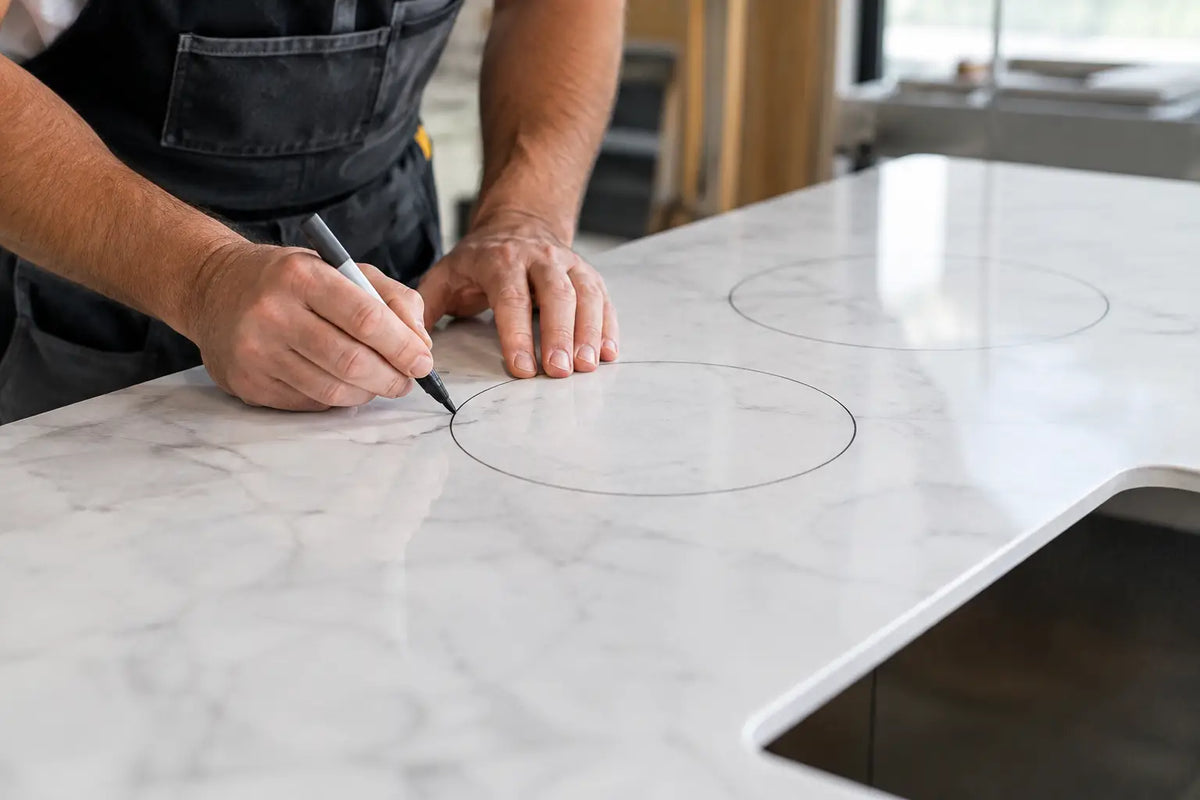
The specific porcelain brand and material thickness must be confirmed before the slab is cut. Your fabricator should understand where each cooking zone will sit, how the system will be supported beneath the counter, and how to preserve the manufacturer-required clearances. A beautiful slab cannot compensate for an unsupported or incompatible installation.
Plan Electrical Early
A four-zone system needs dedicated electrical planning. This is not the time to assume that the circuit intended for a conventional cooktop will automatically suit an invisible induction configuration. A licensed electrician should verify available capacity, required voltage, breaker sizing, wiring, and local code requirements during the design phase.
Early planning protects the clean result you are after. It is far easier to route power, position components, and coordinate cabinet modifications before the island is built and the porcelain is installed. It also avoids the costly last-minute compromises that can happen when appliances are selected after cabinetry and stone have already been finalized.
Respect the Undercounter Space
The countertop may look completely open above, but the equipment below needs room to operate. Four burner induction modules require proper support, airflow, access for service, and coordination with drawers, plumbing, structural supports, and other island features.
This is where an experienced dealer and a capable kitchen team make a noticeable difference. The goal is not simply to fit components into the cabinet. It is to preserve the function of the island while making the installation serviceable for years to come.
Cookware Is Part of the System
Induction requires magnetic cookware. Cast iron, enameled cast iron, and many stainless-steel pans work well, while aluminum, copper, and glass cookware usually need a magnetic base to function. A quick magnet test can offer a useful first indication, but cookware designed for the system delivers the most predictable zone recognition and heating performance.
For a four-burner setup, cookware size and placement matter. Use pans that fit the marked or programmed cooking positions, keep the base reasonably flat, and avoid crowding oversized cookware across multiple zones unless the system is designed for that use. The countertop remains visually minimal, but the cooking surface should still be treated with the same intention as any professional-grade cooktop.
InvisaCookware is designed to pair with through-surface cooking, helping homeowners get consistent performance without guessing which existing pans will work. That is especially useful after a major renovation, when the expectation is not merely that the kitchen looks exceptional, but that dinner works on the first night.
Four Zones vs. Two or Three: Choose for Real Life
More cooking zones are not automatically better. A two-zone invisible induction system can be an elegant choice for a secondary prep kitchen, a compact condo, or an island used mainly for light cooking. Three zones can suit households that want flexibility without using the full island for meal production.
Four burners make the strongest case when the island is intended to replace or substantially reduce reliance on a traditional range. Think of the homeowner who makes Sunday breakfast with multiple pans, hosts holiday meals, prepares dinner while kids gather at the counter, or wants a dedicated cooking surface that disappears completely after guests arrive.
There is a trade-off. Four zones demand more planning below the counter and more disciplined coordination among the designer, fabricator, electrician, and installer. In return, they offer the closest thing to a full-size cooktop without turning the island into a permanent appliance display.
A Better Alternative to the Visible Cooktop Question
Many luxury kitchens reach the same decision point: a gas range, a conventional glass induction cooktop, or a cooking surface that is hidden inside the island. Gas offers familiar flame and immediate visual feedback, but it adds grates, cleanup, combustion, and a strong visual presence. Glass-top induction is fast and efficient, but it still leaves a visible appliance on the counter every day.
A four burner induction system beneath porcelain is for homeowners who want induction performance without accepting the visual compromise. It is not the lowest-cost approach, and it should not be installed as a casual retrofit. It is a premium architectural solution for a kitchen planned around multifunctional space.
Invisacook California helps homeowners and project teams validate the details before the commitment is made, from porcelain compatibility and electrical requirements to installation coordination and cookware selection. That level of guidance matters because the finished result should feel effortless, even though the planning behind it is highly intentional.
The best time to decide on four hidden cooking zones is before the porcelain is ordered and the island drawings are final. Bring the cooking plan into the same conversation as the cabinetry, slab layout, and electrical design, and your island can remain the most beautiful surface in the house - even while dinner is on it.


Leave a comment
This site is protected by hCaptcha and the hCaptcha Privacy Policy and Terms of Service apply.