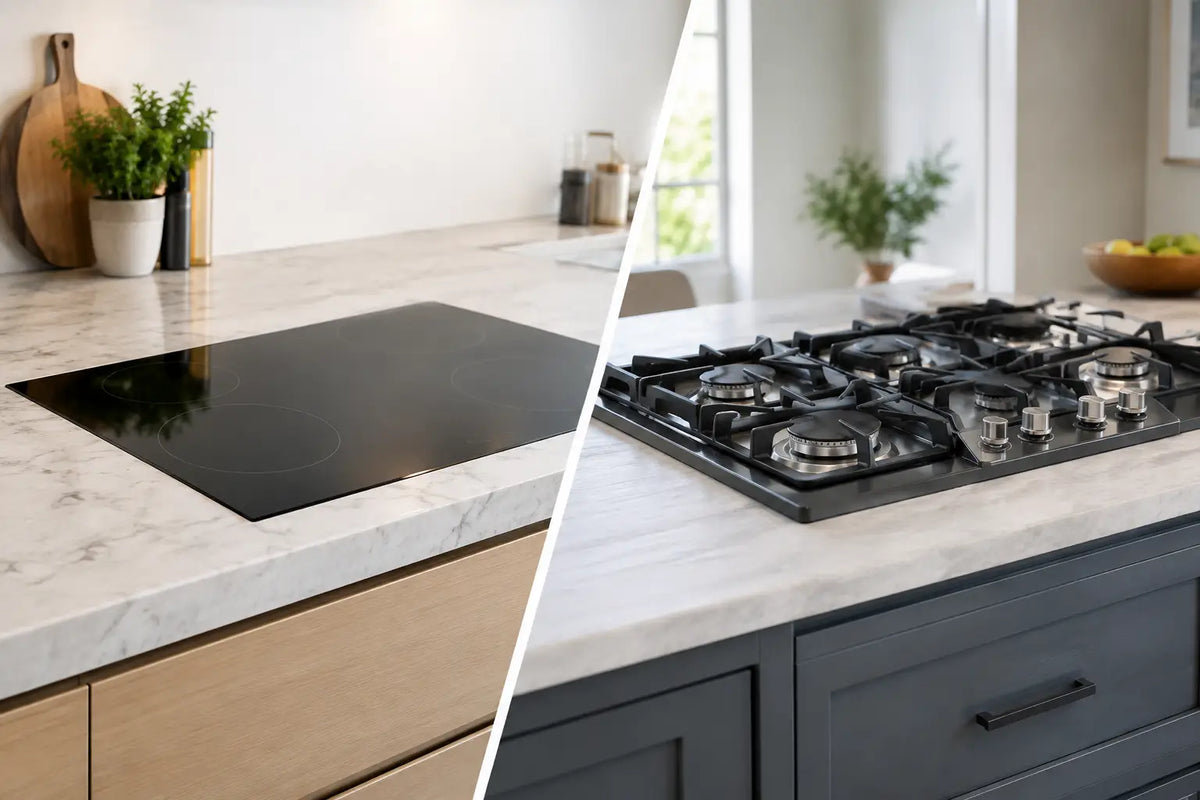
A kitchen island can either announce itself as a cooking station or disappear into the architecture. That is the real decision behind flush mounted versus freestanding cooktops. Both can deliver serious heat and everyday convenience, but they create entirely different experiences for the room, the countertop fabricator, and the people who live around the island.
For a high-end renovation, the choice should begin with how the kitchen needs to function after dinner is served. Is the island primarily a dedicated cooking zone? Or should it become a prep surface, buffet, homework station, cocktail bar, and gathering table without visible burners taking center stage?
Flush Mounted Versus Freestanding Cooktops: The Core Difference
A flush-mounted cooktop sits level with the surrounding countertop. In a conventional induction installation, that usually means a glass ceramic cooking surface is fitted into a precisely cut opening so its edge aligns with the counter. The burners remain visible, but there is no raised lip to catch crumbs or interrupt the counter line.
A freestanding cooking setup is typically a range: a self-contained appliance with an oven below and a visible cooktop above. Some homeowners also use “freestanding cooktop” to describe a portable countertop unit. In either case, the appliance remains a distinct object in the kitchen rather than becoming part of the countertop plane.
There is also a third option that changes the comparison: through-surface induction. With this approach, induction technology is installed beneath approved porcelain, so the porcelain itself becomes the cooking surface. No glass panel, burner outlines, or exposed cooktop interrupts the island.
That distinction matters. A flush-mounted glass induction cooktop refines a conventional appliance. A through-surface system rethinks the island entirely.
Design Impact: Visible Appliance or Continuous Surface?
A freestanding range makes a strong visual statement. That can be exactly right in a traditional kitchen, a chef-inspired space, or a renovation built around a professional-style focal point. A substantial range can add character, symmetry, and the familiar confidence of knobs, grates, and a dedicated oven.
The trade-off is permanence. The cooking zone is always visible, and an island cooktop creates a clear boundary between the person cooking and the people gathering nearby. Even a beautiful range occupies visual and physical territory every day.
Flush-mounted cooktops take a quieter approach. Their level installation gives the counter a more tailored appearance, especially with porcelain, quartz, or natural stone. Still, the black glass surface and burner markings remain visible. When the appliance is off, it is still unmistakably an appliance.
For minimalist and architectural kitchens, a hidden induction system takes the final step. A porcelain island can read as one uninterrupted slab from end to end. When cooking is finished, the same surface can support serving platters, seating, floral arrangements, or simply open space. This is not only a visual benefit. It can make a large island work harder for entertaining and family life.
Performance Is Not Determined by Visibility
Choosing a less visible cooking surface does not mean compromising on speed. Induction transfers energy directly to magnetic cookware, rather than heating the surrounding air or relying on an open flame. The result is responsive power, precise control, and significantly less wasted heat than gas or traditional electric elements.
A well-specified induction system can bring water to a boil in under two minutes and deliver cooking temperatures up to 400°F at the pan. The countertop around the cookware remains comparatively cool because heat is generated in the vessel itself, not by a glowing exposed element.
Freestanding gas ranges remain appealing to cooks who enjoy seeing a flame and using any type of cookware. They also offer familiar performance during certain power disruptions, depending on the model. But gas introduces radiant heat, combustion byproducts, open-flame safety concerns, and grates that require regular cleaning.
Flush-mounted induction and through-surface induction both require compatible magnetic cookware. For many homeowners, that is a straightforward change. Cast iron, enameled cast iron, and many stainless steel pans work beautifully. The key is confirming cookware compatibility before the first dinner party, not after.
Cleanup and Everyday Living
The difference becomes especially clear on a busy weeknight.
A freestanding gas range has grates, burners, seams, knobs, and crevices. A spill can bake onto multiple surfaces. Even a premium range requires more than a quick wipe-down, particularly after sautéing, frying, or simmering sauces.
A flush-mounted glass cooktop is easier to clean because its surface is flat. Yet it still has edges around the cutout, and food residue can mark the glass. Abrasive pans and dragged cookware can also leave visible wear over time.
With through-surface induction beneath porcelain, the cooking area is the same durable porcelain surface used throughout the island. After the pan is removed and the surface is safe to touch, cleanup is generally as simple as wiping the counter. There are no exposed burner circles, grates, or glass panel seams competing for attention.
For families with young children or pets, the cooler surrounding surface adds another practical layer of confidence. The cookware itself is hot, of course, and normal kitchen supervision still applies. But there is no open flame and no hot coil left glowing after a pan is lifted away.
Installation: Where the Real Decision Happens
Freestanding ranges are comparatively familiar for most contractors. They need appropriate gas or electrical service, ventilation planning, clearances, and a finished floor location. They can be simpler to replace later, but they demand dedicated space and often influence the entire kitchen layout.
A flush-mounted cooktop requires a countertop cutout with exact dimensions. The cabinet below must accommodate the appliance body, ventilation requirements, and electrical connection. Fabricators need the final specifications before cutting the slab. A last-minute appliance change can become expensive when the countertop opening is already complete.
Through-surface induction requires even earlier coordination, but the result is more integrated. The porcelain material, slab thickness, support structure, electrical capacity, control placement, and approved cooking zones all need to be planned before fabrication and installation. This is a system, not a late-stage appliance swap.
That planning is worth it when the island is the centerpiece of the home. Invisacook California helps homeowners, designers, fabricators, and contractors verify the technical details before the countertop is cut, including approved porcelain selections and electrical requirements. The best installations feel effortless because the coordination happened long before the first pan reaches the surface.
When a Freestanding Setup Is the Better Choice
A freestanding range can be the right answer when the kitchen needs an integrated oven directly below the cooktop, the renovation favors a classic or commercial-inspired look, or the homeowner wants a familiar appliance that can be replaced without altering the countertop.
It also makes sense when cooking is intentionally meant to be on display. For serious home cooks who love the theater of gas, visible burners and heavy grates may be part of the appeal rather than a design compromise.
A flush-mounted conventional induction cooktop is a strong middle ground. It delivers a clean, modern look and induction efficiency while keeping the appliance selection broad. It is ideal for homeowners who want a refined cooking surface but do not need the island to disappear completely when not in use.
When an Invisible Cooking Surface Wins
Through-surface induction is designed for homes where the island must do more than cook. It is especially compelling in open-plan kitchens, compact luxury residences, and entertaining-focused homes where every square foot of horizontal surface matters.
It also gives designers more freedom. Without a black glass rectangle defining the cooking zone, the island can maintain a continuous porcelain pattern and a calmer visual rhythm. The kitchen can look like furniture when it is not actively being used as a kitchen.
This option is not a shortcut, and it is not right for every countertop material or renovation timeline. It rewards precise planning, approved porcelain, compatible cookware, and a team willing to coordinate details. For the right project, however, it replaces a visible appliance with usable, high-performance space.
Before approving a slab layout or finalizing electrical rough-in, decide what the island should become between meals. That answer will point you toward a freestanding focal point, a refined flush-mounted surface, or a countertop that keeps its cooking power beautifully out of sight.


Leave a comment
This site is protected by hCaptcha and the hCaptcha Privacy Policy and Terms of Service apply.