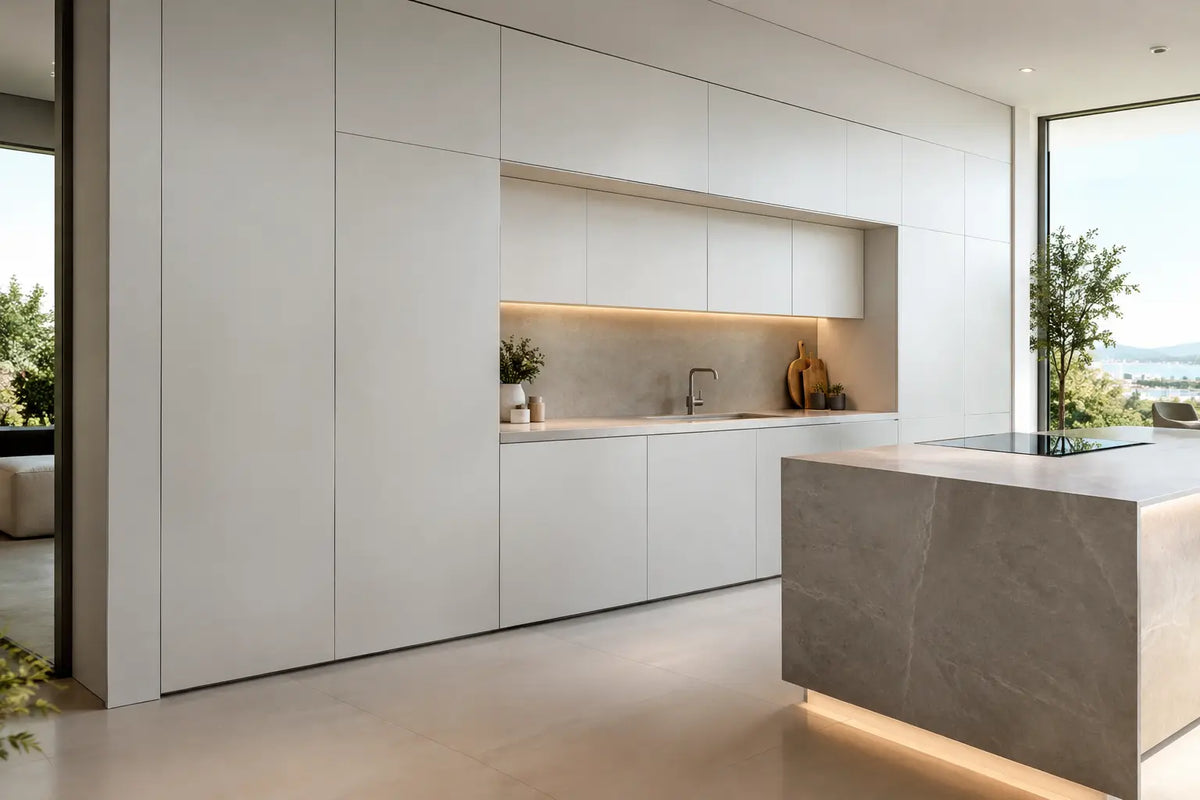
A kitchen island should not lose its purpose the moment dinner starts. Yet a conventional cooktop turns the center of the home into a fixed appliance zone, complete with visible burners, metal grates, glass panels, controls, and cleanup seams. Future invisible kitchen design takes a different approach: the countertop itself becomes the cooking surface, then returns to a clear, architectural plane when the pans come off.
This is not a concept kitchen built for a showroom. Through-surface induction is a working solution for high-end renovations using compatible porcelain slabs. It delivers the speed and control homeowners expect from a premium cooktop while giving designers something standard appliances cannot: uninterrupted surface area.
What future invisible kitchen design changes
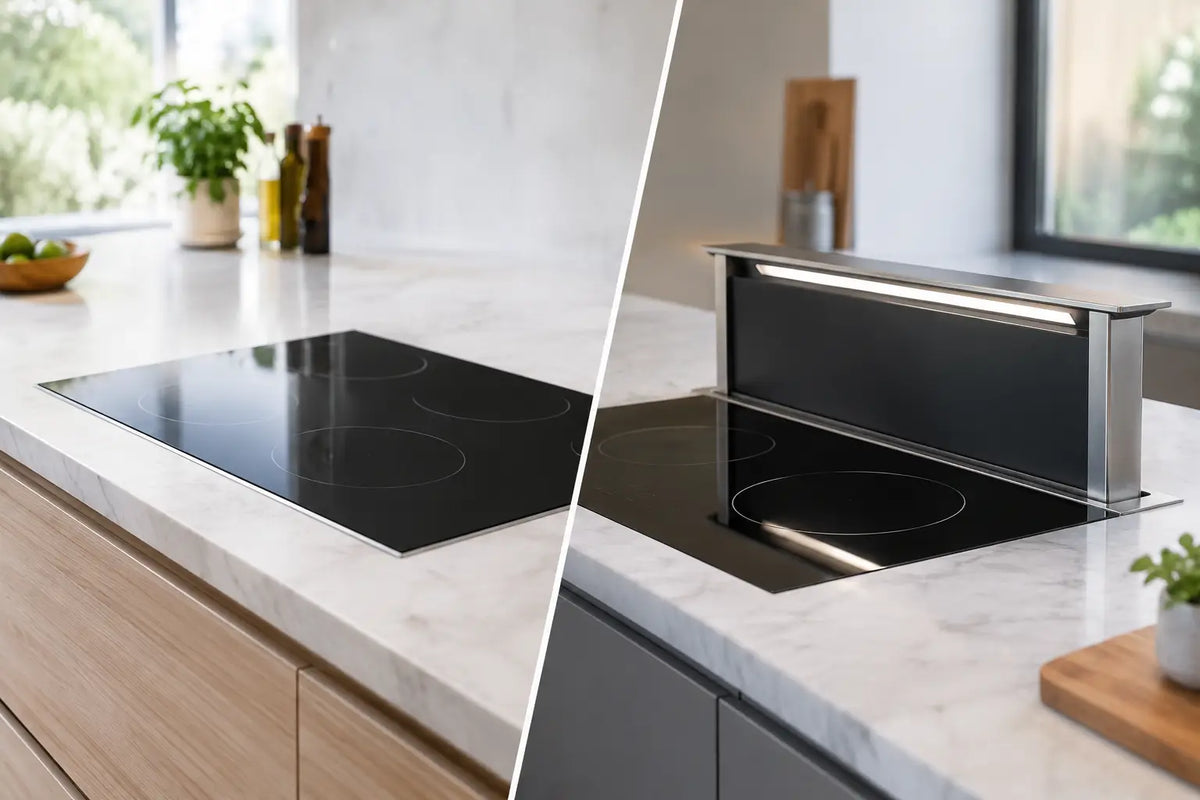
The visible cooktop has remained largely unchanged because it forces an obvious compromise. You gain a cooking zone, but you permanently give up countertop real estate. On a large island, that can mean an expanse of black glass or a gas range becomes the visual focal point, even when nobody is cooking.
An invisible induction system is installed beneath the porcelain. Cooking positions can be marked with subtle etching, a minimalist icon, or no permanent visual marker at all, depending on the design and how the space will be used. Place compatible induction cookware on the selected zone, activate the system, and the surface cooks through the slab. Remove the cookware, and the island is ready for serving, homework, cocktails, floral arrangements, or a full buffet.
That shift is especially meaningful in open-plan homes. The kitchen no longer reads as a collection of appliances first. It reads as furniture, architecture, and material. The cooking capability is present when needed without dominating the room when it is not.
Performance still has to lead the design
A hidden cooktop earns its place only if it performs like a serious appliance. Induction works by creating a magnetic field that heats compatible cookware directly. The pan becomes the heat source rather than the countertop or surrounding air. That produces rapid response, efficient energy use, and a surface that remains substantially cooler than a conventional radiant glass cooktop.
With the right system, cookware, and installation, through-surface induction can reach cooking temperatures up to 400°F and bring water to a boil in under two minutes. It also operates at roughly 83 to 90 percent energy efficiency. Those specifications matter because a beautiful island is not useful if it makes everyday cooking slower or more complicated.
The practical experience is where the technology becomes convincing. Sauce splatter stays on a flat porcelain surface rather than collecting beneath grates. A pot can be lifted without leaving a hot exposed burner behind. After cooking, there are no burner rings, metal trim, or control knobs to work around. A wipe-down replaces the familiar task of cleaning a cooktop.
For households with children or pets, the cooler countertop is another meaningful advantage. The cookware gets hot. The porcelain around it does not behave like an open flame or a glowing electric coil. That does not eliminate the need for normal kitchen awareness, but it changes the risk profile of the island.
The island becomes a true multifunctional surface
A standard cooktop reserves space all day for a task that may happen for an hour. Invisible induction gives that space back. It is a subtle idea with an outsized effect on how a kitchen feels and functions.
For an entertainer, the same island can move from active cooking to plated service without a visual interruption. For a family, it can be used for breakfast and schoolwork between meals. For a designer working within a smaller footprint, it can remove the need to choose between a generous prep area and a cooktop location. The gain is not only cleaner sightlines. It is more flexibility per square foot.
The material decision is the real starting point
Not every countertop can support through-surface induction. Porcelain is central to the conversation because compatible slabs are engineered to handle the conditions required for this type of installation while offering the thin, refined profile that makes the concept possible.
Countertop selection cannot be treated as a last-minute finish decision. The exact porcelain brand, slab thickness, underside construction, and fabrication plan should be verified before equipment is ordered or cutouts are finalized. Approved materials and installation specifications exist for a reason: induction performance depends on the relationship between the system, the cookware, and the surface above it.
This is also where a knowledgeable dealer adds real value. Invisacook California helps homeowners, designers, fabricators, and contractors validate countertop compatibility, electrical needs, system sizing, and installation planning before the project reaches the expensive point of no return. A hidden appliance should never mean hidden decisions.
Electrical planning cannot be an afterthought
Invisible induction does not require a gas line, which can simplify the kitchen plan and remove combustion from the home. It does require proper electrical infrastructure. The number of cooking zones, system configuration, and local code requirements will determine the circuit and panel planning.
Coordinate early with the electrician, cabinetmaker, countertop fabricator, and kitchen designer. The equipment needs sufficient room below the countertop, appropriate ventilation around its components, and access for service according to the manufacturer requirements. The cleanest finished kitchens are usually the ones where these details were settled before cabinets and slabs arrived.
It is also worth considering integrated features while the island is being planned. Through-counter wireless charging, for example, can keep phones powered without adding visible outlet towers or cluttering a countertop with cords. It follows the same principle as invisible cooking: useful technology should support the room without taking it over.
Where invisible induction fits best
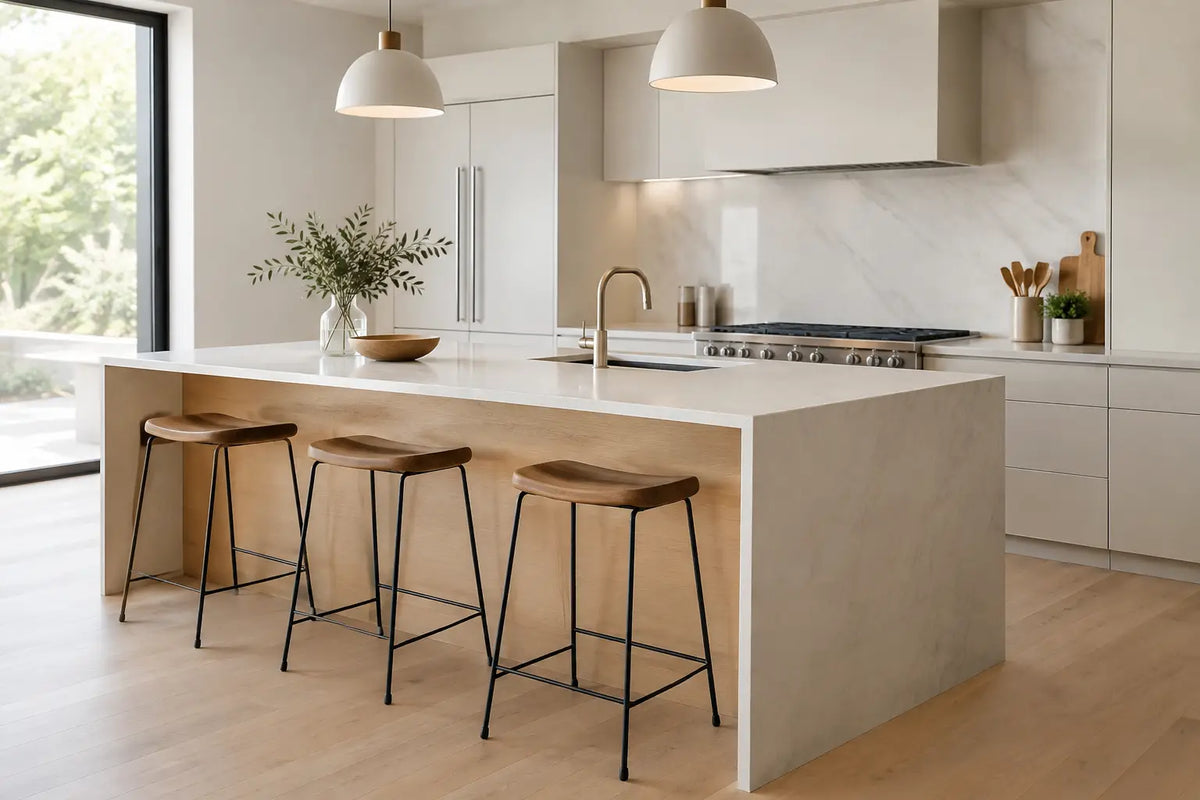
This approach is especially compelling for a porcelain waterfall island in a modern, transitional, or contemporary home. It suits clients who want the visual calm of a furniture-grade kitchen but still cook often enough to demand speed and control. It can also be a powerful choice for second kitchens, entertaining areas, luxury condominiums, and homes where the island is the primary gathering point.
It is not automatically the right answer for every renovation. A homeowner who strongly prefers cooking with a visible flame may still choose gas. Someone committed to a thick natural stone with no compatible path may need a conventional induction or gas solution. And projects with limited electrical capacity, shallow cabinetry, or a late-stage countertop decision may require more planning than the schedule allows.
The key is to compare the full experience, not just the appliance category. Gas offers flame visibility but brings heat, open combustion, grates, and a permanent visual presence. A conventional glass induction cooktop offers excellent efficiency but still interrupts the counter with a dark rectangle. Through-surface induction is the option for homeowners who want high performance without accepting the appliance as a visual object.
Designing for the next decade, not the next trend
The strongest luxury kitchens feel calm because every element has a purpose. Future invisible kitchen design is not about hiding technology for novelty. It is about removing unnecessary visual noise while making the room work harder.
A porcelain island that can boil water quickly, handle dinner service, clean in moments, and then become a clear gathering surface makes a persuasive case for a different kind of kitchen. Plan the material, electrical, fabrication, and cookware decisions early. Then let the island do what great design does best: deliver more than one job without looking like it is trying too hard.

Leave a comment
This site is protected by hCaptcha and the hCaptcha Privacy Policy and Terms of Service apply.