
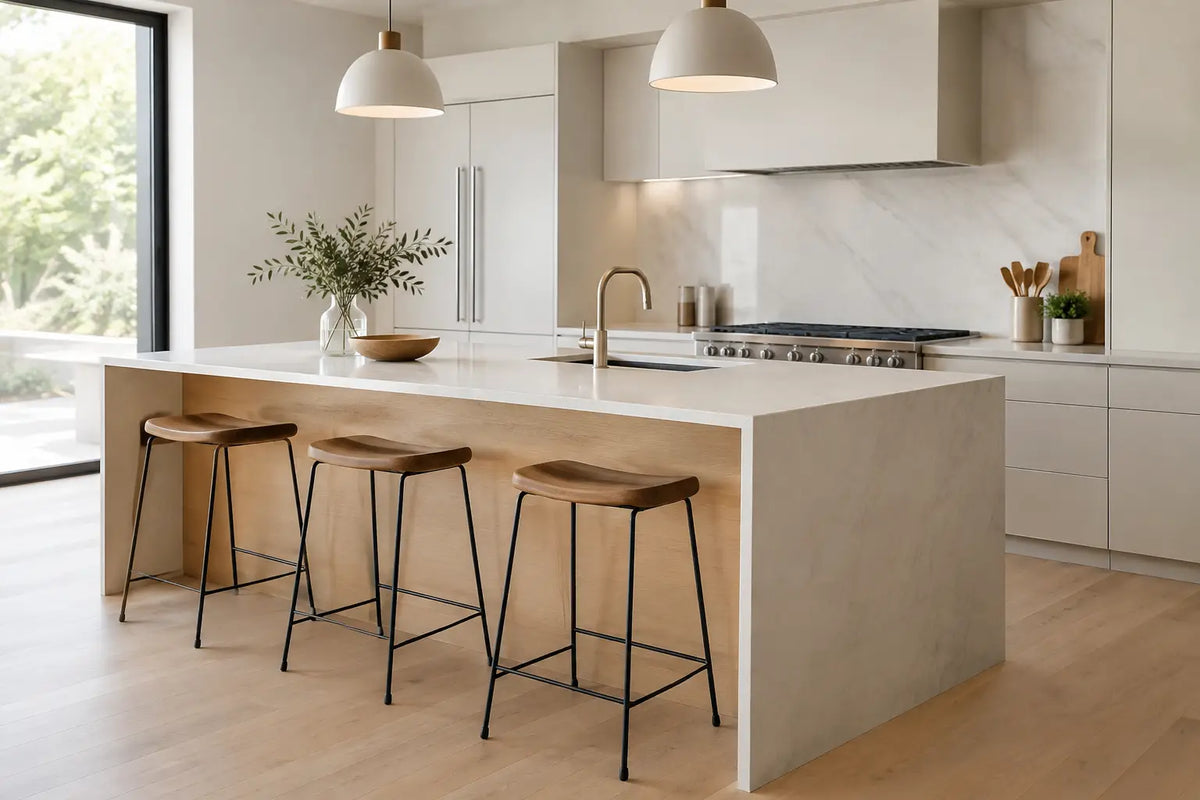
A luxury kitchen island used to force a choice: make it a serious cooking zone, or preserve it as a clean architectural surface. Induction adoption is changing that calculation. Homeowners no longer have to accept visible burners, heavy grates, or a second appliance interrupting the centerpiece of the room.
For a growing number of high-end renovations, induction is not simply replacing gas. It is enabling a different kind of kitchen - one where the island can cook dinner at 6 p.m., serve cocktails at 7 p.m., and function as an uninterrupted porcelain surface the rest of the time. That shift matters most when design, performance, and usable square footage all carry equal weight.
Why Induction Adoption Is Accelerating
The strongest case for induction begins with performance. Induction creates heat directly in compatible cookware rather than heating a burner and then transferring that heat to the pan. The result is responsive control, rapid boiling, and less wasted energy. Depending on the pan, water volume, and cookware quality, a properly specified system can bring water to a boil in under two minutes.
That speed comes with a more controlled cooking experience. The active heat is concentrated at the cookware, so the surrounding countertop remains far cooler than a gas grate or conventional electric element. The pan is still hot, and sensible kitchen precautions still apply, but there is no exposed flame and no glowing element to work around. For households with children, pets, or frequent entertaining, that difference is practical rather than cosmetic.
Efficiency is also moving the conversation forward. Conventional gas loses a meaningful share of its heat to the surrounding room. Induction systems can operate at approximately 83% to 90% energy efficiency, putting more of the energy used into the pan instead of the kitchen air. In a large open-plan home, less excess heat near the island can make cooking more comfortable.
There is also a design reason behind the momentum. Modern kitchens are increasingly expected to feel like living spaces. Oversized pendants, sculptural stools, full-height cabinetry, and quiet material palettes have pushed visible appliances out of the visual center. A traditional cooktop can interrupt that intention. Through-surface induction allows the countertop material to remain the focal point.
Induction Adoption Is About More Than Replacing Gas
A standard glass-top induction cooktop is already a major step up from gas for many homeowners. It is fast, efficient, and easy to clean. But it still reads as an appliance. The black glass rectangle, control markings, and designated cooking zone remain visible even when the kitchen is not being used for cooking.
Invisible induction changes the role of the island itself. The cooking technology is installed beneath an approved porcelain countertop, leaving no burner outlines on the finished surface. When the system is off, the island looks like a continuous slab. When it is on, marked cooking areas guide placement without permanently changing the visual character of the room.
That distinction is why induction adoption in luxury projects often starts with a design brief rather than an appliance comparison. The question is not only, “Should we switch from gas?” It is, “What should this island become when nobody is cooking?”
For a family, the answer may be a homework station, breakfast table, and dinner-prep surface. For an entertainer, it may be a buffet, cocktail bar, and chef-facing gathering point. For an architect, it may be the uninterrupted material statement that holds the entire room together.
The Technical Details That Decide Whether It Works
Not every countertop and not every renovation plan is suitable for through-surface induction. That is where an exciting concept becomes a technical project requiring early coordination.
Porcelain is the preferred material because it is engineered for high heat resistance and can be specified in approved thicknesses and compositions. The exact slab brand, product line, thickness, fabrication approach, and underside conditions all matter. A countertop fabricator should know about the induction system before fabrication begins, not after the slab is cut and installed.
Electrical planning matters just as much. Invisible induction systems require dedicated electrical circuits sized to the selected configuration. A one-burner system has different demands than a four-burner layout, and the control components need a planned location that remains accessible after installation. A qualified electrician, fabricator, cabinet team, and appliance specialist should be working from the same plan.
Ventilation deserves an honest assessment, too. Induction eliminates combustion at the cooking surface, but it does not eliminate steam, grease, or cooking odors. Whether a hood, downdraft, ceiling solution, or other ventilation approach is appropriate depends on the cooking style and local requirements. Someone who regularly sears, fries, or cooks aromatic dishes will have different needs than someone using the island primarily for lighter meals and entertaining.
The Cookware Question Is Smaller Than It Sounds
Induction requires magnetic cookware. Cast iron and many stainless-steel pans work well; aluminum, copper, and glass cookware generally do not unless they have an induction-compatible magnetic base. The easy test is a magnet: if it adheres securely to the bottom of the pan, the cookware is typically compatible.
With through-surface systems, cookware selection should be more deliberate. Flat-bottomed pans in the appropriate size help maximize performance and protect the finished countertop. InvisaCookware is designed for this application, giving homeowners a reliable option rather than asking them to guess whether existing pans will deliver the expected results.
This is one area where expectations should stay realistic. Invisible induction is not intended to reproduce the visual theater of an open gas flame. If flame-charred peppers, wok cooking over fire, or an oversized commercial griddle are central to how someone cooks, gas may remain the better fit for part of the kitchen. Many premium projects solve this by placing induction at the island for daily cooking and social use, while reserving specialized cooking for a secondary location.
What Adoption Looks Like in a Well-Planned Renovation
The best projects treat invisible induction as an early design decision. It affects the countertop specification, island dimensions, electrical rough-in, cabinetry, appliance placement, and the way the household expects to use the room.
A practical starting point is deciding how many cooking zones the island truly needs. One or two burners can be ideal for a compact prep island, a vacation home, or a kitchen with a separate primary range. Three- and four-burner systems make more sense when the island will carry the daily cooking load. More burners are not automatically better if they create crowding or exceed the way the space is actually used.
Next, establish the countertop material before finalizing equipment. A porcelain sample is not enough on its own. The full specification needs review against the induction system requirements. From there, the project team can confirm burner locations, controls, power, and access points before cabinets and slabs are finalized.
This is where specialist support saves time. Invisacook California works directly with homeowners, designers, fabricators, and contractors to validate compatibility and installation details before an expensive countertop decision becomes difficult to change. That guidance is especially valuable for clients building remotely or coordinating several trades on a custom project.
A Kitchen That Does More When It Is Off
The most compelling argument for induction is not the technology hidden below the countertop. It is what the technology gives back above it: more clear surface, fewer visual interruptions, easier cleanup, and an island that remains useful between meals.
A porcelain countertop with no visible burners does not ask to be excused from the room when the cooking ends. It stays ready for flowers, platters, laptops, school projects, and late-night conversation. That is the real measure of a well-designed kitchen: not just how efficiently it cooks, but how completely it supports the life happening around it.
Before choosing a cooktop, decide what you want your island to do for the other twenty-three hours of the day. The answer will usually make the right direction clear.

Leave a comment
This site is protected by hCaptcha and the hCaptcha Privacy Policy and Terms of Service apply.