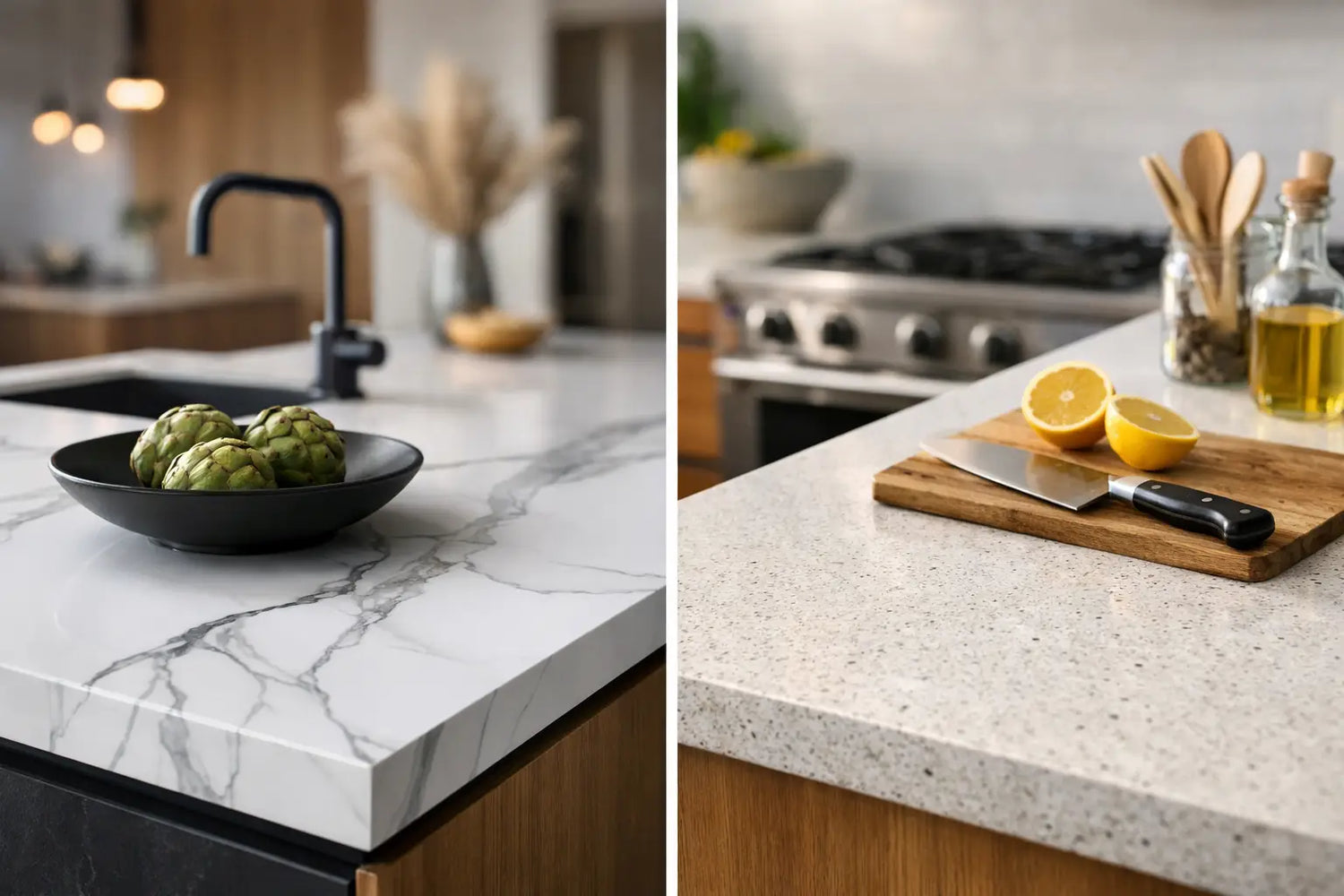
A kitchen island can be a showpiece, a prep station, a serving bar, and the center of daily life. That is why the choice between porcelain versus quartz counters reaches far beyond color samples. Both surfaces deliver a polished, low-maintenance look, but they perform very differently around heat, oversized slabs, edge details, and the next generation of invisible cooking.
For a traditional renovation, quartz remains a strong, familiar option. For a kitchen designed around uninterrupted surfaces, serious heat resistance, and an island that can become a cooking zone without visible burners, porcelain makes a different kind of case.
Porcelain Versus Quartz Counters: The Core Difference
Quartz countertops are engineered slabs made primarily from crushed natural quartz blended with resins, pigments, and other binders. They are dense, consistent, and available in an enormous range of colors and patterns. Many homeowners choose quartz because it delivers the look of stone with dependable fabrication and no routine sealing.
Porcelain slabs are made from refined clay, minerals, and pigments, then fired at extremely high temperatures. The result is a compact, nonporous material with exceptional resistance to heat, UV exposure, staining, and everyday kitchen chemicals. Large-format porcelain also makes it possible to carry one finish across counters, full-height backsplashes, waterfall panels, and even cabinet cladding.
Neither material is automatically better for every home. The right choice depends on what the counter needs to do. If it will simply be a beautiful, durable worktop, both deserve consideration. If it is expected to handle hot cookware, outdoor light, or an integrated through-surface induction system, porcelain moves into a category of its own.
Heat Changes the Conversation
The most practical difference between porcelain and quartz is heat tolerance.
Porcelain is fired in a kiln, which gives it a high resistance to thermal stress under normal kitchen use. A hot pan is far less likely to create the kind of permanent concern associated with resin-bound surfaces. That matters for ambitious cooks, busy families, and anyone who prefers not to hunt for a trivet every time dinner moves from cooktop to island.
Quartz is heat resistant, not heat proof. The resin binders within a quartz slab can discolor, scorch, or crack when exposed to a very hot pot, pan, slow cooker, electric griddle, or sustained localized heat. A quality fabricator will still recommend trivets and heat protection. This is not a failure of quartz. It is simply the trade-off behind its engineered composition.
For visible cooktops, that distinction may feel manageable. For hidden induction, it is foundational. Through-surface induction relies on a countertop material that can safely sit above an induction unit while cookware generates intense heat on the surface. Approved porcelain slabs are engineered for this application. Quartz is not the countertop material for an Invisacook installation.
Invisible Cooking Requires More Than a Beautiful Slab
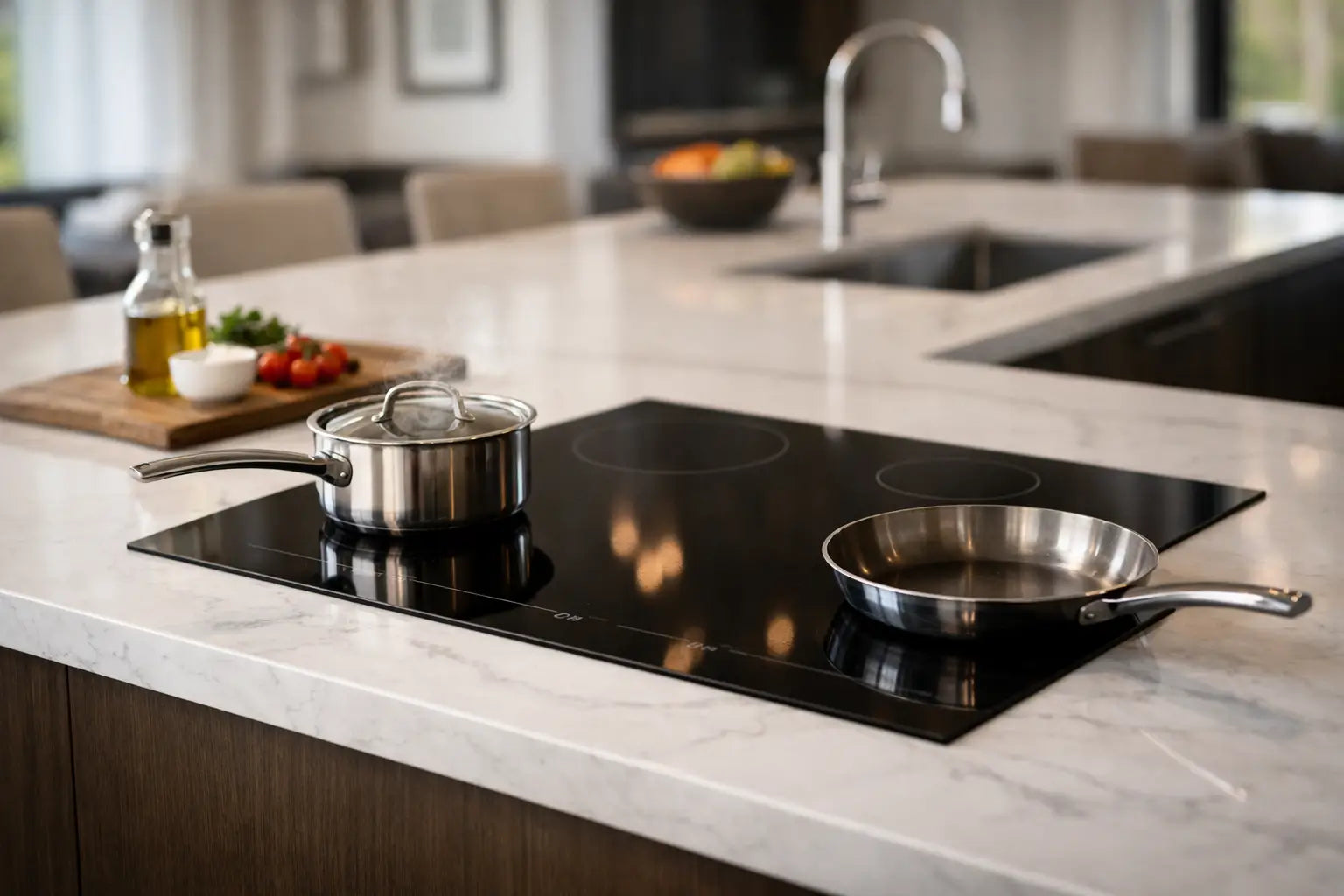
A conventional cooktop divides an island into fixed zones: prep here, burners there, cleanup around the edges. A porcelain surface paired with through-surface induction changes the plan entirely. When cooking is finished, there are no grates, knobs, burner outlines, or raised glass panel interrupting the countertop.
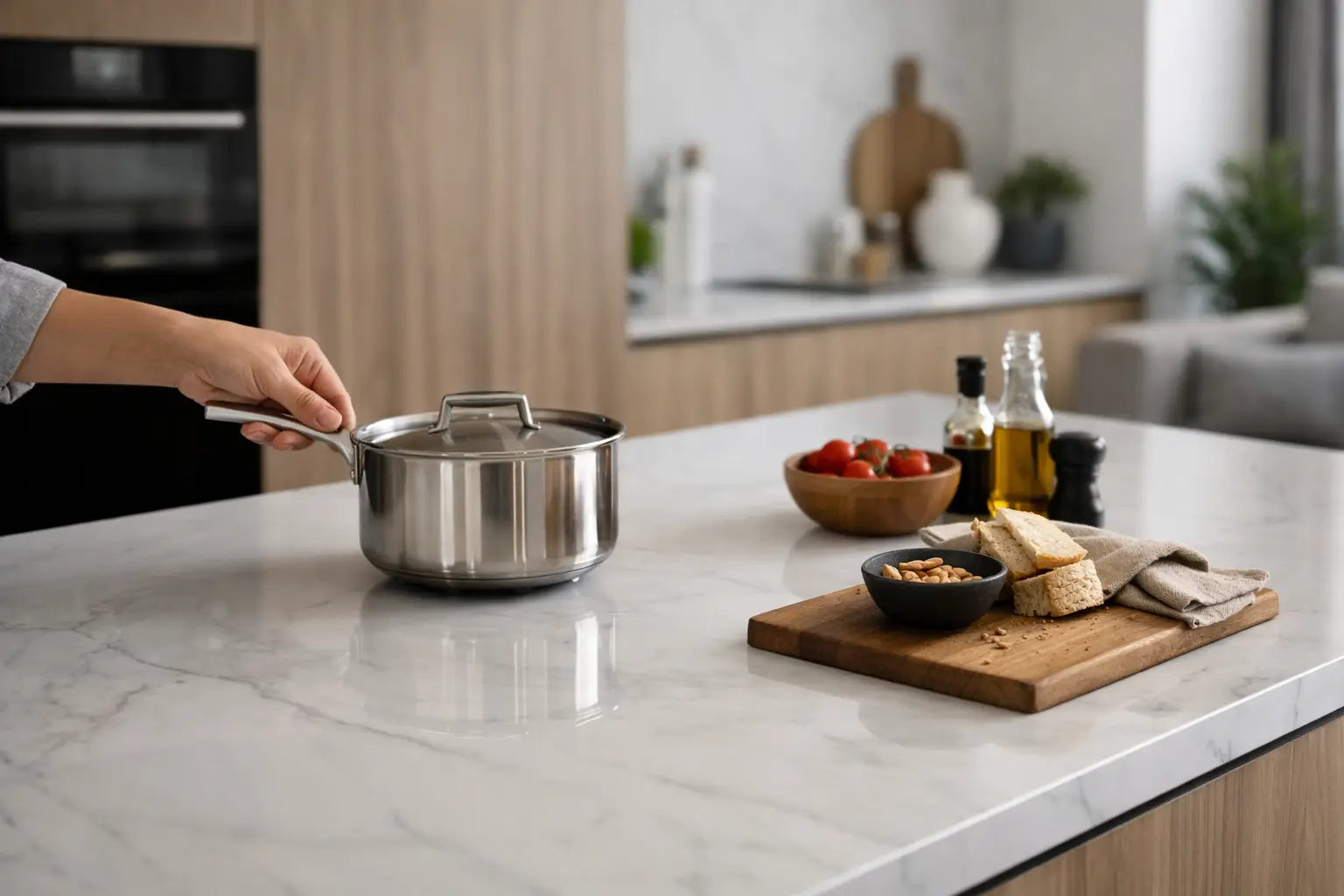
The same island can shift from a high-performance cooking surface to a buffet, homework station, dining table, or clean architectural centerpiece. With compatible cookware, the induction field heats the pan while the porcelain surface itself remains comparatively cool. Spills do not collect around burner hardware. Cleanup is as direct as wiping the counter.
This is where material selection needs to happen early, before cabinetry is finalized and before the slab is ordered. Countertop thickness, approved porcelain brand and collection, electrical requirements, ventilation planning, cutouts, and unit placement all affect the finished result. Invisacook California helps homeowners, designers, fabricators, and contractors validate those details before installation becomes expensive to change.
Durability: Both Are Tough, but in Different Ways
Quartz is highly resistant to staining and is one of the easier surfaces to live with. It does not require sealing, and its consistent composition can make it forgiving for everyday meal prep. It also resists scratches well, although cutting directly on it is still a poor habit for both the slab and the knife.
Porcelain is exceptionally hard, nonporous, and resistant to scratches, stains, acids, and household cleaners. Tomato sauce, red wine, citrus, coffee, and cooking oils are less likely to become a maintenance event. Its UV stability is another meaningful advantage. A porcelain finish can continue onto a sunlit patio kitchen or near expansive windows without the color-change concerns that can affect some quartz products.
There is a fabrication caveat. Porcelain slabs are thinner than many traditional stone slabs and require fabricators who understand porcelain handling, support requirements, mitered edges, and precise cuts. The material is extremely durable once installed correctly, but edges can chip if subjected to a sharp impact. A skilled porcelain fabricator is not optional, especially for waterfall islands and integrated cooking projects.
Quartz also requires professional fabrication, but it is more familiar to a broader range of countertop shops. If your project is on a compressed schedule in an area with limited porcelain expertise, that availability can legitimately influence the decision.
Design Freedom and the Look of the Kitchen
Quartz excels at consistency. If you want a crisp white surface, a quiet concrete look, or a predictable veining pattern throughout a large kitchen, quartz offers a deep catalog of options. It can be a smart choice when visual control and a classic stone-inspired appearance are the priority.
Porcelain brings a more architectural point of view. Many collections recreate marble, limestone, travertine, metal, concrete, and solid colors with remarkable realism. Because porcelain is available in large-format slabs, it can create long, nearly uninterrupted planes with minimal visual noise. Continuing the same material up the wall or down an island side creates a composed, gallery-like effect.
For minimalist kitchens, the absence of visual interruptions matters. A porcelain island without a conventional cooktop reads as furniture rather than an appliance bank. That can make a large open kitchen feel calmer, larger, and more intentional.
Maintenance Is Easy, but Daily Rules Differ
Both materials are low maintenance compared with natural marble or granite. Neither needs routine sealing. For everyday care, a soft cloth, warm water, and a mild cleaner are generally enough.
The difference is in what you can comfortably ask of the surface. Porcelain has the advantage when heat, sun, and aggressive kitchen use are part of the brief. Quartz asks for more caution around hot cookware and should not be treated as a landing zone for pans fresh from a high-heat burner.
Avoid abrasive pads, harsh chemicals not approved by the manufacturer, and direct knife work on either material. The goal is not to baby the counter. It is to protect a major design investment with sensible habits.
Cost Depends on the Entire Installation
Comparing slab prices alone can be misleading. Quartz is often easier to source and fabricate, which can make the installed cost more predictable. Premium quartz, complex edge work, thick slabs, waterfall panels, and difficult access can still place it firmly in luxury-kitchen territory.
Porcelain can carry higher fabrication costs because cutting, transporting, mitering, and installing large thin slabs demand specialized equipment and experience. But its value is not limited to the surface itself. A porcelain selection can support a full-height backsplash, outdoor continuity, and, where approved, a concealed induction system that removes the need for a separate visible cooktop.
Think of the budget in terms of the finished room. If a porcelain island eliminates visual clutter and gives back usable square footage, it may justify a higher upfront investment. If the project calls for a beautiful, durable surface without integrated cooking or high-heat demands, quartz may deliver exactly what the kitchen needs.
Which Countertop Fits Your Kitchen?
Choose quartz when you want a proven, low-maintenance engineered surface, broad color availability, and a traditional countertop installation. It is particularly well suited to renovations where the cooktop will remain a separate appliance and heat exposure on the counter is limited.
Choose porcelain when the brief includes serious heat resistance, a monolithic slab aesthetic, strong UV performance, full-height applications, or a countertop that will support invisible induction. It is the material for homeowners who want the island to work harder while looking quieter.
Before committing to either slab, ask your designer and fabricator four practical questions:
- Will hot cookware regularly land on this surface?
- Is the island intended to include cooking, dining, or entertaining in the same footprint?
- Does the selected slab have the right thickness and approval for the planned application?
- Does the fabricator have documented experience with this exact material and edge detail?

Leave a comment
This site is protected by hCaptcha and the hCaptcha Privacy Policy and Terms of Service apply.